Early Weaning Lambs: What the Massey Trials Found
Farmers with high-quality feed available in late spring could consider weaning at least a proportion of their lamb crop early to benefit both lambs and ewes.




 increase font size
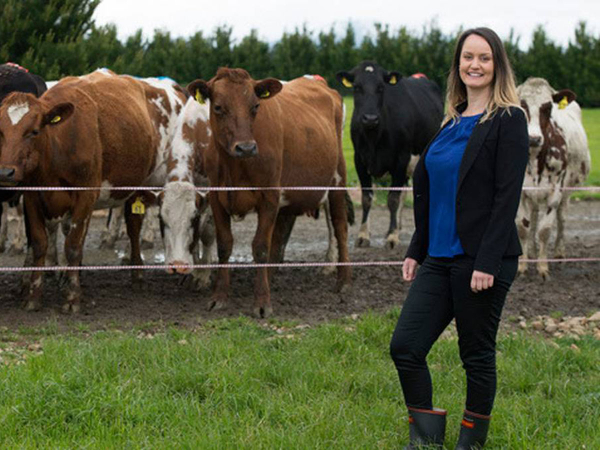 Emma Higgins, Rabobank.
Emma Higgins, Rabobank, says grain, oil and livestock feed are being caught up in the Ukraine war and producers in the northern hemisphere are going to face higher cost of milk production this year and into next year.
She says producers in NZ are also being caught up in higher input costs and, while prices for dairy prices could be good, she believes that the margins for the 2022/23 season will be lower. She notes the challenges farmers have been experiencing this past season right around the country.
"Anecdotally we have heard that farmers in the Waikato for example have tried to change some of their calving patterns so they can get as much milk as possible before the Christmas cut off when things start to be become a lot more fickle and volatile," she says.
Despite this, Higgins believes that while NZ dairy farmers are being challenged by the weather gods, new regulations and geopolitical chaos inflating input costs, theoretically they should be in a better position than northern hemisphere farmers. This is because we operate an extensive pasture based system.
She says there is a whole body of regulation that farmers are working through right now, some of which requires more clarity on how it will impact on them, which may lead to some changes faming systems.
"Climate change is global challenge and it's not just us facign the uncertainty of how to deal with it. If we look offshore, it is front and mind for European producers as well. The difference in NZ is we are being led towards what that new normal looks like by regulation, whereas in places such as America it's more being led by markets. Ultimatelty we are moving towards the same direction, it's just in different ways and places," she says.
Finally Higgins says Fonterra has really stepped up their game and got good information out to farmers about the nuances of markets and need for change.
Farmers with high-quality feed available in late spring could consider weaning at least a proportion of their lamb crop early to benefit both lambs and ewes.

A 'tsunami' of milk from key exporting countries is winding down and this may be good news for New Zealand dairy farmers.
A team effort that is paying dividends for the wider New Zealand economy.
RaboResearch senior analyst Emma Higgins expects the 2026/27 dairy season to be another profitable one.
If growing more feed at home adds up to $428 profit per tonne of dry matter to your bottom line, wouldn’t it be good to have a ryegrass that gets you there quicker?


Dairy processors are ready to further boost New Zealand’s export earnings but want the incoming government to match their ambition with good policy.

Massey University is best placed to solve the “problems” facing the dairy industry, says vice chancellor, Pierre Venter.
Synlait's longest serving employee – a man who joined the Canterbury-based milk processor even before it began processing milk – is now its newest executive.
A dairy industry leader believes eradicating the common and costly disease, Bovine Viral Diarrhoea (BVD) is within reach.
A farmgate milk price of $10/kgMS this season is firming up as milk powder prices soar and the New Zealand dollar weakens.
Federated Farmers has welcomed new rural policies released by ACT, saying they align closely with its own election priorities.

OPINION: It seems Canterbury processor Synlait is still in the doldrums.
OPINION: Get offside with New Zealand First leader Winston Peters at your own peril.




