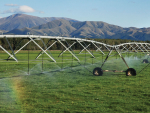
GETTING DAMAGED irrigators back up and running is the big concern on many dairy farms in the wake of the September 10-11 windstorm.
Irrigation New Zealand estimates 800 irrigators, mostly pivots and laterals, went over in the gales and it will be weeks, if not months before they’re all operational again.
“For probably 60% of them it’s just a repair job but for 40% we’re talking major imports of
parts from overseas required,” INZ chief executive Andrew Curtis told Dairy News.
Extra staff has been drafted in from the US and Australia to speed the response and Immigration New Zealand has provided a specific contact to facilitate the visa process.
Curtis says besides the wind damage, there a number of pivots and/or control panels towards to the top of the plains that have suffered lightening damage.
On some farms such damage will not be immediately obvious so running pre-season checks before starting pumping in earnest is important this year, he says.
“If you have a problem because of your own stupidity [not running checks] this year you’ll find you’re at the back of the queue for repairs and that queue’s going to be pretty long.”
Where effluent irrigation infrastructure has been damaged, some form of contingency operation must be put in place to avoid environmental issues, he adds. “We’ve put together some guidance with Fonterra, DairyNZ and ECan on this.”
While a few properties on light soils are already irrigating, most soil moisture deficits in the region haven’t reached trigger points yet so as of last week there would have been little grass production lost, says Curtis.
“The challenge will be if we get a week of nor’westers, unless we get rain with it. For some the reality is it is going to be six or eight weeks until the repairs are done.”
Dairy Holdings’ chief executive Colin Glass is hopeful it won’t be that long.
“The response of the irrigation companies has been very pleasing. The initial comments were that they could be eight weeks out of action but the issues don’t appear to be as severe as was first suggested, and they’re getting arrangements in place and gearing up.”
However, he adds that if there isn’t a good rain in the next week or two across the region then there will be a delayed production impact. Of the group’s 58 farms, the worst hit were those in the Oxford and Te Parita areas.
“At Te Parita seven out of the eight irrigators are damaged and at Oxford 50% are affected, but across the company we are relieved that the amount of damage elsewhere is pretty minor really.”
Elsewhere a few calf sheds were damaged and shelter-belts flattened. Eucalypts seemed to suffer worst, he notes.
In terms of production, the group’s staff pulled out all the stops to get generators around the properties, one machine servicing six farms in 24 hours, and nearly all the group’s cows were milked within a day of the outage.
“We lost power to nearly all our farms across Canterbury except in the Waitaki.”
As of late last week, five Dairy Holdings’ sheds were still without power, though all had dedicated generators and had done so from within three days of the event, he says.