Take control of your cup removers
Malfunctioning cup removers in the milk shed can be a major issue, just ask Gordonton farmers John and Sandra Shewan.




 increase font size
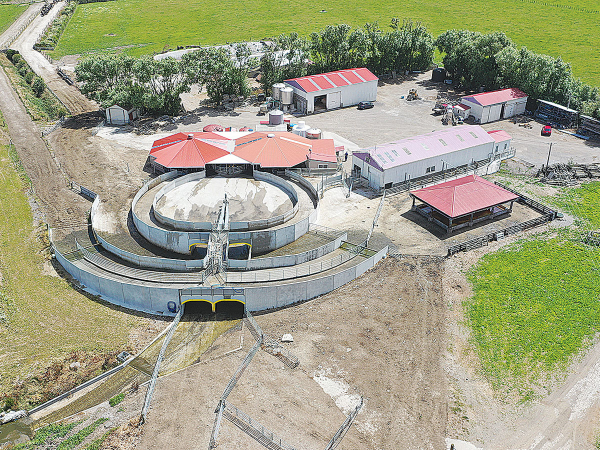 King Country farmer Shane Ardern’s twin rotary milking shed.
King Country farmer Shane Ardern has never been afraid to be a bit different.
He is perhaps best remembered as the MP who drove a tractor up the front steps of Parliament in 2003 in protest at the government’s so called ‘fart tax’
After leaving Parliament he went back to his dairy farming operation in Taranaki and this year built what is said to be the fastest dairy shed in New Zealand.
Faced with having to replace his aging shed he travelled the world to find the answer and he found it in the US – a twin rotary shed.
Shane Ardern says the problem with most of new dairy sheds is that while they are highly spec’d, they are slow.
The twin rotary he’s had built consists of two 40 bail rotary platforms which enables him to milk his 600 cows in just one hour. “Most of the modern sheds milk about 400 cows an hour and cost about half a million dollars more than mine. Most of the sheds suit the builders, the milking machine fitters and engineers, but don’t suit the cows and the management of stock flow,” he says.
Ardern says for many staff spending long hours in the milking shed is not something they like and is inefficient use of labour.
Milking cows faster he says is a win-win for farmer and staff alike. He says DairyNZ should start taking a closer interest in milking shed design.
Arden’s unique model has been picked up and copied by Nathan Guy and is one that is likely to be copied by others, and could revolutionise the dairy industry in NZ.
Malfunctioning cup removers in the milk shed can be a major issue, just ask Gordonton farmers John and Sandra Shewan.
A feeding system developed for herringbone dairy sheds by Tuakau-based PPP Industries is now ready for prime time, says general manager Nick Morison.
PPP Industries Ltd, New Zealand-owned company, has been designing, manufacturing and installing innovative agricultural equipment for at least 50 years.
Rotary milking machines are becoming more popular worldwide, says DeLaval executive vice-president milking systems Jonas Hallman.
The first 84-bail composite Waikato Milking Systems rotary platform built in the US has won an energy efficiency award.


Federated Farmers has welcomed new rural policies released by ACT, saying they align closely with its own election priorities.

Rural Contractors NZ says proposed changes to land transport rules for agricultural vehicles are a welcome response by the Government to out of date regulations which have seen members hit with huge fines.
Alliance is calling for final applications for its 2027 Graduate Programme, with applications closing on Sunday 25 October.
Decades piloting planes has ensured vet and farmer David Hayes is focused on safety. So, after a serious accident while welding on farm, he is sharing his experience so others can learn from it.
Canterbury milk processor, Synlait Milk has confirmed Leon Fung as its chief executive officer.
OPINION: Making it easier to collect rainwater and use it to grow crops and livestock is a no brainer.

OPINION: It seems Canterbury processor Synlait is still in the doldrums.
OPINION: Get offside with New Zealand First leader Winston Peters at your own peril.




