
Editorial: Stay the Course
OPINION: The United States wine market has changed forever, and companies cannot use same old playbook, said Erin Kirschenmann at the New Zealand Wine 2026 Wine Business Forum in August.




 increase font size
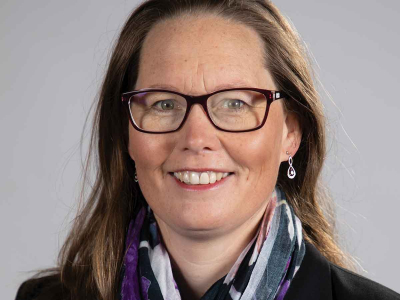 New special agricultural trade envoy Mel Poulton.
Taranaki farmer Mel Poulton will work with New Zealand’s special agricultural trade envoy, Mike Petersen, over the next three months in preparation for taking over his role on January 1.
Poulton was announced last week as his successor.
“First and foremost, this role is about bringing the voice of food producers to the table,” Poulton told Dairy News.
“I grew up in agri and together with my husband we are producing food and fibre, most of which, like the large majority of NZ’s primary industry products, is exported to many different markets around the world.
“I’ve had a number of experiences offshore at global meetings where the practical knowledge, experience and authority of an actual food producer, or farmer as some would say, has had a real impact on the conversations and debate.”
Poulton says it is difficult to comment too much on her new role yet, other than to honour the work Mike Petersen has done for NZ in the role.
“His relentless positivity and tireless effort really is admirable. I don’t start officially until January, so I’ve got three months to work with Mike, learn the ropes and get up to speed so that I can continue building on the platform he’s set.
“I look forward to working with all the people involved in this role across the industry and internationally.
“We’re all in this together and I’ll be just one part of a big team.”
Asked to comment on challenges facing NZ, particularly in view of the current trading environment, Poulton says broadly speaking both in NZ and worldwide there is significant change taking place.
“No-one really knows where it’s all going to land,” she said.
“What we do know is that change is constant. It always has been. We can look back at the change we’ve all been part of and have confidence that we embraced opportunities, we’ve adapted, we’ve created solutions and we will continue to do this.
“Navigating our way through change needs everyone positively and constructively contributing to solutions, from our food producers all the way through the industry, including Government ministries and our trade staff here in NZ and offshore.
“We’re all part of the NZ Team and it’s going to take everyone playing their part in working together to navigate our way through change and capture the opportunities that arise.”
The NZ dairy sector is full of amazing people doing good work on farms and in our markets, says Poulton.
“As much as dairy has been in the spotlight on some challenging issues, the people I know in dairy have been inspirational in their engagement on the issues.
“They’ve been tireless in their efforts to be solutions focussed, their leadership in navigating change, their innovation to connect with consumers and the NZ population, and their open gate initiatives.
“In my engagements offshore [I’ve seen] the NZ dairy sector is held in very high regard and just about everyone involved in agri around the world knows something about NZ dairy and its contribution internationally from a trade perspective.
“NZ dairy farmers and the dairy industry are producing highly nutritious food and beverages, innovative products and valuable nutritional solutions for people in many different countries.
“Keep up the good work.”
Nuffield scholar
Poulton is hands-on with husband Mike on an intergenerational Taranaki family sheep and beef farm that has been in Mike’s family for about 100 years.
They are stewards of 1011ha, consisting of mostly medium to hard hill country, and they have a 28ha block down the road which is all flat and used for finishing stock, she says.
In a Nuffield Scholarship she was awarded in 2014 Poulton “set out to understand the export of NZ expertise with regard to trade”.
“Food producers and the primary industry invest a lot of money in developing knowledge, science, technology and solutions to the challenges and opportunities we face in our farming systems.”
Her study tour touched on international science collaboration, offshore investments in farming systems from different countries including NZ, trade negotiations and global policy with the UNFAO and WTO.
She also looked a little at intellectual property and how we value it, and she explored completely different farming systems such as Tilapia fish farming, an American investment in Colombia.
“I wanted to maximise the opportunity as a Nuffield scholar to get into places and spaces that I otherwise didn’t think I was ever going to get a chance to look at. So while I was travelling I took a broad look at as much as I possibly could. This was a great approach for learning.”
She travelled widely in South America and Latin America, the USA, Europe and Israel and visited at least 10 countries in her scholarship year.
Poulton is a member of the Global Farmer Network which she says is amplifying the voice of farmers and food producers on the global stage, promoting trade, science and technology and other issues important to food producers.
“Along with other folk in NZ I’ve been contributing to some of the global conversations on issues where I can bring a NZ perspective.”
In the last month this included involvement in the Global Agenda on Livestock Sustainability (GASL) and promotion of issues on mobile digital connectivity.
Last year she attended a small APEC meeting in Taiwan/Chinese Taipei.
OPINION: The United States wine market has changed forever, and companies cannot use same old playbook, said Erin Kirschenmann at the New Zealand Wine 2026 Wine Business Forum in August.

Chinese beef trade quotas and a looming suspension of Brazilian beef imports into the European Union are expected to reshape global beef trade flows over the remainder of 2026, with implications for New Zealand exporters, according to Rabobank's Q3 Global Beef Quarterly report.
China remains New Zealand’s biggest market, taking $23 billion of our exports, but it’s no longer a commodity story, says Prime Minister Christopher Luxon.
According to new research, industry leaders have ranked world-class biodiversity as the number one priority for the 16th year in a row.
OPINION: This is my last article as Chief Executive, so I thought I’d take the opportunity to talk about three recurring issues which I have seen over the years, and which are almost certain to be issues in the future.


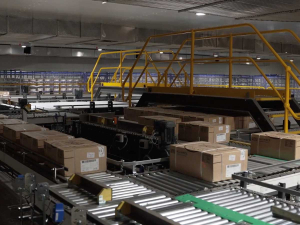
Alliance is calling for final applications for its 2027 Graduate Programme, with applications closing on Sunday 25 October.
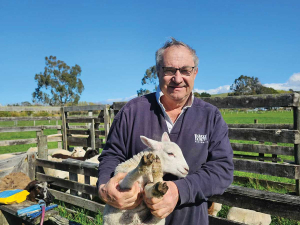
Decades piloting planes has ensured vet and farmer David Hayes is focused on safety. So, after a serious accident while welding on farm, he is sharing his experience so others can learn from it.
Canterbury milk processor, Synlait Milk has confirmed Leon Fung as its chief executive officer.
OPINION: Making it easier to collect rainwater and use it to grow crops and livestock is a no brainer.
As part of its Election 2026 coverage, Rural News asked political parties how they would help pull the arable sector out of the doldrums. Here's what they said:
Farmers are being encouraged to rethink how they manage waste on farm with the launch of ruralwastesorted.co.nz, a new website bringing together practical tips, real farmer experiences and resources.


OPINION: It seems Canterbury processor Synlait is still in the doldrums.
OPINION: Get offside with New Zealand First leader Winston Peters at your own peril.




