Why Now Is the Time to Plan Farm Succession, Findex Says
OPINION: Succession and long-term planning are perennial topics because it is perpetually sidelined on busy farms.




 increase font size
Global dairy markets last week broke out of a seven-month stable stretch in a move labelled “material and meaningful” by one leading analyst.
Fonterra’s GlobalDairyTrade weighted index was down 4.5%, with every commodity down, in almost every position: the exception was skimmed milk powder for April shipment – the only commodity offered for that period – which was up 1.1%.
Milk protein concentrate (MPC) plummeted 15%, rennet casein 12.9%, cheddar 11.3% and anhydrous milk fat 9.5%. Whole milk powder slipped 2.6% to average US$3316, while skimmed milk powder eased 2% to average US$3125.
“This one is meaningful and material,” BNZ economist Doug Steel told Dairy News. “Meaningful in that it wasn’t driven by movements in the US dollar or New Zealand dollar: both were pretty much where they were at the last auction, which means it’s a genuine drop in dairy markets; and material in that the market had been in a relatively stable, 5% range since August. It’s now dropped below that range and those demand and supply pressures are taking hold.”
In the case of demand, it’s reducing in line with slowing global GDP growth, notably China where last year the economy grew at 8.9%, down from 9.2%, and the first economic figures for this year are “even softer”, notes Steel.
“In a large part that is by the design of the authorities... the question is at what point will it level out. They’ve lowered their growth target from 8% to 7.5%.”
Meanwhile global milk supply has “ramped up” in response to recent firm prices.
“You get the sense the milk supply is still coming. The February numbers in the US were very strong, even after accounting for the extra day; likewise in the EU and Australia.”
With New Zealand’s production pumping through autumn, Steel’s feeling is “there’s a bit more downside.”
Consequently
forecasts for next season will be lower than Fonterra’s recently revised forecast for this season, says Steel. “But what the figure will be is pie-in-the-sky
at this stage.”
Fonterra shaved 15c/kgMS off its 2011/12 milk price forecast earlier this month to $6.35/kgMS, leaving the dividend profit forecast at 40-50c/kgMS. The first forecast
for the coming season
is typically made in late May by Fonterra.
OPINION: Succession and long-term planning are perennial topics because it is perpetually sidelined on busy farms.
Farms across the upper North Island are trialling different pasture mixes as part of a research programme that aims to build greater resilience into farming systems.
Election years are always a concerning time for farmers, according to DairyNZ chair Tracy Brown.
Matt Collier, Probiotic Revolution, says calves will drink a lot of milk once-a-day with their probiotic Calf Xtreme.


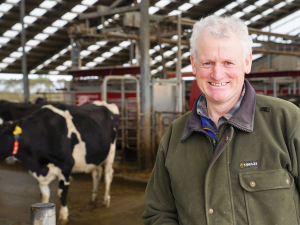
In Dacre, near Invercargill in New Zealand’s South Island, Bruce Dinnington is running a dairy operation unlike any other.

A free online platform aggregating governance vacancies across rural and regional New Zealand has been launched.
Environment Minister Nicola Grigg has announced details of a new rural plastics recycling scheme.
Agricultural drone operators say that a government decision to allow lower-risk drone work without certification won’t lower standards but drive innovation and efficiency.
OPINION: Warning bells are ringing in the arable sector.
Farmgate lamb prices are down by 8%, beef cattle by 4.5% and farm expenditure up by 4.2%.




OPINION: It seems Canterbury processor Synlait is still in the doldrums.
OPINION: Get offside with New Zealand First leader Winston Peters at your own peril.