M.I.A.
OPINION: The previous government spent too much during the Covid-19 pandemic, despite warnings from officials, according to a briefing released by the Treasury.




 increase font size
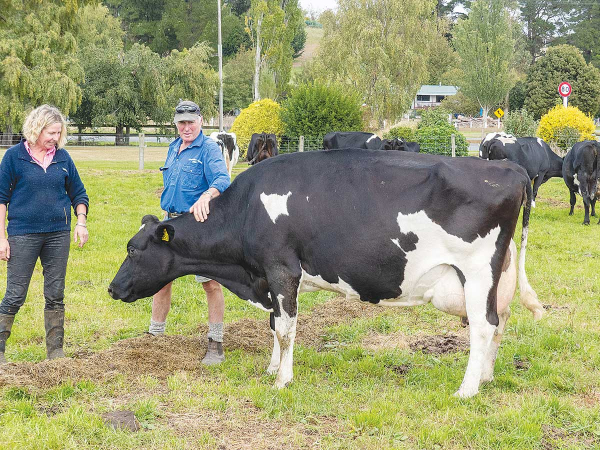 Andrea and Stuart Weir with their raw milk herd on their Glenwillow Farm on the outskirts of the Timaru.
It's business as usual for Timaru raw milk suppliers Stuart and Andrea Weir as the country is in total COVID-19 lockdown.
The couple run their business Real Milk Timaru from their third-generation dairy farm right on the edge of the city. They sell raw unpasteurised milk and refillable glass bottles from automatic dispensers in their roadside shop, as well as delivering three days a week to regular customers in Timaru, Waimate and Fairlie.
As the Level Four COVID-19 lockdown took effect last week, their Facebook page assured customers that sanitisers and wipes were provided for shop customers using the vending machines, and home deliveries would continue.
They are also expecting an uptick in interest in home deliveries, but are reliant on Facebook and word-of-mouth to get the message out.
Stuart Weir explains that while their raw milk meets all the safety requirements and they believe it is a healthy product, they don’t advertise because any formal advertising cannot include explicit health claims, and must include an MPI raw milk health warning word-for-word.
“To me that’s that’s contradicting what you’re trying to do... it’s a full food and it’s safe because we meet the regulations.”
Their 104ha Glenwillow Farm, in the family since 1944, nestles in a valley overlooked by houses on the Southwest edge of Timaru.
“Because we’ve always been town supply it suited us to to set up the retail milk for the public because of our locality being close to Timaru city,” says Stuart.
 |
|---|
|
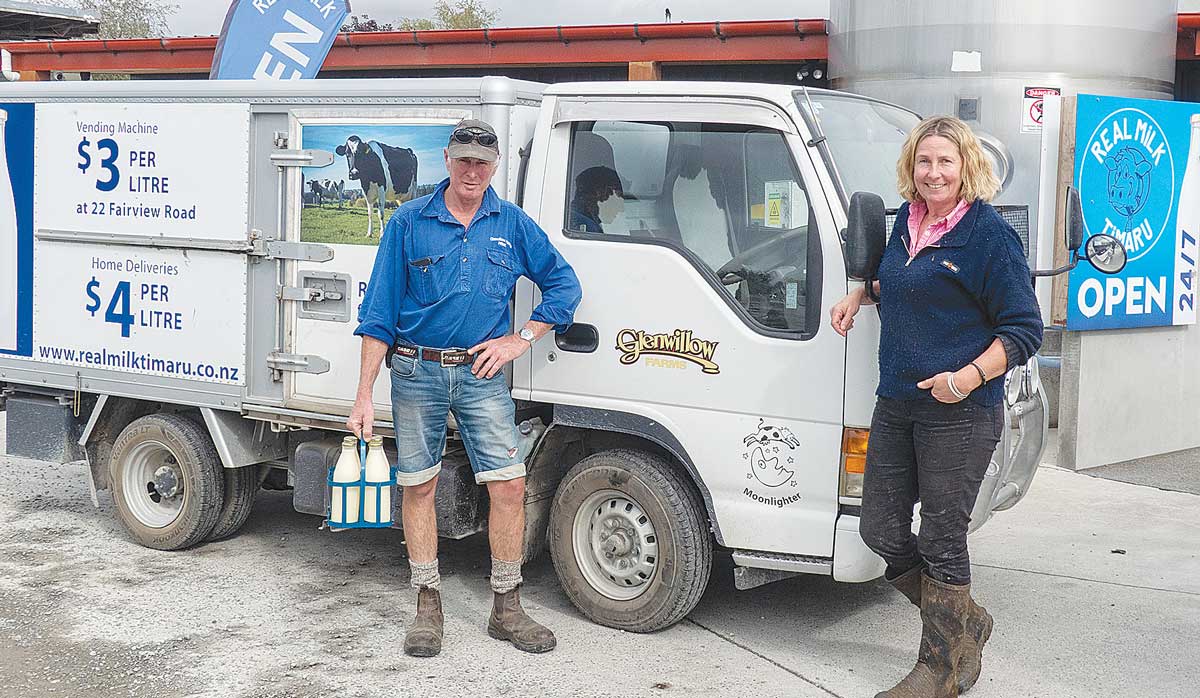
Stuart and Andrea Weir provide three home delivery runs a week to Timaru and surrounding towns, from their Glenwillow Farm on the outskirts of the city. |
They milk year-round with both autumn and spring calving. They run about 270 cows all up including 15 in the raw milk herd, which is milked once a day. The main herd is milked twice a day, providing winter supply to Fonterra.
The raw milk is tested weekly for pathogens, in line with MPI regulations.
“We have cows in the main herd that are tested for the real milk herd as well, so when I need to swap some cows around or dry some cows off from the shop herd, I bring some of the girls from the main herd into that mob,” says Andrea.
“So it’s a rotational system and it’s year round, of course. We supply the shop 24/7.”
Andrea says they choose mid-range cows, producing about 18l a day, for the raw milk herd because big producers cannot go on once a day.
“So the big girls have to stay in the main herd and get milked twice a day and the mid-range girls that have got a low cell count and that nice sort of quantity of milk come into this herd.
“They are generally rolled over from one year to the next so it’s the same cows. They know the system well.”
The Weirs started producing raw milk six years ago as franchisees of raw milk pioneers, Takaka’s Village Milk. They rebranded as Real Milk Timaru in 2016 when MPI regulated the industry and required all raw milk suppliers to register individually, and the franchise system had to stop.
Stuart says it was Village Milk who originally drew up the processes and safety procedures which MPI largely adopted in 2016.
“Village Milk still run a consultancy service, which I strongly recommend people to go to them if they’re looking at setting up. There is a lot involved in the testing procedures and getting the quality of the milk right before it goes public.”
The 2016 regulations still don’t allow supply via third parties such as corner stores, but allows home deliveries. The Weirs bought their delivery truck at that time and now deliver about 150l a week to subscribers, as well as about 150l a day through the shop.
Stuart says they’ve had a good uptake for the deliveries.
“We’ve got a lot of families with young kids and/or older people, that can’t get out.”
Andrea says the raw milk business is great extra income.
“If you’re a small farm you have to diversify and think of ways of creating an income.”
OPINION: The previous government spent too much during the Covid-19 pandemic, despite warnings from officials, according to a briefing released by the Treasury.
OPINION: Labour leader Chris 'Chippy' Hipkins is carrying on the world-class gaslighting of the nation that he and his cohorts started after their disastrous Covid response; now trying to undermine the Covid inquiry to protect his own backside.
OPINION: Did former PM Jacinda Ardern get fawning reviews for her book?
OPINION: Welcome to the second annual NZ Dairy Expo at Matamata – an event created to bring together the best of the New Zealand dairy industry in a focused, grassroots environment where dairy farmers and rural professionals can meet, talk, compare products, and make smart decisions for their farms.
It's a bloody tough year for sheep farmers, but the worst may be over, and the future looks optimistic.



Testing confirms H5 bird flu in a single northern giant petrel, found dead on a remote Cape Palliser beach in the Wairarapa, says Dr Mary van Andel, the Ministry for Primary Industries' (MPI) Chief Veterinary Officer.

"What's for dinner?" may sound like a simple question, but for many Kiwi parents, answering it has become a job in itself.
Fifty Eight years ago, on the 16th of August 1968, August Claas, the founder of the harvesting company and father of Helmut Claas, personally presented a Claas Senator combine harvester to Scottish farmer John Steven.
New Zealand consumers are paying more for beef mince than ever before, with the average retail price now sitting above $24 per kilogram, according to Rabobank.
State farmer Pamu has delivered its strongest operating result on record.
Four years since it was first detected in New Zealand, researchers and growers now know much more about management of maize pest fall armyworm (FAW).




OPINION: After hogging the media limelight for telling a NZ Chinese MP to "go back home", Winston Peters has decided…
OPINION: With fuel prices soaring, one would have expected most farmers to be reclaiming excise duty on petrol.