Moxham Family's Organic Milk Now Comes as Gelato
Horowhenua organic dairy farmers Ange and Wayne Moxham have taken their business to a new level.




 increase font size
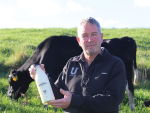
 Gary Hirshberg.
The potential for organics in New Zealand is being viewed as huge because of dairy farmer competence and excellent growing and market conditions.
That's the thinking from Gary Hirshberg, founder of US organic dairy company Stonyfield Farm in New Hampshire.
Hirshberg told Dairy News non-organic dairy farmers in his region are struggling: 14 - 20% of dairy farms in Maine, New Hampshire and Vermont this year 2018 are expected to go out of business, he says.
“They will fail because corn prices and energy prices are extremely high and the price for conventional milk is quite low.”
But the organic dairy farmers are all making good money. The US overall organic market has reached $60 billion per year and is growing faster than conventional foodstuffs.
He is “bullish” about our organic potential, he says.
“You have the advantage here [for organics] of so much natural grass. Right away you have a distinctive edge over the rest of the world with the greater amount of insulation and you are able to be more productive and more diversified.”
Stoneyfield Farm started as a seven cow operation in 1983 and now has $400 million annual sales, specialising in organic yoghurt. It is now owned by French dairy giant Lactalis.
Hirshberg is involved in companies that produce and export into China. As Fonterra is well aware, he says, because of the pollution in China and one-child families, the Chinese are committed to giving their children the cleanest-possible foods.
“So that opens up a huge market particularly in baby food and infant formula.”
Pointing to alternative dairy products such as sheep dairy, he says they are on the move as a global market. “My friends in the baby food and infant formula business can’t keep up with demand.
“The millennial consumer, young parents, are coming into the marketplace and they want to purchase more conscientiously. They are concerned about pesticides and so on. Emerging millennial consumers the world over are more conscious of these things now. They don’t want additives, antibiotics and pesticides.
“The combination of New Zealand’s ability to grow extraordinary produce and dairy and so forth with that emerging market makes it an exciting future for organic.”
On the wholesale side he thinks NZ companies like Fonterra and Westland are well aware of opportunities in milk powder, whey protein, etc.
“But where the real opportunities lie is in value added products – cheeses, butter, etc.
Better marketing and communication is needed of ‘Brand New Zealand’, he says.
“You have this extraordinary growing environment. New Zealand right away has an image of green. Where you have to be careful is more and more pressure to open up with genetically engineered corn and feedstuffs. That will work against that overall positive image.
“The opportunities are on the offensive side to grow more value added and do more communicating but also the defensive side to protect the integrity of clean green New Zealand.”
Hirshberg says he has been coming here for 15-16 years and is immensely impressed with the agricultural and technical know-how in a wide range of categories. “The quality of the product is extraordinary here. Americans cannot teach New Zealand much about agriculture.”
But our communicating, marketing and promoting has a long way to go, he says.
Hirshberg held a ‘boot camp’ with Trade and Enterprise NZ for primary industry entrepreneurs this month in Auckland.
He has also invested in a Motueka property where he is working with a number of entrepreneurs to create an onfarm incubator for organics including sheep milking.
Horowhenua organic dairy farmers Ange and Wayne Moxham have taken their business to a new level.

Fonterra has announced it will continue with the planned expansion of its organic business into the South Island.
Fonterra's plan to expand its organic programme to the South Island is being well received by farmers, the co-op says.
Fonterra has delivered a fifth straight year of record organic milk price for farmer suppliers.
Fonterra has announced a record forecast opening organic milk price of $12.30/kgMS for the new season.


Now in its fourth year, the 2026 Fencing Industry Awards, formed part of the proceedings of the FCANZ Conference, held in Nelson during August.
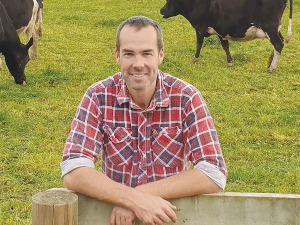
DairyNZ deputy chair Cameron Henderson has been re-appointed unopposed for another term.
OPINION: The stats speak for themselves.
Farms across the upper North Island are trialling different pasture mixes as part of a research programme that aims to build greater resilience into farming systems.
Election years are always a concerning time for farmers, according to DairyNZ chair Tracy Brown.
The Ballance Farm Environment Awards are coming to the West Coast of the South Island.


OPINION: It seems Canterbury processor Synlait is still in the doldrums.
OPINION: Get offside with New Zealand First leader Winston Peters at your own peril.