Agri sector to lead economic recovery
OPINION: Over the past month, people up and down the country have been asking me what I think is in store for the Agri sector.




 increase font size
 Graeme Wheeler, Reserve Bank governor
The economy is performing well but faces challenges arising from the Chinese economy, says Reserve Bank governor Graeme Wheeler.
Volatility in dairy, oil and house prices and the exchange rate also pose a risk to the economy, he told the Canterbury Employers Chamber of Commerce in Christchurch.
“The main risks and uncertainties relate to the Chinese economy, and four key prices – dairy prices, oil prices, house prices and the exchange rate.”
But he doesn’t expect the drop in dairy prices this year to greatly affect farmers’ balance sheets. An expected $6 billion drop in dairy farmers’ incomes is likely to be cushioned as farmers normally smooth spending through swings in income.
And many farmers had used last year’s record payout to bolster farm balance sheets, he says.
But if prices do not recover as expected, spending could slow more sharply in 2016; a further risk to farm incomes stems from dry weather in several dairy regions.
Oil prices have fallen 58% since the end of June 2014. If they remain about US$50/barrel, household disposable income would gain by about $600pa/household. But if the main driver of the fall in oil prices is weakening global demand, New Zealand’s export incomes can expect to continue to be weak.
The bank will monitor the impact of lower fuel prices on downstream prices in the economy, and how much they might reduce households’ expectations of inflation.
Wheeler says that while the New Zealand dollar has eased recently on a TWI basis it remains unjustified in respect of current economic conditions, particularly export prices, and unsustainable given long-term economic fundamentals. “We expect to see a further significant depreciation.”
Annual CPI inflation is expected to be below the bank’s target band and could become negative for some of 2015 as direct and indirect impacts of falling oil prices feed through the economy. The bank then expects inflation to move back towards the middle of the 1-3% target band, albeit more gradually than anticipated.
The bank expects to keep the OCR on hold for some time; interest rate adjustments, up or down, will depend on economic data.
“Some commentators suggest that a cut in interest rates would be appropriate at this stage. With a sizeable positive supply side shock, such as a major fall in the price of oil, a cut in interest rates can be appropriate.”
OPINION: Over the past month, people up and down the country have been asking me what I think is in store for the Agri sector.

OPINION: Despite the volatility created by the shoot-from-the-hip trade tariff 'stratefy' being deployed by the new state tenants in the White House, farm commodity prices are holding their own.
There are calls for the Reserve Bank to drop its banking capital rules, which Federated Farmers says is costing farmers a fortune.
ANZ says the latest cut to its floating rates will be welcome news to many of its business and agri customers still feeling the effects of high inflation and interest rates.
Rabobank New Zealand will reduce the variable base rate on its rural loans by 0.5%, effective from 16 October 2024.


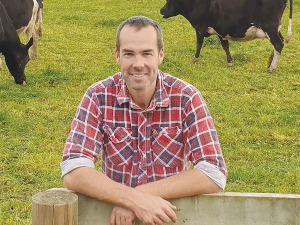
DairyNZ deputy chair Cameron Henderson has been re-appointed unopposed for another term.
Farms across the upper North Island are trialling different pasture mixes as part of a research programme that aims to build greater resilience into farming systems.
Election years are always a concerning time for farmers, according to DairyNZ chair Tracy Brown.
The Ballance Farm Environment Awards are coming to the West Coast of the South Island.
Most dairy regions around the country have had a pretty good season so far says Tracy Brown.



OPINION: It seems Canterbury processor Synlait is still in the doldrums.
OPINION: Get offside with New Zealand First leader Winston Peters at your own peril.