See your heating costs evaporate
Attention to the details of dairy shed infrastructure can improve a farm's bottom line.




 increase font size
After the recent cold spell, few dairy farmers will be wondering why they still milk in an open sided shed, exposing them to fickle New Zealand weather.
Cleaning the plant, they dream about getting their hands in hot water, traditionally heated in dairy sheds by electricity. But in the last eight years power prices have doubled.
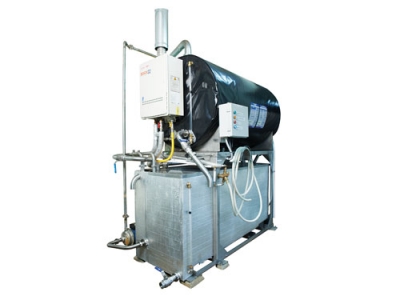
As an alternative to electricity, or to upgrade an existing plant, look at the Longveld dairy hot water system (DHWS).
This portable, all-in-one gas hot water system incorporates a horizontally mounted and insulated cylinder, a dump tank, controller, water pump and – the heart of the unit – a Bosch commercial grade gas boiler.
All the components are mounted in a stainless steel frame that comes ready for connection to water and gas. Systems are also available to fit over existing dump tanks or water cylinders. The nature of the construction – within a stainless steel frame – allows easy removal to new sheds, and it suits to low buildings because of the horizontal cylinder.
Gas fired systems have advantages over electric, not least the potential to save at least 40% in water heating costs, since the plant can heat 600L to 85oC per hour. To do this using electricity would require three cylinders running all day.
A programmable controller can be set to heat the required volume as many times daily as needed.
An extra bonus is instant hot water (55oC) from a tap – not available with an electrical system; safer when carrying open buckets of water for cleaning or, say, vet procedures.
Capacity range is 400, 600 or 1000L.
Costs drop
Kaipara dairy farmers Bruce and Rosie Sandford needed to replace a worn out electrical system and chose a Longveld DHWS.
The system cut their water heating costs from $8000 to $4600 – around 46%.
Bruce commented, “the time had come to replace our old system. The Longveld unit takes no more than 35 minutes to heat our 400L to 80oC and the automation makes vat and plant washing a breeze”.
Attention to the details of dairy shed infrastructure can improve a farm's bottom line.
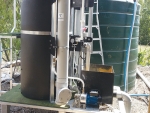
Dissolved iron in drinking water and reduced palatability can be a major problem, particularly for dairy farmers, who strive to get dairy cows to drink upwards of 70 litres of water per day for good production.
Iron contamination in dairy farm water supplies causes turbidity problems that lead to water restrictions, says Waikato milking technology company Longveld.
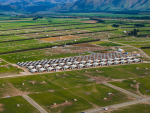

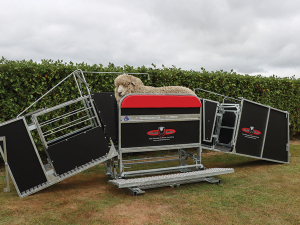
Oamaru-based livestock handling specialist Te Pari has bought Combi Clamp, the New Zealand manufacturer of Combi Clamp manual sheep handlers.
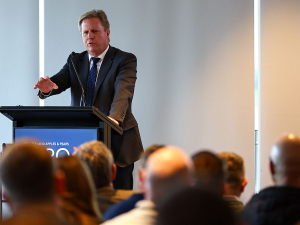
Agriculture Minister Todd McClay has admitted that a scheme bringing workers from Pacific nations to work on orchards has become too hard to navigate but says changes are coming.
A new app designed in New Zealand aims to help sheep, beef and deer farmers capture, analyse and use body condition score data more effectively.
Canterbury farmer Andy Macfarlane has been appointed to the board of AgriZeroNZ, the public-private partnership designed to accelerate the development and deployment of emissions reduction tools for New Zealand farmers.
For over 50 years Mel Ewers has been supporting the apple sector navigate through compliance and quality assurance issues.
The apple sector is enjoying a bumper harvest season.


OPINION: City and regional councils have been put on notice - stop using extreme climate forecasting scenarios that can drive…
OPINION: The Green Party’s rivers and oceans policy may have a new name but nothing else has changed.