See your heating costs evaporate
Attention to the details of dairy shed infrastructure can improve a farm's bottom line.




 increase font size
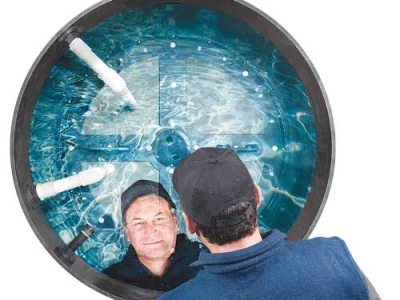 Iron Out tank.
Iron contamination in dairy farm water supplies causes turbidity problems that lead to water restrictions, says Waikato milking technology company Longveld.
Corrosion and system blockages cause further downstream issues, and water unpalatable to stock lowers milk production.
Longveld in 2014 launched a new type of non-chemical iron filter designed to address these problems and to help lift milk production. The filtration units have flow rates of 12,000 to 200,000L per day.
Called Iron Out, the unit comes with a money-back guarantee to remove iron from water. It provides milking equipment washout water that doesn’t negatively impact milk quality, the company says.
Longveld sales manager John Martin says the Iron Out is easy to use and costs little to maintain. “It will continuously process water 24/365 without expensive chemical dosing or constant maintenance.”
It uses a floating polymer filter media said to be superior to sand or chemical filters. It requires little maintenance, no scalping and the filter media lasts 15 years with an occasional top-up.
Features of the system include high reliability; no chemicals; continuous removal of iron, dissolved gases and suspended solids; adapts to changing iron loadings; and automatically backwashes.
Automatic backwashing is triggered by an increase in resistance through the floating polymer filter media as the iron and other contaminants are being removed. So the system self-adjusts to changing iron loads in the feed water to give stable, repetitive results.
Iron Out is designed for the non-chemical removal of high levels of dissolved iron (up to 50mg/L or 50ppm), dissolved gases and suspended particles.
The company says it also knows about switching to gas in dairy sheds. “Using a Bosch commercial boiler, the Longveld dairy hot water system is saving farmers thousands on their energy costs and supplying 85oC water whenever it is needed. Once iron contamination is addressed, gas water heating is a natural follow-on.”
Martin says gas hot water is proven to save up to half the cost of electric water heating. And 55oC on-demand tap supply “comes into its own for cleaning up after vet visits or for mixing calf feed”.
“You don’t need to turn your cylinder on to get a bucketful of hot water. It also removes the hazard of taking 85oC water straight out of the cylinder and hauling it around the shed in buckets.”
Waitoa farmer Carl Steiner has installed Iron Out and the company’s dairy hot water system.
Says Steiner, “We quickly saw the economics of it. Once we had processed all the information and analysed the nuts and bolts of it all, it was a no-brainer.”
Tel. 0800 566 483
Attention to the details of dairy shed infrastructure can improve a farm's bottom line.
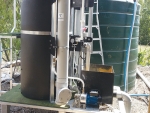
Dissolved iron in drinking water and reduced palatability can be a major problem, particularly for dairy farmers, who strive to get dairy cows to drink upwards of 70 litres of water per day for good production.
After the recent cold spell, few dairy farmers will be wondering why they still milk in an open sided shed, exposing them to fickle New Zealand weather.

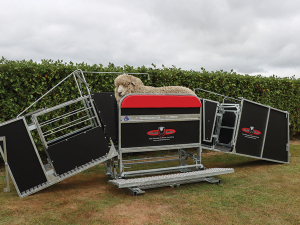
Oamaru-based livestock handling specialist Te Pari has bought Combi Clamp, the New Zealand manufacturer of Combi Clamp manual sheep handlers.
Agriculture Minister Todd McClay has admitted that a scheme bringing workers from Pacific nations to work on orchards has become too hard to navigate but says changes are coming.
A new app designed in New Zealand aims to help sheep, beef and deer farmers capture, analyse and use body condition score data more effectively.
Canterbury farmer Andy Macfarlane has been appointed to the board of AgriZeroNZ, the public-private partnership designed to accelerate the development and deployment of emissions reduction tools for New Zealand farmers.
For over 50 years Mel Ewers has been supporting the apple sector navigate through compliance and quality assurance issues.
The apple sector is enjoying a bumper harvest season.



OPINION: City and regional councils have been put on notice - stop using extreme climate forecasting scenarios that can drive…
OPINION: The Green Party’s rivers and oceans policy may have a new name but nothing else has changed.