The development of a solar powered pumping system has opened up possibilities for farmers looking for a guaranteed water supply to outlying areas of the farm, which are often not connected to the national grid.
This potential to bring areas into production, and increase stocking rates, has been developed over two years by Hawkes Bay based Isaacs Pumping and Electrical with help from the Callaghan Innovation Group.
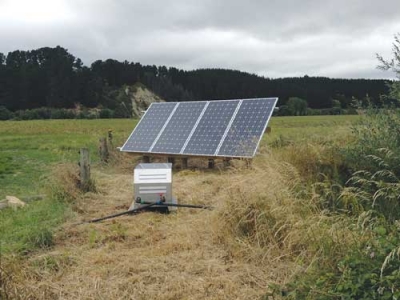
The e-pump is fully automated, and takes tried and tested pump technology, and combines it with a circuit board based controller system to optimise the solar power being generated, whilst protecting the industrial spec continuous motor, all housed in a stainless steel protective cover. Power generation is achieved with a six panel set-up situated near the pumping equipment. The pump used has been around for 50 years, so is well proven, but users can specify a pump of choice if required, although the Isaacs preferred unit is able to tackle clean or dirty water.
The e-pump is able to deliver to a head of 120 metres at a rate of around 20 litres per minute during daylight hours, and large distances from point A to B can be achieved within the limitations of frictional losses within the delivery pipe.
As director Gavin Streeter explains, "The aim would be to pump to a header tank at the highest point, and allow gravity to take the water back down to the troughs and livestock".
As well as obvious interest from around NZ and Australia for the agricultural market, the company has also had requests for systems for hunting and tramping huts in remote locations, as well as enquiries from organisations providing development and aid assistance throughout the world.
www.isaacshb.co.nz