
It's The Margins That Matter
OPINION: It appears to be difficult for people who haven’t tried to run a business to understand the difference between assets and cash.




 increase font size
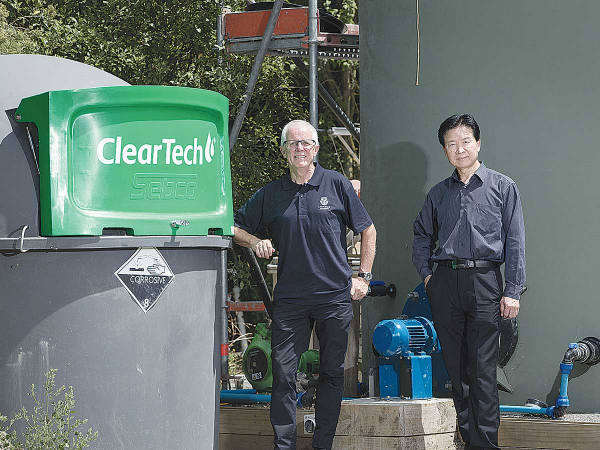 Professors Keith Cameron and Hong Di with the Lincoln University Dairy Farm ClearTech Effluent Treatment System.
A Ravensdown ClearTech effluent treatment system installed at the Lincoln University Dairy Farm (LUDF) has saved over 600,000 litres of freshwater in its first month of operation.
The saving equates to the average daily use of about 3,000 people, or the amount used by an individual in eight years.
With a potential to save billions of litres of freshwater annually if used across the New Zealand dairy industry, the systems efficacy and impact is confirmed by LUDF farm manager Peter Hancox.
“Our ClearTech plant has been operational from the start of our milking season and we’re saving at least 50% of the water used to wash the yard. If we continue along this trend, then over a 10-month season we’ll achieve a total saving of 6,000,000 litres of freshwater,” he says.
Hancox notes the costs of set-up and ongoing maintenance are relatively modest, and far outweighed by the benefits that will accrue to farms and the wider community.
Working away in the background, with no extra effort on behalf of the farmer, it’s a “win-win” for farmers and their communities, as every litre of wastewater recycled is a litre of freshwater saved, he says.
The ClearTech system collects farm dairy effluent then treats it with a coagulant to bind effluent colloidal particles together in order to settle them out from the water. The treated water can then be recycled, with the leftover treated effluent being safely used to recycle nutrients back to the pasture without odour.
In addition to reducing freshwater used in the yard by about 50%, the system effectively increases effluent pond storage capacity, while at the same time reducing leaching losses of phosphate and E. coli from the treated effluent when it is applied to the land.
The technology, developed by Lincoln University Soil Science Professors Keith Cameron and Hong Di, in conjunction with commercial partner Ravensdown, won the Science & Research Award at the inaugural Primary Industries Awards, the South Island Agricultural Fieldays Agri-Innovation Award, and a Highly Commended at the 2019 National Fieldays Innovation Awards.
Hancox says as farmers the LDUF wants to do the right thing.
“So, ClearTech delivers us a system where we can make a real difference to our environmental impact without busting the budget and with no disruption to our normal farm operations.”
Lincoln University acting vice-chancellor Professor Bruce McKenzie said the development of ClearTech exemplifies the university’s significant contribution to discovering Agritech solutions to help address some of the world’s most pressing land-based challenges.
“We’re also focused on developing meaningful partnerships with like-minded organisations, and our close collaboration with Ravensdown has enabled the successful delivery of the ClearTech system to farmers,” says McKenzie.
OPINION: It appears to be difficult for people who haven’t tried to run a business to understand the difference between assets and cash.
There's been widespread support from the primary sector for the Government's announcement on changes to freshwater farm plans that come under the Natural Environment Bill, which is now set to replace the existing RMA.
OPINION: In the 1980s, concern was expressed in West Germany about the falling birth rate. Some simple analysis was performed by Professor Helmut Sies, physician and biochemist at Dusseldorf University. His letter ‘A new parameter for sex education’ was published in Nature in 1988:
When it comes to annual rebates, it's been a long time between drinks for Ravensdown shareholders.
Ravensdown has reported a net profit before tax and rebate of $50.1 million for the year ended 31 May 2026.


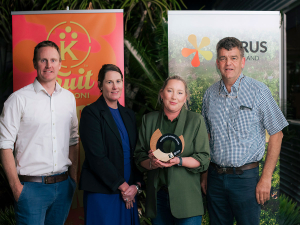
New Zealand's citrus growers were challenged to build their future on the value embedded in their fruit rather than the volume they produce, at Citrus New Zealand's annual gathering in Gisborne on 17 September.
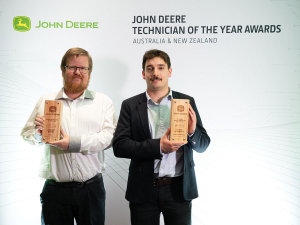
Leading John Deere technicians and apprentices from New Zealand and Australians were recognised at the recent sixth annual JD Technician of the Year Awards, held in Brisbane.
In Dacre, near Invercargill in New Zealand’s South Island, Bruce Dinnington is running a dairy operation unlike any other.
A free online platform aggregating governance vacancies across rural and regional New Zealand has been launched.
Environment Minister Nicola Grigg has announced details of a new rural plastics recycling scheme.
Agricultural drone operators say that a government decision to allow lower-risk drone work without certification won’t lower standards but drive innovation and efficiency.


OPINION: It seems Canterbury processor Synlait is still in the doldrums.
OPINION: Get offside with New Zealand First leader Winston Peters at your own peril.




