
Rural Contractors Urged to Renegotiate Contracts as Fuel Prices Surge
Rural contractors are getting guidance on how to deal with recent rising fuel prices.




 increase font size
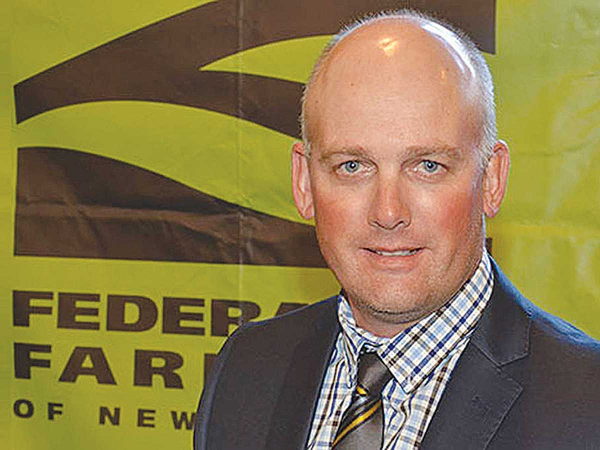 Federated Farmers employment spokesperson Chris Lewis.
OPINION: Crunch time is approaching for the country’s agricultural contractors.
It’s clear that the cultivation and planting of crops could be in jeopardy if some skilled machinery operators aren’t allowed in.
Rural Contractors NZ has just finished surveying its members and has found that 57 contractors urgently need a total of 206 skilled operators.
They’re needed to service 8213 clients. Federated Farmers says many of those would be its members.
Without this annual influx of highly skilled drivers and operators, RCNZ estimates there would be a 32% downturn in activity, worth $65 million.
The effect of that would be the loss of nearly 28 million tonnes of production, with a value in excess of $110 million.
These are whopping numbers. Not allowing these skilled machine operators on the grounds that there are enough locals to do the job is absurd.
Timing is critical: we’re on the cusp of spring activity and we need to get these seasonal workers on flights and into quarantine for two weeks.
Federated Farmers employment spokesperson Chris Lewis wrote to the new Immigration Minister Kris Fafoi and his message was clear.
If managed entry can’t be found for the machinery operators, experienced senior dairy staff and a limited number of other skilled technical staff, there is significant potential for economic, health & safety and animal welfare issues across the primary industries that could otherwise be avoided.
Lewis rightly points out that exemptions have been allowed for workers laying synthetic tracks for horse racing, for the movie industry, and others.
The farming sector shares the Government’s desire to train Kiwis for these roles, and action is happening on that front. The 40 places on the first of six planned agricultural drivers’ courses at SIT’s Telford campus have all been taken.
They should graduate with the ability to safely drive a tractor, but not the combine harvesters and silage machines that can be worth a million dollars or more.
“Newer drivers need to gain experience with tractors on basic tasks in simple country before they can move on to more complex machines. The majority of fatalities in agriculture involve vehicles and the last thing anyone wants is inexperienced vehicle operators put in situations where they end up having an accident.”
The resurgence of Covid-19 last week marks a new twist. What happens over the next few weeks will be crucial.
For rural contractors, the agonising wait continues.
Rural contractors are getting guidance on how to deal with recent rising fuel prices.

Rural contractors will be able to play a role in the revamped agricultural plastic recycling scheme with new regulations due for Cabinet signoff before this year’s election.
Rural Contractors NZ says members are frustrated at having to work through more layers to get visas approved for skilled seasonal machinery operators ahead of the imminent season start. Andrew Olsen comments.
Rural contractors deserve to be listened to on safety issues created by new roading developments which don’t allow motorists to pass slow-moving vehicles, says Associate Agriculture Minister Andrew Hoggard.
When the new National-led government is finally formed there will be a long list waiting for it to action from the primary industries sector.



Federated Farmers says it welcomes Labour's commitment to reviewing the Sharemilking Agreements Act, calling on other major parties to do the same.
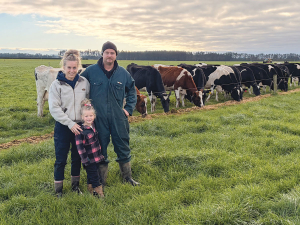
For Canterbury dairy farmers Sian Meijer and Rick Wobben, wearable technology has become one of their most valuable on-farm tools - helping manage 1850 cows across an expansive, high-performing dairy operation while improving efficiency, mating outcomes and day-to-day decision making.
Fonterra has unveiled its annual results for the 2026 financial year, posting $27 billion in revenue and close to $20 billion returned to New Zealand farmer owners and unit holders.
The first major update to the Dairy Cattle Code of Welfare in more than a decade has been released, marking what DairyNZ describes as an important step in ensuring animal welfare standards continue to evolve alongside scientific evidence and on-farm realities.
Ravensdown shareholders have elected Jane Montgomery and Kate Acland to the Ravensdown Board for three-year terms, following a closely contested director election.
Federated Farmers says new legislation replacing the Resource Management Act will cut red tape, unlock investment and help grow New Zealand's export-led economy, after the Planning Bill and Natural Environment Bill passed their third reading in Parliament yesterday.




OPINION: It seems Canterbury processor Synlait is still in the doldrums.
OPINION: Get offside with New Zealand First leader Winston Peters at your own peril.




