
Fonterra CFO Andrew Murray Resigns
Fonterra Co-operative Group chief financial officer Andrew Murray has resigned to take up a role outside the dairy giant.




 increase font size
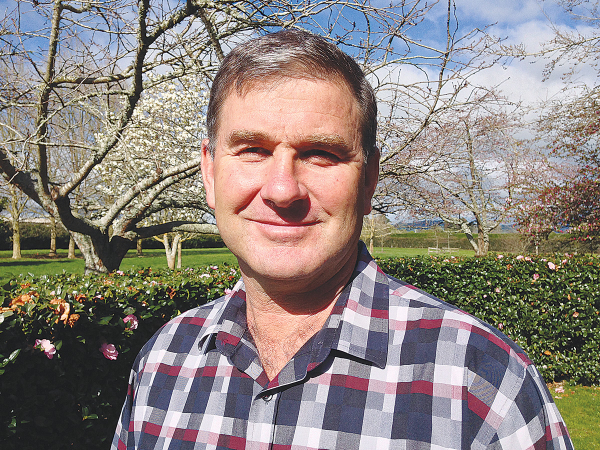 Garry Reymer
OPINION: I believe Fonterra’s governance and representation as well as capital structure are interconnected, and both are important to the survival of the co-op.
Apathy is one of the biggest killers of any organisation and a threat to Fonterra. In fact, it is also probably one of the reasons our councils (local government) perform so badly, but that’s another story.
Fonterra is never going to be able to buy loyalty just by discounting its share price. Loyalty and respect are earned.
If we go back first for a bit of history: it was common to have a dairy co-op in almost every small rural centre. When that was the case, the farmers all knew the board members personally. They saw them at the footy club, church, school or wherever. They all had active discussions and farmers felt involved and connected. As the mergers took place, this was held together by better transport to larger centres and more regional co-ops with ward directors, so someone with a close connection to your region.
Fonterra now has no wards, and 4 of the 11 directors are not even farmers (appointed by the board) and Fonterra want to reduce the size of its board. To make it worse, from a farmer representation point of view, only the definition of ‘farmer director’ is very loose, and if you are a trustee of a farming company you qualify as a farmer director. This can make that director no different from an appointed director. You may never have seen the back end of a cow in your life or have a good connection to the land.
The farmers are feeling more removed all the time. Fonterra has a Co-operative Council which is supposed to bring the representation role back to the land and connect on farm. This, in my opinion, is not working that well and many farmers question the value of the council and call it more of a lapdog than watchdog. I feel now it is just an old dog past its working life.
If we are serious about protecting Fonterra and serious about delivering best-practice governance and serious about farmer representation and engagement, I feel we need to rethink all aspects of our governance representation and capital structure. Rather than look at these things individually as we have been.
A key part of this is the reinvigorate the council. The Co-operative Council needs to be more like the shareholders association or a cornerstone investor. If we can achieve that it should drive farmer engagement.
Here’s how it would work: Many years ago, George Moss came up with a plan to utilise every vote in Fonterra, without taking away any shareholder rights.
Any vote not taken by the farmer shareholder themselves would default to the Co-operative Council.
The council would get this vote for any matter that shareholders get to vote on including the director election.
This would give the council some real power. The results would be many fold:
If Fonterra went down this road it could also de-list and once again be a pure co-op with a nominal share price. This is not a guarantee that Fonterra would be protected from a hostile takeover, but it would address the constant chatter about entry, exit strategies and what is fair value. All of which help divide opinion and the co-op.
Depending on how Fonterra used the new DIRA legislation, the share price value would transfer to the Fonterra supply number. The board needs to come out and tell farmers what a strong co-op is. Now their best answer is "large with the majority of NZ milk". I would argue it is a loyal engaged shareholder base who have pride in their company.
Garry Reymer is a Fonterra shareholder and Federated Farmers Waikato executive.
Fonterra Co-operative Group chief financial officer Andrew Murray has resigned to take up a role outside the dairy giant.

Four candidates have been confirmed for two director positions on Fonterra’s board.
A record farmgate milk price and strong global demand is laying the foundation for continued growth of organic dairy farming in New Zealand.
Waikato milk processor Tatua has again declared a record milk payout to farmer shareholders, leaving other processors in the dust.
Fonterra has unveiled its annual results for the 2026 financial year, posting $27 billion in revenue and close to $20 billion returned to New Zealand farmer owners and unit holders.


National’s pledge to introduce 19 new national standards shows the party is serious about getting Wellington out of farming, Federated Farmers says.
The National Party’s policies to make it easier to grow fresh vegetables, secure reliable water and energy and simplify farm planning are practical changes that will give growers the confidence to invest, according to Horticulture New Zealand (HortNZ).
Fonterra Co-operative Group chief financial officer Andrew Murray has resigned to take up a role outside the dairy giant.
A major move is about to get underway to improve the quality and viability of dairy beef and cattle in NZ.
Veterinarians say changes to the code of welfare for dairy cattle provides a positive foundation for improved cattle welfare across the country.
Today, 15 October, is the International Day of Rural Women, which recognises rural women’s contribution to farming, communities and the environment.

OPINION: It seems Canterbury processor Synlait is still in the doldrums.
OPINION: Get offside with New Zealand First leader Winston Peters at your own peril.




