Government Declares Medium-Scale Adverse Weather Event in Bay of Plenty, Gisborne/Tairāwhiti, and Canterbury
Recent weather events in the Bay of Plenty, Gisborne/Tairawhiti, and Canterbury have been declared a medium-scale adverse event.




 increase font size
Once again dairy farmers have been struck a cruel blow with the weather playing the trump card.
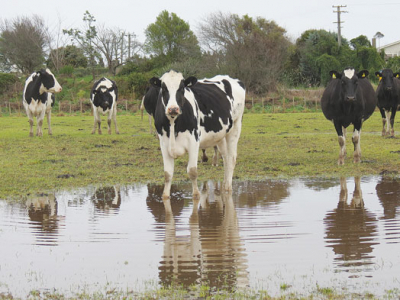
The sight of some North Island farms is heart-breaking as farmers try to cope with an unusually wet spring.
The rain and the resulting mud have come right on calving and mating time and made difficult jobs much harder, not to mention the cost implications.
In some ways it’s not dissimilar to what farmers in Ireland have been experiencing with the heavy rain, though their problems are in the summer. But it seems the rains came in exactly the same months.
Dairy farmers in the North Island had a morale boost with Fonterra lifting the predicted farmgate milk price, but suddenly any benefit from this has been virtually wiped out by the rain.
Farmers were forced to feed out in autumn and winter and now this has extended into spring for many, putting severe pressure on budgets and cashflows.
In many ways farmers’ profitability hinges on the unpredictable and fickle nature of the weather. It is possible to have some control over most other factors, but not the weather. Farmers are now very good at planning for adverse events, but there is a limit to what they can do in a tight environment.
Farmers have heeded the messages from advisors such as DairyNZ and focused on getting the best out of their pastures. They have also reduced stock numbers to ease the pressure on pastures and to retain only the higher producing cows. But a combination of rain and heavy soils has put paid to all of this and it would seem that for many farmers in the North Island the season is out of kilter with last year.
Production is down on many farms and a lot are still not at peak milking. Unless there is a sudden change in the weather, farm incomes will be down and dairy exports may be too.
One wonders how many townies watching the weather on television understand the implications of this for the primary sector and ultimately for them.
The weather is not just about the implications for holidays; for farmers the weather forecast directly affects their livelihood and families. Long adverse weather causes depression and this latest bout is no exception. It’s time for farmers to look after themselves and their mates to get through this difficult time.
Recent weather events in the Bay of Plenty, Gisborne/Tairawhiti, and Canterbury have been declared a medium-scale adverse event.

Agriculture and Forestry Minister Todd McClay is encouraging farmers and growers to stay up to date with weather warnings and seek support should they need it.
With adverse weather set to rain down on the Top of the South, the Bay of Plenty and parts of Northland, Agriculture Minister Todd McClay says farmers, foresters, and growers need to prepare for possible challenges.
Rural Communities Minister Mark Patterson says the present weather conditions remain challenging for farmers.
While it has been a great spring and summer for farmers, soil moisture levels in the Waikato are now plummeting as the dry February starts to bite.

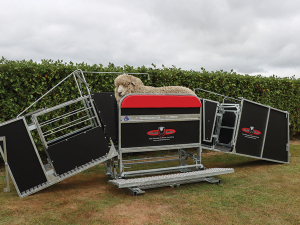
Oamaru-based livestock handling specialist Te Pari has bought Combi Clamp, the New Zealand manufacturer of Combi Clamp manual sheep handlers.
Agriculture Minister Todd McClay has admitted that a scheme bringing workers from Pacific nations to work on orchards has become too hard to navigate but says changes are coming.
A new app designed in New Zealand aims to help sheep, beef and deer farmers capture, analyse and use body condition score data more effectively.
Canterbury farmer Andy Macfarlane has been appointed to the board of AgriZeroNZ, the public-private partnership designed to accelerate the development and deployment of emissions reduction tools for New Zealand farmers.
For over 50 years Mel Ewers has been supporting the apple sector navigate through compliance and quality assurance issues.
The apple sector is enjoying a bumper harvest season.



OPINION: City and regional councils have been put on notice - stop using extreme climate forecasting scenarios that can drive…
OPINION: The Green Party’s rivers and oceans policy may have a new name but nothing else has changed.