
Arla Foods delivers $15b revenue as Co-op turns 25
European dairy giant Arla Foods celebrated its 25th anniversary as a cross-border, farmer-owned co-operative with a solid half-year result.




 increase font size
Arla Foods is implementing an updated human rights policy throughout its organisation to ensure that its global business does not leave a negative footprint in developing countries.
Arla says plans to grow in several African markets in the coming years, but this growth must be achieved in a responsible way that does not bring unintentional consequences for the local farming industry and its related communities.
The co-op plans to increase its current business in sub-Saharan Africa from $130 million annually to $400m by 2017; achieved through sales of powdered milk and UHT milk, which is in high demand among the rapidly growing middle class in and around the big cities.
Today Arla sells products in Nigeria and the Ivory Coast, but Arla’s strategic focus is also directed at markets like Ghana, Senegal, Congo as well as other markets in East Africa.
“More and more African consumers demand types of dairy products that cannot always be produced locally in adequate volumes. We offer good nutrition through our powdered milk products, and simultaneously we want to ensure that our business does not have any negative effects on local farmers,” says executive vice-president Finn Hansen, who is head of Arla’s international business group.
For the past months Arla has had a constructive dialogue with the NGO, Action Aid, which has confirmed the need to launch these initiatives.
“Arla is taking these active steps because it is important to us as a cooperative farmer-owned dairy company to be able to document to ourselves, our customers and consumers that we are doing things properly, even in this area as well. We have received advice from different NGO’s, including Action Aid, who have helped us focus on these things,” says Hansen.
European dairy giant Arla Foods celebrated its 25th anniversary as a cross-border, farmer-owned co-operative with a solid half-year result.
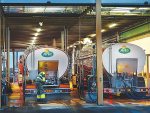
The creation of Europe's largest dairy co-operative should be complete by early 2026.
OPINION: One of the world’s largest dairy co-operatives has come under fire for embracing a new methane-reducing additive fed to cows. The claims, made on social media, says the use of a feed additive by Arla Foods farmers could ‘contaminate’ milk and allegedly cause cancer.
European dairy co-operative Arla Foods is forecasting a total revenue of nearly $25 billion this year.
Danish dairy co-operative Arla Foods is accelerating sustainability efforts on farm to help customers achieve their reduction targets for scope 3 emissions targets.


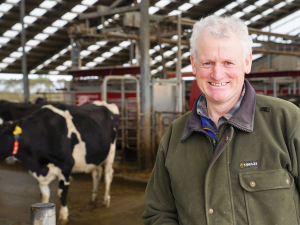
In Dacre, near Invercargill in New Zealand’s South Island, Bruce Dinnington is running a dairy operation unlike any other.

A free online platform aggregating governance vacancies across rural and regional New Zealand has been launched.
Environment Minister Nicola Grigg has announced details of a new rural plastics recycling scheme.
Agricultural drone operators say that a government decision to allow lower-risk drone work without certification won’t lower standards but drive innovation and efficiency.
OPINION: Warning bells are ringing in the arable sector.
Farmgate lamb prices are down by 8%, beef cattle by 4.5% and farm expenditure up by 4.2%.



OPINION: It seems Canterbury processor Synlait is still in the doldrums.
OPINION: Get offside with New Zealand First leader Winston Peters at your own peril.




