Fonterra FY26 Results: $9.69 Milk Price, $3.4bn Profit
Fonterra has unveiled its annual results for the 2026 financial year, posting $27 billion in revenue and close to $20 billion returned to New Zealand farmer owners and unit holders.




 increase font size
“SUSTAINABILITY’ IS the dairy industry’s buzzword for 2013.
It’s great to see the Feds, Fonterra and DairyNZ each acknowledging that sustainability is an important issue and developing strategies appropriate to their organisations. These three, together with other dairy companies and the Dairy Women’s Network, will launch a new Strategy for Sustainable Dairy Farming in a few months, which they say will guide the investment and activities of the industry.
These priorities, reviews and strategies are to be welcomed – as long as they ultimately benefit farmers. My question is what will the farmers’ strategy have to be?
Will they have to go cap-in-hand to the bank manager for a larger overdraft to achieve the sorts of sustainability these organisations have in mind? Just what extra research will be needed, and can most of that research be done in a real on-farm situation?
One of the problems is that sustainability means different things to different people. To Fonterra it means, amongst other things, more milk and consistent supply. To DairyNZ it might mean higher and consistent funding. To many farmers it probably involves higher and more consistent production.
Given these different expectations and interpretations it isn’t surprising there is confusion about how farmers are actually going to achieve sustainability.
For some it may mean a high stocking rate with feed supplies propped up by maize, PKE and lots of nitrogen. For others – in sensitive catchments – it probably means optimising Olsen P, low solubility phosphate, limited N and tight management of effluent treatment and disposal.
The wise ones will be asking: what is the most profitable approach?
There is a real danger that the true intent of words like sustainability and profit will be lost in the jargon and different interpretations. There are wide variations in what people understand by them and how they measure them.
This is significant because, for farmers, sustainability and profit should be intimately linked. In fact, I am convinced sustainable options have to be measured in profit terms and then managed to achieve maximum returns to farmers. Why make any change unless it is going to be profitable?
The key to all this is how you measure profit. The best I have found – in over 50 years of searching – is: cents per kilo of dry matter eaten daily by stock. This may sound complicated, but it is actually straightforward and certainly the most accurate way of comparing management options.
A simple example: you might be wondering whether to put on more stock and therefore using more fertiliser and/or supplementary feeds, or less stock and doing them better with existing resources.
Using your own farm data in new, innovative on-line software you can determine which option will be the more profitable. Not just today, but also next week, next month, next year, and forecast for several years after that. The more sustainable option becomes obvious when profit is the measure.
I hope the new Strategy for Sustainable Dairy Farming takes this measure of farm profitability into account, rather than just tinkering with generic industry figures or indirect estimates like EFS.
• Peter Floyd is the managing director of Cogent Farming Business Systems Ltd www.profitfocusedfarming.com Tel. 0800433376 or 0275968796
Fonterra has unveiled its annual results for the 2026 financial year, posting $27 billion in revenue and close to $20 billion returned to New Zealand farmer owners and unit holders.

Fonterra Co-operative Group has confirmed the independently assessed candidates standing for election to its board in 2026.
Fonterra has revised its Farmgate Milk Price forecast for the 2026/27 season, lifting the midpoint and narrowing the range on the back of improving global dairy commodity prices.
Outgoing Fonterra Co-operative Council chair John Stevenson says that it has been a privilege to represent the co-op's farmer shareholders.
Environment Minister Nicola Grigg has announced details of a new rural plastics recycling scheme.


Federated Farmers says it welcomes Labour's commitment to reviewing the Sharemilking Agreements Act, calling on other major parties to do the same.
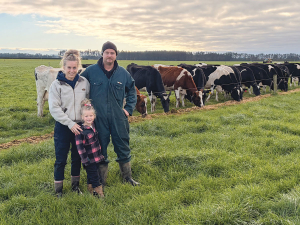
For Canterbury dairy farmers Sian Meijer and Rick Wobben, wearable technology has become one of their most valuable on-farm tools - helping manage 1850 cows across an expansive, high-performing dairy operation while improving efficiency, mating outcomes and day-to-day decision making.
Fonterra has unveiled its annual results for the 2026 financial year, posting $27 billion in revenue and close to $20 billion returned to New Zealand farmer owners and unit holders.
The first major update to the Dairy Cattle Code of Welfare in more than a decade has been released, marking what DairyNZ describes as an important step in ensuring animal welfare standards continue to evolve alongside scientific evidence and on-farm realities.
Ravensdown shareholders have elected Jane Montgomery and Kate Acland to the Ravensdown Board for three-year terms, following a closely contested director election.
Federated Farmers says new legislation replacing the Resource Management Act will cut red tape, unlock investment and help grow New Zealand's export-led economy, after the Planning Bill and Natural Environment Bill passed their third reading in Parliament yesterday.




OPINION: The same mainstream media muppets that brought you Jacindamania in 2017 have been flat out pimping for the Opportunities…
OPINION: Your old mate reckons the atrocious way farmers in the UK are treated by their lords and masters in…




