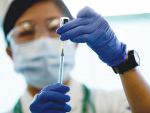
Free Flu and Covid-19 boosters available
District Health Boards across New Zealand are kicking off a push to encourage people to get their flu jabs ahead of what is expected to be a tough winter.




 increase font size

YOU'LL NEVER catch the cats so vaccination is the best way to prevent foetal and lamb losses to toxoplasmosis.
"Usually the young cats are the problem, not the older ones," says MSD Animal Health veterinarian, Jo Chisnall, a speaker at a recent Beef and Lamb New Zealand field day in Taranaki. "They get infected from 6 to 12 months and shed the disease in their faeces for one-two weeks, then become immune themselves."
One cat can spread the disease widely and rapidly; estimates are one gram of cat faeces can infect up to 5000 ewes.
"Unfortunately, it's very hard to control all the cats on your property. There are a lot more feral cats on farms than people realise." So it's important farmers vaccinate livestock. Getting rid of the family pet will not solve the problem.
Serological testing by MSD over the last five to 10 years, checking exposure to toxoplasmosis, shows it's present on all farms.
The time to deal with it is as mating time nears. Mixed-age ewes have generally had more exposure than two-tooths and hoggets, so these younger animals should be considered for vaccination.
"Focus on your first-time lambers, the two tooths and hoggets, and vaccinate them at least four weeks before they go to the ram. The vaccination for toxo is about $2 per animal and it is a one-off-for-life injection."
In unprotected stock toxoplasmosis causes significant abortion losses and less obvious embryonic loss or dry ewes, and birth of weak, non-viable lambs. The cause is a protozoan parasite picked up by cats from rodents and birds, then passed to sheep through cat faeces on pasture or hay.
The vaccine is unusual in that it's 'live' and requires special handling. "It has just a ten-day shelf life so once it's been purchased it should be used as quickly as possible."
Blood testing a sample of ewes in the flock should give a good idea of the status of the flock in terms of toxoplasmosis, Chisnall says.
District Health Boards across New Zealand are kicking off a push to encourage people to get their flu jabs ahead of what is expected to be a tough winter.

The dairy industry is facing the prospect of losing some highly skilled staff because they are not fully vaccinated.
Get vaccinated - that's the message from the National Secretary of the Meat Workers Union to his members.
Mandatory vaccination against Covid-19 for meat sector workers is still up in the air.
OPINION: Rural NZ is again getting the rough end of the stick when it comes to services - this time in relation to Covid-19 vaccinations.



Ravensdown shareholders have elected Jane Montgomery and Kate Acland to the Ravensdown Board for three-year terms, following a closely contested director election.

Federated Farmers says new legislation replacing the Resource Management Act will cut red tape, unlock investment and help grow New Zealand's export-led economy, after the Planning Bill and Natural Environment Bill passed their third reading in Parliament yesterday.
Leading figures from the major political parties will be questioned on their primary sector policies at the Rural Issues Debate at Mystery Creek Events Centre, Hamilton, on 30 September.
OPINION: Have a plan in place now!
Beef + Lamb New Zealand (B+LNZ) says it welcomes the passage of the Natural Environment Bill and Planning Bill, calling the bills a positive step for sheep and beef farmers.
A spate of southerly winds bringing cold temperatures has presented challenges for Taranaki dairy farmers.





OPINION: The same mainstream media muppets that brought you Jacindamania in 2017 have been flat out pimping for the Opportunities…
OPINION: Your old mate reckons the atrocious way farmers in the UK are treated by their lords and masters in…




