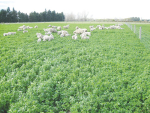
B+LNZ Urges Farmers to Graze Lucerne Hard Before Winter Weed Control
Beef + Lamb New Zealand is reminding farmers with lucerne stands to graze them hard over the next few weeks in preparation for a winter weed control programme.




 increase font size

DON’T LET ample pasture now lull you into a false sense of security with winter just round the corner, says farm management systems firm Farmax.
“Some farmers could tend to be complacent when it comes to making decisions for winter feeding because they have a surplus to work with,” says Farmax general manager Gavin McEwen.
“Based on the historical pasture cover information we have in Farmax, we want to caution farmers against this tendency as there are plenty of decisions to be made heading into winter even if covers are higher than normal.”
Farmax’s database holds historic pasture cover data, pasture growth rates, stock performance prices and trends which allows modelling, scenario analysis and planning.
As of end of March this year, average pasture cover on North Island sheep and beef farms was 2,300 – 2,700kgDM/ha.
“On average at that time of year it’s well below 2000.”
Last week McEwen told Rural News covers now “probably haven’t changed too much” from that March figure.
“We’ve continued to have a very good growing season through the autumn in most regions.”
Waikato-based consultant, colleague, Brendan Brier, stresses the situation is different region to region which means winter pasture management decisions must be tuned accordingly.
“What’s important to remember... is that not all pasture covers are the same. For example, take a Northern Waikato farm that had a well controlled pasture cover, say less than 1900 kgDM/ha at Christmas time, and has since accumulated cover to the 2,300-2,700 levels. This farm’s pasture will be a relatively fresh sward with moderate metabolisable energy levels and low levels of dead matter.
“Alternatively, a farm in Hawkes Bay will be in a completely different scenario with pastures that were high at Christmas and have continued to stay at high levels until now. These pastures will have a high level of dead/stem material and lower metabolisable energy levels.”
The difference in quality can make a marked difference in an animal’s ability to convert dry matter to protein, even though quantity of feed offered may be similar.
Brier says the challenge in both situations is managing covers appropriately to convert the extra feed effectively and efficiently into increased profit.
“The simplest option would be to do nothing and accept reasonable results given the impact of heavier ewes at mating. But if you have accurate knowledge of your current pasture cover and can model scenarios for winter, there is opportunity to push the envelope and create higher profits.”
A planning tool like Farmax helps hit key pasture cover levels at target times to maintain excellent feed quality, he adds.
“For instance, in the example above, Farmax estimates that the energy content is 8.5 MJME/kgDM on the Hawkes Bay farm compared to 9.1 MJME/kgDM on the Waikato farm. That’s a 7% difference.”
Also, the better quality pasture in the Waikato situation means net autumn growth will be higher.
Brier suggests six management priorities for the coming months:
Ensure quality feed for ewes over tupping;
Getting timing right when weaning cows;
Timing of nitrogen fertiliser use;
Use of winter supplements;
Winter grazing options;
Lifting spring stocking rates to prevent a repeat of this season.
McEwan says to maximise profit from pasture, “you need to analyse each of these six factors to decide what needs to be done to positively affect your bottom line.”
Beef + Lamb New Zealand is reminding farmers with lucerne stands to graze them hard over the next few weeks in preparation for a winter weed control programme.
Southland farmers are being encouraged to get ahead of the winter grazing season by attending a practical field day in Pukerau next week.
A new publication has been launched that offers a comprehensive and up-to-date resource on commercially available grazing pasture species in New Zealand.
New Zealand farmers know that pastoral fortunes can shift rapidly once summer’s extreme dryness gives way to cooler, wetter autumn conditions.
OPINION: Few things are more stressful for dairy farmers than running out of feed when cows need it most.



National’s pledge to introduce 19 new national standards shows the party is serious about getting Wellington out of farming, Federated Farmers says.
The National Party’s policies to make it easier to grow fresh vegetables, secure reliable water and energy and simplify farm planning are practical changes that will give growers the confidence to invest, according to Horticulture New Zealand (HortNZ).
Fonterra Co-operative Group chief financial officer Andrew Murray has resigned to take up a role outside the dairy giant.
A major move is about to get underway to improve the quality and viability of dairy beef and cattle in NZ.
Veterinarians say changes to the code of welfare for dairy cattle provides a positive foundation for improved cattle welfare across the country.
Today, 15 October, is the International Day of Rural Women, which recognises rural women’s contribution to farming, communities and the environment.




OPINION: The same mainstream media muppets that brought you Jacindamania in 2017 have been flat out pimping for the Opportunities…
OPINION: Your old mate reckons the atrocious way farmers in the UK are treated by their lords and masters in…




