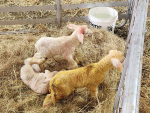
Beef + Lamb NZ's Lambing Kit Checklist for a Tough Season
With lambing underway in many regions, Beef + Lamb New Zealand is encouraging farmers to put together a wellequipped lambing kit to help minimise lamb losses, particularly in bad weather.




 increase font size

SELECTION OF breeding stock could be fine-tuned with fat and muscle scans as early as post weaning, new Australian research shows.
“There is a very strong correlation between young and older animals for fat, and this is the same for muscle and weight,” says University of Adelaide researcher Sam Walkom.
“For producers, this means that selection for improved condition score in the young breeding ewe can be useful.”
Walkom’s work was supported by Australia’s Sheep CRC and investigated the potential to breed lines better able to maintain condition in tough times through adaption of fat reserves.
He found superior genetics could indeed be an “insurance policy”, especially when managing pregnant ewes.
“Having sheep with superior genetics for fat storage gives producers more flexibility in their management, for example being able to delay supplementary feeding because individuals will have more condition when entering tough times,” he suggests.
Management of feed is still paramount to maintaining condition of ewes, but Walkom says genetics may be used to provide an “edge” in many breeds and environments.
“Across all breeds and sites our results were very similar with differences in the genetics for weight, fat, muscle and condition remaining constant; meaning that ewes will maintain their genetic superiority for body composition traits during tough times providing the potential to hold off supplementary feeding for longer.
“This is gives producers a better chance of getting more lambs on the ground in good condition and maintaining or improving their weaning rates.”
However, the benefit of breeding sheep for increased fatness may be of limited value in areas that have high certainty of good feed conditions, he adds.
“In production systems where there is reliable pasture production, breeding programs can focus on traits that will have more impact on profit such as growth and reproductive performance – it is therefore important that every producer should be selecting for fat that matches their particular management and production systems.”
With lambing underway in many regions, Beef + Lamb New Zealand is encouraging farmers to put together a wellequipped lambing kit to help minimise lamb losses, particularly in bad weather.
Will a stronger, more coordinated voice help rebuild confidence and improve returns in the wool sector?
The vineyards at Pyramid Farm in Marlborough’s Avon Valley have never been run of the mill, with plantings that follow the natural contours of the land, 250 metres above sea level.
Sheep and cattle numbers continue to decline, and this year's drought hasn't helped, according to Beef + Lamb New Zealand (B+LNZ).
High quality feed, reduced stocking rates and shelter will all help enhance triplet lamb survival and ultimately benefit the bottom line.


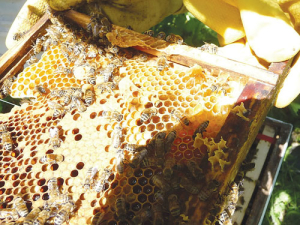
New Plymouth-based Manuka honey exporter Egmont Honey has completed its acquisition of Taihape beekeeping business Tweeddale's Honey, with settlement finalised on Friday, 18 September.

Westpac NZ is calling on farmers and growers to start preparing now for the possibility of a dry summer, as likely El Niño conditions raise the risk of drought across parts of the country.
Fonterra Co-operative Group has confirmed the independently assessed candidates standing for election to its board in 2026.
Fonterra has revised its Farmgate Milk Price forecast for the 2026/27 season, lifting the midpoint and narrowing the range on the back of improving global dairy commodity prices.
New Zealand's citrus growers were challenged to build their future on the value embedded in their fruit rather than the volume they produce, at Citrus New Zealand's annual gathering in Gisborne on 17 September.
Leading John Deere technicians and apprentices from New Zealand and Australians were recognised at the recent sixth annual JD Technician of the Year Awards, held in Brisbane.




OPINION: The same mainstream media muppets that brought you Jacindamania in 2017 have been flat out pimping for the Opportunities…
OPINION: Your old mate reckons the atrocious way farmers in the UK are treated by their lords and masters in…




