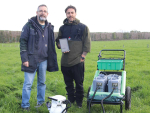
Massey Uses Portable Analyser to Measure Pasture Soil GHGs
Researchers at Massey University are using a special piece of scientific equipment to improve the measurement of greenhouse gas emissions from pasture soils.




 increase font size
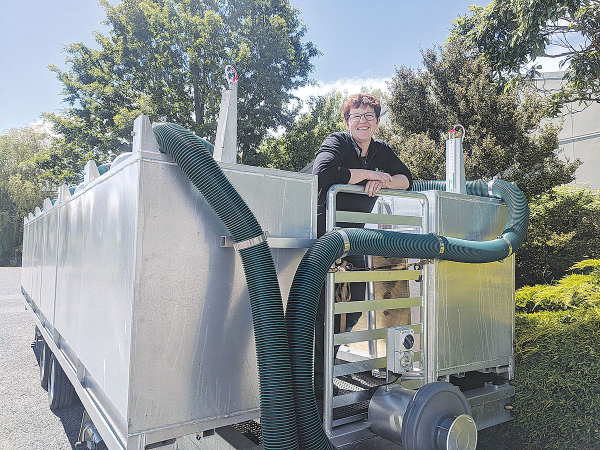 AgResearch senior scientist Suzanne Rowe has been heavily involved in the project breeding low methane-producing sheep.
AgResearch scientists' work to successfully breed low methane emitting sheep has the potential to help all NZ livestock farmers lower their carbon footprint.
The ground-breaking research took out the 2021 Supreme Award at the Science New Zealand Awards.
Backed by the industry through the Pastoral Greenhouse Gas Research Consortium (PGgRc) and the Government - via the New Zealand Agricultural Greenhouse Gas Research Centre (NZAGRC) - the AgResearch team spent over a decade working on the science.
They were able to identify genetic differences which influences how much methane an individual sheep produces. Methane is a relatively short-lived but potent greenhouse gas.
The AgResearch project has shown that after three generations the lowest emitting sheep produce close to 13% less methane than the highest emitters - per kilogram of feed eaten.
While the actual methane reduction on farm is expected to be less, when sheep are also bred for other desirable genetic traits, it is still expected to be significant. The lower emitting sheep were also found to be otherwise healthy and productive when it comes to their meat and wool production.
"Research like this is critical for the agriculture sector, which produces almost half of New Zealand's greenhouse gas emissions and needs practical tools to help achieve a reduction target of 24-47 percent less methane by 2050," says AgResearch senior scientist Suzanne Rowe.
Judges a the Science New Zealand Awards referenced the major significance of AgResearch's work within New Zealand and the "tangible contribution to the global issue of our time".
Rowe says the research is being shared with the sheep industry in New Zealand, with researchers globally and is also assisting research into breeding lower methane emitting cattle.
The world-first AgResearch achievement also featured engineering innovation in the form of specially designed portable accumulation chambers that can be taken on to farms to measure emissions of individual sheep.
Rowe says it has taken well over a decade to reach this point and it has been a long journey by a dedicated team of scientists.
"We have worked side by side with sheep breeders and farmers to achieve a practical outcome that can be applied on farms," she says. "It is a fantastic feeling to know that we have achieved something that will make a difference for the livestock industry, for New Zealand, and the world when it comes to climate change."
Rowe adds that is was great to have support from funders in PGgRc and NZAGRC, and to work closely with the sheep industry through Beef+Lamb Genetics to share these gains with sheep breeders and farmers.
"We think that when this low methane breeding trait is incorporated into New Zealand's entire sheep flock, the methane reduction could be in the area of 0.5 to 1% to annually, which will be significant as it accumulates over time."
PGgRc general manager Mark Aspin described the research as "trail-blazing", which provided NZ sheep farmers with the opportunity to lower methane in a permanent and cumulative manner.
"It has opened up the opportunity for all New Zealand livestock industries to follow suit," he adds.
"This is now gaining momentum as the focus shifts to extending the genetic selection across the national sheep flock and to cattle and deer."
Researchers at Massey University are using a special piece of scientific equipment to improve the measurement of greenhouse gas emissions from pasture soils.

Last night saw the winners of the 2026 Beef + Lamb New Zealand (B+LNZ) Awards named at a gala dinner at Te Pae Christchurch Convention Centre.
OPINION: Among the many satisfying jobs on the farm is shifting our Angus heifers onto fresh pasture. They love it. Tails up, they gallop around for a minute, then it’s heads down — those long, raspy tongues pulling in mouthfuls of lush green feed.
The Government's revised 2050 biogenic methane target range of 14-24% by 2050 is being welcomed by dairy farmers.
Opening a new $3 million methane research barn in Waikato this month, Agriculture Minister Todd McClay called on the dairy sector to “go as fast as you can and prove the concepts”.


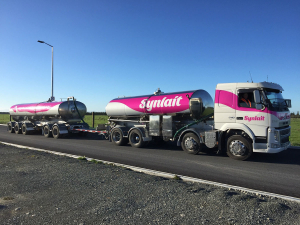
Synlait has swung to second-half profit as operations stabilise, but the dairy processor still posted a $75.4m annual loss.

LIC shareholders have elected a new North Island representative to the co-operative's Board, along with five representatives to its Shareholder Reference Group (SRG), following the company's Annual Meeting held in Invercargill.
Farmers across parts of Southland and South Otago are continuing to deal with difficult conditions after a prolonged run of wet weather, with pressure building around feed supply, stock management, pasture damage, farm infrastructure and everyday workloads.
Federated Farmers says it welcomes Labour's commitment to reviewing the Sharemilking Agreements Act, calling on other major parties to do the same.
For Canterbury dairy farmers Sian Meijer and Rick Wobben, wearable technology has become one of their most valuable on-farm tools - helping manage 1850 cows across an expansive, high-performing dairy operation while improving efficiency, mating outcomes and day-to-day decision making.
Fonterra has unveiled its annual results for the 2026 financial year, posting $27 billion in revenue and close to $20 billion returned to New Zealand farmer owners and unit holders.




OPINION: The same mainstream media muppets that brought you Jacindamania in 2017 have been flat out pimping for the Opportunities…
OPINION: Your old mate reckons the atrocious way farmers in the UK are treated by their lords and masters in…




