
Labour Vows to Change Tact on How to Handle Freshwater Rules
A Labour-led Government won’t be bringing back the controversial freshwater rules of 2020.




 increase font size
 Agriculture Minister Todd McClay.
The Government is pushing ahead with its election commitment to take agriculture out of the New Zealand Emissions Trading Scheme (ETS).
It is also establishing a new Pastoral Sector Group to constructively tackle biogenic methane.
The announcement on the eve of the National Fieldays will please farmers.
Agriculture Minister Todd McClay says New Zealand farmers are some of the world’s most carbon-efficient food producers.
“The Government is committed to meeting our climate change obligations without shutting down Kiwi farms. It doesn’t make sense to send jobs and production overseas, while less carbon-efficient countries produce the food the world needs.
“That is why we are focused on finding practical tools and technology for our farmers to reduce their emissions in a way that won’t reduce production or exports.’
The Government will introduce legislation later this month amending the Climate Change Response Act 2002 (the CCRA) to ensure agriculture does not enter the NZ ETS.
The amendment to the CCRA will remove agriculture, animal processors and fertiliser companies from the ETS before 1 January 2025. For these organisations, their emissions associated with non-farm activities will continue to be covered by the NZ ETS.
Meanwhile an industry partnership to reduce agricultural greenhouse gas emissions and build the sector's resilience to climate change- He Waka Eke Noa is to be disbanded.
McClay says it is now clear that Labour’s He Waka Eke Noa process has failed and is no longer tenable.
“The primary sector worked collaboratively for years, however Labour rejected many of its proposals compromising consensus, relationships, and confidence across rural New Zealand. To restore confidence, Cabinet has decided to formally disestablish He Waka Eke Noa from today.
“It’s time for a fresh start on how we engage with farmers and processors to work on biogenic methane.”
To do this, the Government will engage directly with levy bodies and sector organisations that represent the pastoral sector - DairyNZ, Beef + Lamb New Zealand, Deer Industry New Zealand, Federated Farmers, Dairy Companies Association of New Zealand, and the Meat Industry Association. Terms of reference for the Pasture Sector Group will be developed and agreed with the group,” McClay says.
A Labour-led Government won’t be bringing back the controversial freshwater rules of 2020.

It was billed as a chance for all the political parties to woo the rural vote, but question marks hang over just how effective this was.
Red meat farmers are welcoming Labour’s plan to review the Emissions Trading Scheme and not to campaign on pricing agricultural emissions.
The New Zealand Institute of Forestry (NZIF) says unnecessary changes to New Zealand’s Emissions Trading Scheme (NZ ETS) will seriously erode investor confidence and result in significant reductions in forest planting rates.
For the first time in a quarter of a century, Federated Farmers has something positive to say about the Labour Party’s climate change policy leading into a general election.


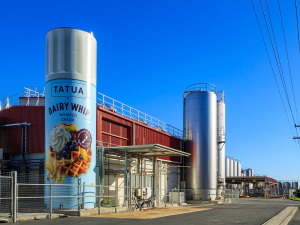
Waikato milk processor Tatua has again declared a record milk payout to farmer shareholders, leaving other processors in the dust.

A Labour-led Government won’t be bringing back the controversial freshwater rules of 2020.
National’s much-touted free trade deal with India featured in the Rural Issues Debate at Mystery Creek, Hamilton on Wednesday night.
New Zealand's 2026-27 freshwater fishing season has opened, with anglers encouraged to head to rivers and lakes over the coming days as conditions look favourable across much of the country.
Central Otago District Council (CODC) has voted against a plan to spread treated sewage sludge from Cromwell and Alexandra on farmland near Lauder, a decision Federated Farmers says reflects strong opposition from rural residents.
Pāmu has released its FY26 Integrated Annual Report, reporting a Net Operating Profit of $113 million, more than double the $49 million recorded in FY25.





OPINION: The same mainstream media muppets that brought you Jacindamania in 2017 have been flat out pimping for the Opportunities…
OPINION: Your old mate reckons the atrocious way farmers in the UK are treated by their lords and masters in…