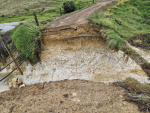
Award-winning Māori farm severely damaged by isolated Northland thunderstorm
One of the country's top Māori farms has been badly damaged by a severe isolated thunderstorm which hit parts of the east coast of Northland last week.




 increase font size
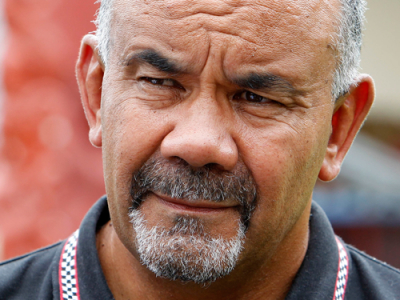 Te Ururoa Flavell.
The three sheep and beef finalists for this year’s Ahuwhenua Trophy competition have been named.
They are Omapere Rangihamama Trust (Kaikohe), RA & JG King Partnership, Puketawa Station (Eketahuna) and Pukepoto Farm Trust (Ongarue).
Māori Development Minister Te Ururoa Flavell and Primary Industries Minister Nathan Guy made the announcement at a parliamentary event yesterday.
"These beef and sheep farming stations are shining examples of the commitment Māori farmers have to sustainably developing their land for future generations. I’m proud to acknowledge and celebrate the key role Māori play in New Zealand’s primary industries,” says Guy.
“The asset base of the Māori economy is worth over $42 billion, most of which is strongly focussed on the primary industries. Māori collectively own 40% of forestry land, 38% of fishing quota, and 30% of lamb production, to name just a few examples.
“Right across the economy as a whole, Māori are successful players and many of their companies and entities are amongst the top performing commercial operations in New Zealand.”
All three finalists are inspiring models of Māori farming innovation, says Flavell.
“They have all demonstrated a commitment to sustainability and a striking balance between people, planet and profit.
“Our progress and achievements in the farming, forestry, fishing and tourism sectors alone deserve illumination as an inspiration to Māori everywhere and are a demonstration of our valuable contribution to the nation’s growth.”
The Ahuwhenua Trophy competition is now in its 84th year and celebrates the pursuit of innovation and new approaches by Māori farmers. The competition alternates each year between sheep and beef farming and dairy.
“All finalists embrace a Māori world view that requires a balance between the social, cultural, environmental and economic factors which are key to unlocking their power,” says Flavell.
“They are part of a continuous creed of Māori farms modelling the belief that the immense potential of our country’s primary sector can be harnessed and contribute more substantially to the increased prosperity of all New Zealanders.”
Flavell encouraged people to get out to the farms field days in April and May, cautioning that they should be prepared to be impressed.
A perennial on the Māori calendar, he also encouraged people to join the Ahuwhenua Trophy celebration evening in Whangārei on 26 May 2017 to share in the success of the Trophy winner.
The three finalists;
• Puketawa Station is a sheep and beef breeding unit located at Tīraumea about 45 minutes east of Pahiatua in the northern Wairarapa. The property consists of 1108ha (900 effective) and is mainly medium to steep hill country with some rolling contours. Breeding stock on the farm comprise 3177 Romney breeding ewes plus 850 ewe replacements and 148 stud ewes. The cattle side comprises 144 mixed mainly Hereford cows plus replacements.
• Ōmāpere Rangihāmama Trust is situated just 2km northwest of the Far North township of Kaikohe and is regarded by its shareholders as a taonga tuku iho, gifted to them over time by their ancestors. Of the Trust’s 1,997ha total land area, 1,253ha is devoted to the sheep and beef operation, of which 902ha is effective. In the past the farm ran a combination of sheep and beef. The move away from sheep to beef has largely been driven by better returns for bull beef and poorer returns for wool, sheep and lamb.
• Pukepoto Farm Trust is a small farm trust, with just over a thousand owners, is situated at the tiny settlement of Ōngarue about 20 minutes north of the central North Island town of Taumarunui. The property consists of 1400ha of which just over 1000ha are farmed. About 100ha are covenanted under the Ngā Whenua Rāhui scheme. There is 62ha in plantation pine and the remainder of the unfarmed land is scrub; much of which is being retired to prevent erosion. The Trust has worked closely with Horizons Regional Council in this regard. Currently the property winters a flock of 6000 Romney ewes and a herd of 300 mainly Angus cattle.
One of the country's top Māori farms has been badly damaged by a severe isolated thunderstorm which hit parts of the east coast of Northland last week.

Coby Warmington, 29, a farm manager at Waima Topu Beef near Hokianga was named at the winner of the 2025 Ahuwhenua Young Maori Farmer Award for sheep and beef.
Recently two of New Zealand's top Maori sheep and beef farms held field days as part of the prestigious Ahuwhenua Trophy competition. The two are: Whangaroa Ngaiotonga Trust, northeast of Whangarei, and the proprietors of Tawapata Onenui farm on Mahia Peninsula in southern Hawke's Bay. Reporter Peter Burke attended both field days.
Farms from Northland and northern Hawke's Bay are the finalists in this year's Ahuwhenua Trophy competition for the top Māori sheep and beef farms.
The search is on to find the top Māori sheep and beef farm with entries now open for the 2025 Ahuwhenua Trophy competition.


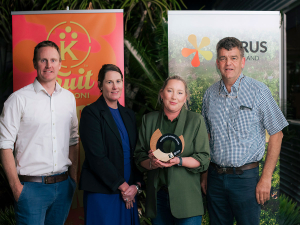
New Zealand's citrus growers were challenged to build their future on the value embedded in their fruit rather than the volume they produce, at Citrus New Zealand's annual gathering in Gisborne on 17 September.
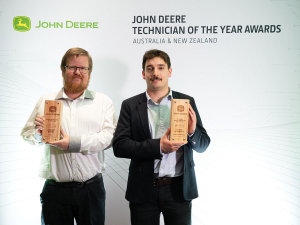
Leading John Deere technicians and apprentices from New Zealand and Australians were recognised at the recent sixth annual JD Technician of the Year Awards, held in Brisbane.
In Dacre, near Invercargill in New Zealand’s South Island, Bruce Dinnington is running a dairy operation unlike any other.
A free online platform aggregating governance vacancies across rural and regional New Zealand has been launched.
Environment Minister Nicola Grigg has announced details of a new rural plastics recycling scheme.
Agricultural drone operators say that a government decision to allow lower-risk drone work without certification won’t lower standards but drive innovation and efficiency.





OPINION: The same mainstream media muppets that brought you Jacindamania in 2017 have been flat out pimping for the Opportunities…
OPINION: Your old mate reckons the atrocious way farmers in the UK are treated by their lords and masters in…




