
Science system shakeup ‘to maximise investment value’
Reaction to the Government’s major overhaul of the country’s seven crown research organisations has so far been largely positive.




 increase font size
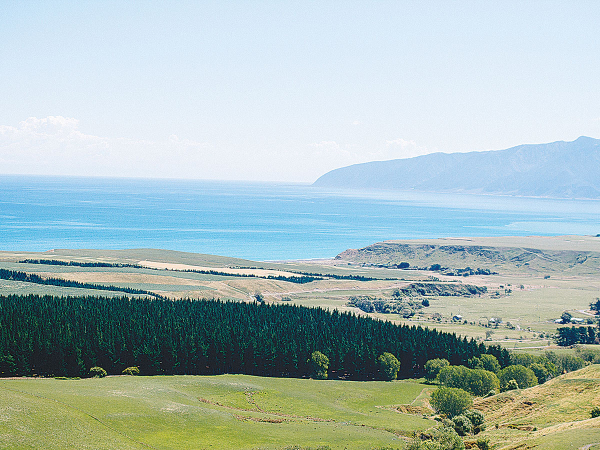 Plant & Food Research is beginning a feasibility study for sustainable almond growing in Hawke's Bay.
Another ‘nutty’ idea could lead to a brand-new almond industry in New Zealand.
Plant & Food Research is embarking on a feasibility study to see if almonds can be grown sustainably in Hawke’s Bay. The project has backing from central and local government, alongside Picot Productions – Kiwi producers of the Pic’s brand nut spreads.
“We’re already supporting peanut growing trials in Northland – now it’s almonds’ turn,” says Steve Penno, Ministry for Primary Industries’ (MPI) director of investment programmes.
“The first step is to see whether we can successfully produce almonds with a low carbon footprint at scale and for a competitive price in New Zealand.”
MPI is investing $67,000 through the Sustainable Food and Fibre Futures fund (SFF Futures) in the $100,000 project.
Plant & Food Research business manager Declan Graham says the goal is to provide diversification opportunities for local dry stock farmers rather than to replicate the large-scale almond monocrop system of California.
“Ideally farmers will be able to set aside some of their pastoral land for growing almonds, as a way of diversifying and deriving better value from their land.”
AgFirst will undertake a financial analysis as part of the project. They will consider the economics of setting up a profitable almond orchard system – factoring in market prices, climatic volatility, and environmental sustainability challenges.
“We need to understand whether Kiwis would prefer to buy New Zealand almonds and whether growers would be able to get the returns they need,” Graham says.
If the feasibility study shows almond growing has promise, the next step would be growing trials.
“We’d look at experimenting with the Future Orchard Planting Systems (FOPS) approach, which optimises the use of sunlight for higher yields and quality,” Graham says.
“We’d also investigate if we can grow almonds using less water compared to commercial practices overseas, as well as an integrated pest management approach.”
He says almonds were first introduced to New Zealand by Chinese goldminers during the Otago goldrush in the 1860s.
“We’ve already done some blue skie work to understand the almonds growing in the hills in Otago,” Graham says.
“We’re also analysing the almond crop grown by a Hawke’s Bay farmer.
“Our research to date indicates that Hawke’s Bay’s climate is ideal for almonds. There’s not enough chilling in Northland and the Otago cultivars can be damaged by late frosts.
“Given almond flower early, they won’t interfere with other crops in the Hawke’s Bay region.”
Central Hawke’s Bay District Council mayor Alex Walker says the aims of the project fit well with the Council’s economic development strategy.
“We grow great food in Central Hawke’s Bay and it’s initiatives like this that will continue to inspire our vision of a thriving future and a prosperous economy. All our farmers are looking for ways to minimise their nutrient, water, and carbon footprints and diversify incomes, so this project is an exciting addition to our district.”
Penno says developing high-value sustainable products is central to the Government’s Fit for a Better World roadmap for the food and fibre sector, which aims to boost sustainability, productivity and jobs over 10 years.
“We’d love to see almonds added to the list of high-value products New Zealand has to offer. The potential for the project to lead to economic and social benefits for Hawke’s Bay landowners, farmers, iwi, and rural communities is enormous. So we thought ‘why not give it a crack?’”
In addition to the MPI funding, further cash and in-kind contributions totalling $33,000 are being provided by Central Hawke's Bay District Council, Hawke’s Bay Regional Council, Wairoa District Council, Hastings District Council, and Picot Productions Limited.
Reaction to the Government’s major overhaul of the country’s seven crown research organisations has so far been largely positive.

The government has announced a major restructuring of the country's seven crown research institutes (CRIs), which will see them merged into three public research organisations (PROs).
Later this month, Ardgour Valley Orchards apricots will burst onto the world stage and domestic supermarket shelves under the Temptation Valley brand.
Regenerative farming trials in Gisborne, in partnership with Woolworths, LeaderBrand, and Plant & Food Research, are uncovering promising opportunities for sustainable vegetable farming in New Zealand.
Harnessing microbial communities to mitigate grapevine trunk disease is an “exciting prospect” for New Zealand’s wine industry, says Dr Hayley Ridgway.


National’s pledge to introduce 19 new national standards shows the party is serious about getting Wellington out of farming, Federated Farmers says.
The National Party’s policies to make it easier to grow fresh vegetables, secure reliable water and energy and simplify farm planning are practical changes that will give growers the confidence to invest, according to Horticulture New Zealand (HortNZ).
Fonterra Co-operative Group chief financial officer Andrew Murray has resigned to take up a role outside the dairy giant.
A major move is about to get underway to improve the quality and viability of dairy beef and cattle in NZ.
Veterinarians say changes to the code of welfare for dairy cattle provides a positive foundation for improved cattle welfare across the country.
Today, 15 October, is the International Day of Rural Women, which recognises rural women’s contribution to farming, communities and the environment.



OPINION: The same mainstream media muppets that brought you Jacindamania in 2017 have been flat out pimping for the Opportunities…
OPINION: Your old mate reckons the atrocious way farmers in the UK are treated by their lords and masters in…




