
EU trade deal signed
Planning is already underway to make exporters aware of the opportunities of the recently signed free trade agreement between NZ and the EU.




 increase font size
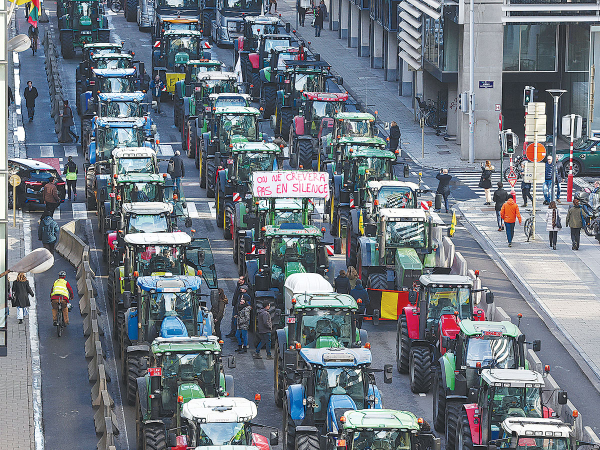 Farmer protests across the 27-nation EU have brought traffic to a standstill in capitals from Berlin to Paris, Brussels and Rome.
Hundreds of tractors gathered on Brussels' Luxembourg Square in the Belgian capital in early February.
On the Paris-Brussels motorway, angry farmers wrote in huge yellow letters, visible from afar: "Ursula, we are here!" It was chalked on the road with equal parts defiance and desperation, warning European Commission head Ursula von der Leyen not to ignore farmers' please for better prices and less bureaucracy.
Farmers hit the Belgian capital to call on European leaders to put an end to free trade agreements between the European Union and third countries. They want a review of agreements such as Mercosur, for imports to be subject to the sae rules as European agricultural products, and for the "costly" bureaucracy of agricultural and environmental regulation to be made more flexible and simplified.
So why are EU farmers protesting now?
Over the past two years, the problems facing farmers have reached critical mass.
Droughts, fires and floods blamed on climate change devastated crops. The Covid-19 pandemic hit the economy. Russia's war in Ukraine sent energy prices soaring. There was runaway inflation, with agricultural products often unable to keep pace.
"European farmers have been under increasing pressure from many sides," said European Commission vice-president Maros Sefcovic. He said that in southern Spain, some water reservoirs were at only 4% capacity.
Forest fires have wiped out around 20% of Greece's annual agricultural income. "The value of grain production fell by 30% last year - from €80 billion to less than €60 billion."
The rallies are part of farm protests across the 27-nation EU that have shown how just a few hundred tractors can bring traffic to a standstill in capitals from Berlin to Paris, Brussels and Rome.
Millions of people across the EU have faced disruption and struggled to get to work or had doctor's appointments cancelled because protests blocked their way.
"It is important that we listen to them," said Belgian Prime Minister Alexander De Croo. They face huge challenges from adapting to climate change to tackling pollution, he said.
The European Commission has announced plans to protect farmers from Ukraine's cheap war exports. These still need to be approved by the EU's 27 member states and the European Parliament but represent a sudden and symbolic concession.
French Farmers Call Off Blockades
France's two major farmers unions, last week, suspended protests and lifted road blockades across the country.
The move came shortly after the French prime minister unveiled a new set of measures they see as "tangible progress".
Farmers have been protesting for days across the country to denounce low wages, heavy regulation and unfair competition from abroad.
The president of the Young Farmers union, Armaud Gaillot, spoke alongside the head of France's biggest farmers union FNSEA.
"We call on our members to suspend the blockades."
FNSEA chief Arnaud Rousseau said they had been heard on a number of points, "including emergency measures to financially support struggling farmers and wine producers".
Earlier, Prime Minister Gabriel Attal announced a new set of measures, coming on top of other promises made in recent days. His speech came as convoys with hundreds of angry farmers driving heavy-duty tractors created chaos outside the European Union's headquarters, demanding leaders at an EU summit provide relief from rising prices and bureaucracy.
"The question is currently being asked throughout Europe: is there a future for out agriculture? Of course, the answer is yes," Attal said.
Planning is already underway to make exporters aware of the opportunities of the recently signed free trade agreement between NZ and the EU.


A major move is about to get underway to improve the quality and viability of dairy beef and cattle in NZ.
Veterinarians say changes to the code of welfare for dairy cattle provides a positive foundation for improved cattle welfare across the country.
Today, 15 October, is the International Day of Rural Women, which recognises rural women’s contribution to farming, communities and the environment.
Global dairy giant Lactalis has integrated its Australian operations with the Mainland Dairy consumer business it acquired from Fonterra earlier this year.
After almost two decades of sharemilking, saving and building equity, Aaron and Marcia Flay this year realised their long-held dream of settling on their first dairy farm.
Good medium to long term prospects for NZ beef, especially in the US, has heighted the focus on various initiatives to capitalise on this situation.


OPINION: The same mainstream media muppets that brought you Jacindamania in 2017 have been flat out pimping for the Opportunities…
OPINION: Your old mate reckons the atrocious way farmers in the UK are treated by their lords and masters in…




