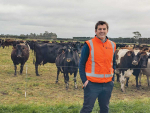
New Dairy Holdings CEO Backs Self-Contained Model
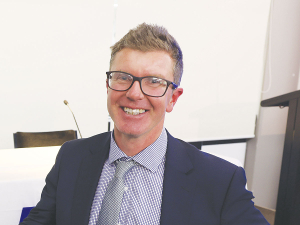
Running a tight and self-contained ship is the key to the success of the country's largest dairy farmer, says Blair Robinson, the new man at the helm of Dairy Holdings.




 increase font size
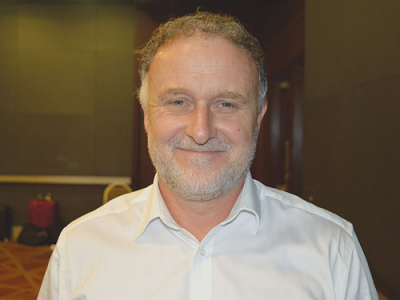 MPI’s national controller for M. bovis Geoff Gwyn.
Farmers have two years of “heavy lifting” before the bulk of the Mycoplasma bovis outbreak is dealt with.
That’s the view of Ministry for Primary Industries (MPI) national controller Geoff Gwyn.
His comments came as national bulk milk testing nears its final stage; so far only three more farms have been confirmed with the bacterial disease.
Gwyn told Rural News that while the results are very encouraging, he doesn’t believe farmers are out of the woods yet.
“I think farmers have two years of heavy lifting before we can say we have dealt with the bulk of the problem; no doubt after that we will get into long term management and ongoing surveillance.”
Over the next two years it is critical that farmers maintain biosecurity practices onfarm and improve National Animal Identification and Tracing (NAIT) records.
Gwyn says a NAIT record is a farmer’s best friend; all animal movements must be recorded.
“NAIT records are very good indicators for you, if you’re buying animals, to understand where they have come from — the last farm.”
Farmers are also encouraged to put animals in an isolated area for seven days for observation and to get vets to check them if need be.
Gwyn says the results of the bulk milk tests so far are good news for farmers.
All three M. bovis confirmed properties were already part of the tracing programme, with previous known links to the disease; one was under surveillance and the other two were about to go under surveillance.
Under the testing programme, 11300 dairy suppliers are being tested six times over a ten-week period, with collections two weeks apart. Until last week, four rounds of testing were completed; 50% were on the way to fifth-round tests and 2000 farms had finished sixth-round tests.
Under the testing programme, milk samples from every New Zealand dairy farm are being taken shortly after calving, when cows are most likely to be shedding the bacterium.
“The fact that we have confirmed Mycoplasma bovis on only three farms, and that all three of them were already on our radar, is encouraging,” Gwyn says.
“It reinforces our belief that we are dealing with a single strain of Mycoplasma bovis, based on the available scientific evidence and our own work in the field.
“While this remains an extremely difficult time for affected farmers, and we still have a lot of work to do, I’m confident we are on the right path in tracking down the disease and eradicating it from New Zealand,” Gwyn says.
Full results from the bulk milk testing are expected to be delivered to most farmers in the North and South Islands in early December.
$100 million spent
MPI has spent about $100 million on the Mycoplasma bovis campaign since July last year.
National controller Geoff Gwyn says this includes compensation paid to farmers forced to cull stock.
Gwyn says funding isn’t an issue, with $880 million committed by the Government and industry.
DairyNZ and Beef + Lamb NZ are paying 32% of the $880m; they are still negotiating on the split of their respective contributions.
Gwyn says he’s not privvy to discussions between the two organisations.
Running a tight and self-contained ship is the key to the success of the country's largest dairy farmer, says Blair Robinson, the new man at the helm of Dairy Holdings.
OPINION: It's no surprise that "world-class biosecurity" continues to dominate as the top priority for agribusiness leaders, holding the number one spot for the 16th consecutive year in KPMG's latest agribusiness report.
Compensation assistance for farmers impacted by Mycoplama bovis is being wound up.
New Zealand's world-first Mycoplasma bovis eradication programme is making great strides but this isn't the time for complacency, says Ospri.
A national pest management plan to eradicate Mycoplasma bovis (M. bovis) will come into effect by the end of this year.


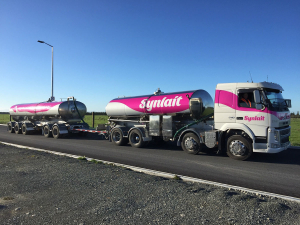
Synlait has swung to second-half profit as operations stabilise, but the dairy processor still posted a $75.4m annual loss.
LIC shareholders have elected a new North Island representative to the co-operative's Board, along with five representatives to its Shareholder Reference Group (SRG), following the company's Annual Meeting held in Invercargill.
Farmers across parts of Southland and South Otago are continuing to deal with difficult conditions after a prolonged run of wet weather, with pressure building around feed supply, stock management, pasture damage, farm infrastructure and everyday workloads.
Federated Farmers says it welcomes Labour's commitment to reviewing the Sharemilking Agreements Act, calling on other major parties to do the same.
For Canterbury dairy farmers Sian Meijer and Rick Wobben, wearable technology has become one of their most valuable on-farm tools - helping manage 1850 cows across an expansive, high-performing dairy operation while improving efficiency, mating outcomes and day-to-day decision making.
Fonterra has unveiled its annual results for the 2026 financial year, posting $27 billion in revenue and close to $20 billion returned to New Zealand farmer owners and unit holders.




OPINION: The same mainstream media muppets that brought you Jacindamania in 2017 have been flat out pimping for the Opportunities…
OPINION: Your old mate reckons the atrocious way farmers in the UK are treated by their lords and masters in…




