
NZ Apple Sector Pushes for Japan & Korea Market Access
The apple sector is working with the Government to unlock access to two key markets that could bring millions in revenue for apple growers.




 increase font size
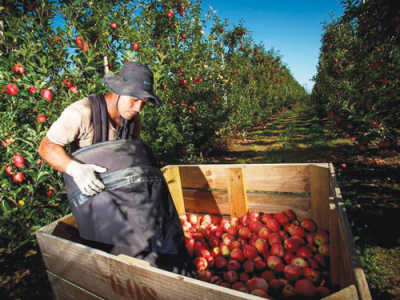 The apple industry is facing a labour shortage this harvest season.
A permanent solution to the harvest labour shortage problem is needed for the apple industry, claims a sector spokesman.
A clear allocation of recognised seasonal worker (RSE) numbers is needed long term so the industry can plan ahead, says NZ Apples and Pears’ Gary Jones.
Planning and building suitable accommodation would cost millions of dollars.
The industry is this year looking at a 30,000 tonne increase in the crop in Hawkes Bay and Nelson, which in itself requires about 500 more workers.
Ideally they need about 2000 more workers in Hawkes Bay alone for the harvest season which starts mid-February.
“A permanent solution would be to agree with the government on how they find labour supply,” says Jones, who chairs a Hawkes Bay labour governance group.
“If we can’t get the fruit off the tree in that time then we lose value in that product,” Jones told Rural News. “We have built up a brand position where NZ apples and pears are the best in the world and we beat all our competitors for quality and we are the preferred products on the shelves of the top retailers in the northern hemisphere.
“We have built that on quality and with RSE we have been able to pick that fruit on time. Quality is a key part of it. But that brand can also erode at a similar speed. Unless we have a permanent solution to labour shortages we will start to erode brand value and we will create a commodity cycle which would be unfortunate.
“We would lose value for NZ.”
Jones says [Apple and Pears NZ] is working extremely hard to find sources of NZ labour.
“We work with the prisons to get out as many workers as we can on day release and we work with the Ministry for Social Development to get people into work and ideally then permanent work.
We have Z schemes working with at risk NZers who are not in education or training – people who need mentoring or pastoral care; we work to bring them into permanent roles as well. So we are doing a whole lot with NZers.
“But the key is that for a few weeks of the year – in some cases only six or so weeks – we need a lot more people than we can find in NZ and so for a short, very specific time RSE is the perfect help for us. We can plan with that.
“If we can get those RSE workers we will build accommodation and plant more trees and continue to grow our sector.”
It costs about $25,000 per bed.
“It is a multi-million dollar investment and unless you know you are going to have someone picking and using that accommodation it just won’t occur. So we need clear signals so we are able to plan.”
Jones says they need to plan over several years. Currently the Government says each year how many RSE positions will be allowed and the industry often does not get a number until after it needs to be in the islands for recruiting.
He says backpackers aren’t meeting the shortfall.
“At the moment, the backpackers can get a job anywhere in NZ; there are jobs available right across all retail and hospitality; NZ-wide the restaurants and retail shops are all running short of staff. There are jobs for NZers and backpackers.”
The apple sector is still drawing in many thousands of backpackers, but Jones says tens of thousands of people are needed across NZ for harvest.
“The ability to find so many at the moment is pretty strained.
“We are still planting trees and will continue to plant trees. The key in the future is to harvest them at the best value and not to lose that value.”
Horticulture should be a growing future especially in Northland, Bay of Plenty, East Coast, Gisborne, Hawkes Bay and Nelson.
“In some of those North Island areas there are challenges to those economies and horticulture is booming in them.
“It seems a shame we can’t ensure and plan to make sure it has a bright future.
“We are after some discussion and clear signals. We are working well with MSD to work with NZers.
“We want more strategic discussions for a longer term solution.”
The apple sector is working with the Government to unlock access to two key markets that could bring millions in revenue for apple growers.
For over 50 years Mel Ewers has been supporting the apple sector navigate through compliance and quality assurance issues.
New Zealand apple and pear industry stakeholders are out in force for the annual conference in Queenstown.
With ethical employment practices a "hot topic" in key markets, Sustainable Winegrowing New Zealand (SWNZ) is strengthening its People Pillar.
OPINION: Farmers have been clear: it is getting harder, not easier, to find and keep good people.


Federated Farmers says it welcomes Labour's commitment to reviewing the Sharemilking Agreements Act, calling on other major parties to do the same.
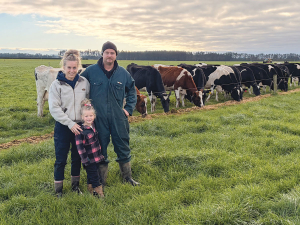
For Canterbury dairy farmers Sian Meijer and Rick Wobben, wearable technology has become one of their most valuable on-farm tools - helping manage 1850 cows across an expansive, high-performing dairy operation while improving efficiency, mating outcomes and day-to-day decision making.
Fonterra has unveiled its annual results for the 2026 financial year, posting $27 billion in revenue and close to $20 billion returned to New Zealand farmer owners and unit holders.
The first major update to the Dairy Cattle Code of Welfare in more than a decade has been released, marking what DairyNZ describes as an important step in ensuring animal welfare standards continue to evolve alongside scientific evidence and on-farm realities.
Ravensdown shareholders have elected Jane Montgomery and Kate Acland to the Ravensdown Board for three-year terms, following a closely contested director election.
Federated Farmers says new legislation replacing the Resource Management Act will cut red tape, unlock investment and help grow New Zealand's export-led economy, after the Planning Bill and Natural Environment Bill passed their third reading in Parliament yesterday.




OPINION: The same mainstream media muppets that brought you Jacindamania in 2017 have been flat out pimping for the Opportunities…
OPINION: Your old mate reckons the atrocious way farmers in the UK are treated by their lords and masters in…




