
True Reflection?
A fair question has been raised about how member-funded organisations should conduct themselves when taking a public position on any given issue.




 increase font size
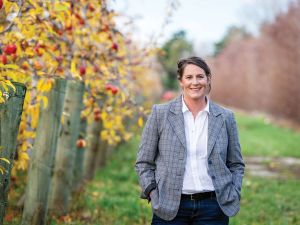
 RWNZ board member and social issues convenor Sharron Davie-Martin.
Rural Women New Zealand (RWNZ) says a survey among members has found strong opposition to the decision by banks to stop accepting cheques in 2021.
“The response was the highest we’ve ever had for a survey in three years. So, it’s clearly an issue for rural communities,” says RWNZ policy manager, Angela McLeod.
According to the survey, the main use of cheques was paying monthly bills, purchasing farm supplies, and paying tax.
Over 70% of respondents voiced concerns over the phasing out of cheques.
42.5% of respondents said they still wrote out cheques for purchases and expenses.
Of those who used cheques, 75.2% said they posted them to make their payments.
“The goal is not to create a permanent stay of cheques, however, to create a viable option for those who do not yet have the connectivity options,” says RWNZ board member and social issues portfolio convenor Sharron Davie-Martin.
“Rural communities don’t have the technology or access to consistent technology to carry out their banking transactions - they have to use cheques.
“Cheques will get rid of themselves eventually, however, we want places to be able to accept cheques until technology is at a point where farming and rural communities can safely use the internet for their banking transactions,” says Davie-Martin.
She adds that while banks say they will help their customers learn to use online banking, that option wouldn’t help those who don’t have reliable internet connections.
“All we want is for banks and other institutions to just keep accepting cheques until technology is at a point where every rural household has good, reliable internet – that’s it.”
A fair question has been raised about how member-funded organisations should conduct themselves when taking a public position on any given issue.

OPINION: About as productive as a politician's taxpayer-funded trip to Hawaii, as cost-effective as an OSPRI IT project, and as smart as the power-company pylon worker, the Hound gives you the NZ Post business strategy:
OPINION: Rural services such as banks, health and postal services have been declining for years, so this mutt was tickled pink to hear Rural Women NZ on national TV slamming the impact of post office closures in rural areas.
"Imagine if John Lennon's famous words could be applied to rural connectivity."
The Government’s announcement of the 2021 Resident Visa will provide some welcome relief to rural communities, says Rural Women New Zealand (RWNZ).



National’s pledge to introduce 19 new national standards shows the party is serious about getting Wellington out of farming, Federated Farmers says.
The National Party’s policies to make it easier to grow fresh vegetables, secure reliable water and energy and simplify farm planning are practical changes that will give growers the confidence to invest, according to Horticulture New Zealand (HortNZ).
Fonterra Co-operative Group chief financial officer Andrew Murray has resigned to take up a role outside the dairy giant.
A major move is about to get underway to improve the quality and viability of dairy beef and cattle in NZ.
Veterinarians say changes to the code of welfare for dairy cattle provides a positive foundation for improved cattle welfare across the country.
Today, 15 October, is the International Day of Rural Women, which recognises rural women’s contribution to farming, communities and the environment.





OPINION: The same mainstream media muppets that brought you Jacindamania in 2017 have been flat out pimping for the Opportunities…
OPINION: Your old mate reckons the atrocious way farmers in the UK are treated by their lords and masters in…




