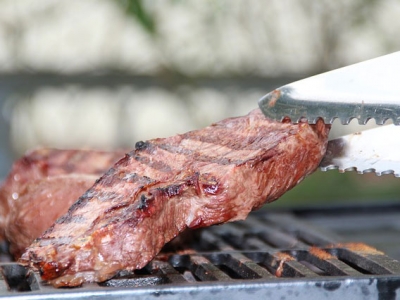
America's love affair with hamburgers has resulted in a bumper year for New Zealand beef farmers, says Beef + Lamb NZ (BLNZ).
Strong demand in the US and NZ dollar weakness against the US greenback has pushed the average per tonne value of beef and veal exports up by 28% to $7540 versus $5890 in the same period last season.
BLNZ reports that for the first six months of the 2014-15 meat export season, 212,000 tonnes of beef and veal were exported – up 12% or 22,600 tonnes on the same period last season.
Chief economist Andrew Burtt says this reflects a high, and early, cattle processing season – particularly in relation to cull cows – and strong global demand for beef. The increase in shipments was mainly due to consistent high monthly volumes exported to the two main markets for New Zealand beef – US and China – while volumes to other main markets decreased.
Beef exports to the US increased by 33% to 122,200 tonnes, while exports to China increased by 21% to 21,000 tonnes in the first half of 2014-15.
“The increase in shipments came mostly from a 23% increase in processing beef, used primarily as an ingredient in ground beef products such as hamburgers. However exports of boneless cuts decreased slightly,” Burtt told Rural News.
Processing beef and boneless cuts accounted for 54% and 34%, respectively, of total beef and veal export volumes in the first six months of the 2014-15 season.
However, while beef exports boom, lamb exports languish and in fact they decreased 2.9% in the first six months of the 2014-15 season, compared with the same period last season.
Burtt says lamb exports to the European Union, the largest market region for New Zealand lamb, were up 3.9%, to 68,700 tonnes on the same period last season. But he adds that exports to North Asia were down 8.5%, to 47,500 tonnes, driven mainly by lower exports of carcases to China. Shipments to North America and the Middle East were up 2% and 0.9%, respectively.
Also taking a tumble was mutton exports, down by 18% to 51,000, reflecting lower production in 2014-15. This contrasts with the previous season when dry conditions and dairy expansion saw more ewes processed.
BLNZ says exports to China, the largest export market for mutton in North Asia, fell 30% to 31,600 tonnes, but exports to the European Union, South Asia and North America increased in the first six months of 2014-15.
News on the export front comes amid speculation on what may happen next season. Burtt says a lot will depend on what effect the recent rain has on pasture growth and how farmers in the South Island have been able to manage their way through the drought.
Overall, he says, conditions have been better in most parts of the North Island and that may lead to some hogget mating. There is anecdotal evidence that North Island farmers have planted herb species, such as chicory and lucerne, helping them get better growth rates in their lambs and hoggets.
He says there is some suggestion farmers in many regions will think twice about dairy grazing and will instead use feed to better maintain capital stock. But the answer is still some months away; the first real indication will come after scanning results.