Naki unveils the world’s most expensive manuka honey
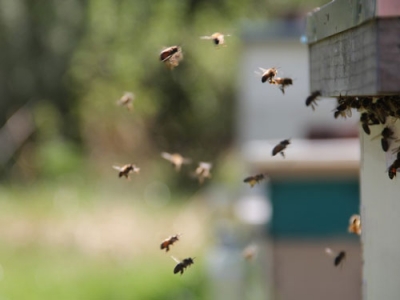
Naki Honey, a New Zealand manuka apiary company, has crafted what is believed to be the world's most expensive honey.




 increase font size
 Hill country landowners are being prompted to act now to get their hands on high performance manuka seedlings.
Hill country landowners are being prompted to act now to get their hands on high performance manuka seedlings.
The seedlings could see them reaping the benefits of what is expected to be a $1.2 billion industry by 2028.
Manuka Research Partnership Ltd (MRPL), has its sights on increasing the supply of highly sought after medical-grade manuka honey to significantly lift the value of the industry.
MRPL wants to lift the value of New Zealand's manuka honey industry from an estimated $242 million last year towards a target of $1.2 billion annually by 2028.
MRPL has launched a commercial arm, Manuka Farming NZ, to provide a full package of services to landowners interested in establishing a manuka plantation to diversify their businesses and at the same time protect erosion prone land.
Manuka Farming NZ's newly appointed commercial manager Allan McPherson says the latest high performance seedlings are now able to be ordered for planting in 2017. These plants will enable economically viable honey production as early as 2020.
"We had high demand for our first release of seedlings and we're confident that our second release will also be highly sought after."
Landowners interested in establishing manuka plantations to help address erosion issues are able to apply for funding through the Ministry for Primary Industries' Afforestation Grant Scheme (AGS). Applications open in April 2016 for planting in winter 2017.
McPherson says Manuka Farming NZ is set to quickly become the preeminent supplier of genetically improved manuka cultivars that have been extensively field tested and matched to individual sites. Manuka Farming NZ will also provide access to services for land environment planning, site appraisal, planting and husbandry, and be able to introduce landowners to apiarist partners and assist with funding applications.
"Our collective knowledge places us at the forefront of the science and practical knowhow regarding the successful establishment of manuka plantations and integrated apiary requirements.
"It's important that we provide a full range of services and support for landowners that are interested in this fast growing industry. MRPL has invested significantly in the science of growing manuka and we have got cultivars that will suit a wide range of climate and environment situations throughout New Zealand.
"We can match a proven cultivar to the land and environment and we can back that up with a range of support services right through the production cycle."
McPherson says more than 1000 ha of trial sites throughout New Zealand have been testing a range of manuka varieties, with 400ha being more closely monitored to gather knowledge of the plants' performance in different environments. This includes establishment, growth, nectar production and quality, floral traits and apiary performance.
"We are talking with landowners throughout New Zealand and advising them on the many benefits of planting manuka. It's not just about providing an additional revenue stream but also minimising the risk of erosion and keeping sediment out of waterways. It's a win-win," he says.
McPherson will be promoting manuka plantations at the Central District Field Days in Fielding on March 17-19 and the National Fieldays at Mystery Creek on June 15-18. The company has also launched a website www.manukafarmingnz.co.nz .
MRPL chairman Neil Walker says back country land provides the ideal conditions for growing manuka.
"We're looking at back country land and suggesting to owners to plant proven manuka cultivars backed by really good advice.
"There is a lot of steep and fairly inaccessible land out there that, if used for plantation manuka, could prevent slips and erosion. The poorer producing parts of a hill country farm can actually cost money to farm, and we can change that."
Naki Honey, a New Zealand manuka apiary company, has crafted what is believed to be the world's most expensive honey.
Thousands of honey retailers and professionals worldwide are getting a taste of the remarkable properties of New Zealand mānuka honey.
After three years of record performance, mānuka honey exporter and retailer Comvita has reported an annual net loss of $77 million.
Bee awareness month - September - ended on a high for the struggling apiculture sector.
While confident that the apiculture sector can meet its target of doubling honey exports by 2030, chair of ApicultureNZ, Nathan Guy, says it will be challenging.

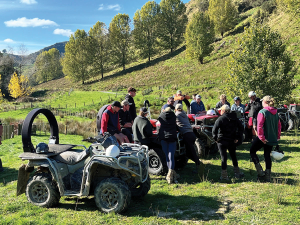
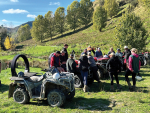
A recent Beef + Lamb New Zealand quad safety field day, held along the rugged Whanganui river valley at Kakatahi, focused on identifying risks and taking appropriate actions to minimise unplanned accidents.

Healthy snacking company Rockit has announced Wang Yibo, one of China's most influential celebrities, as its new brand ambassador.
Rabobank has celebrated the tenth anniversary of its AgPathways Programme, with 23 farmers from Otago and Southland gathering for two-and-a-half days to learn new business management and planning skills.
Adopting strategies to reduce worm burden on farm goes hand-in--hand with best practice farm management practices to optimise stock production and performance, veterinarian Andrew Roe says.
Last night saw the winners of the 2026 Beef + Lamb New Zealand (B+LNZ) Awards named at a gala dinner at Te Pae Christchurch Convention Centre.
A 12-month pathway programme has helped kickstart a career in dairy for an 18-year-old student-turned-farmer.



OPINION: The old saying 'a new broom sweeps clean' doesn't always hold up, if you ask the Hound.
OPINION: This old mutt went to school to eat his lunch, but still knows the future of the country, and…