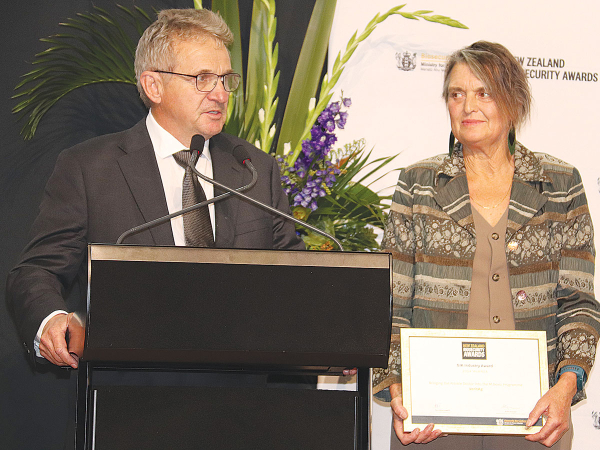
A small company which mobilised veterinarians around the country to deal with Mycoplasma bovis was one of the winners in this year's Biosecurity Awards, held at Parliament.
The awards are designed to recognise inspiring and diverse biosecurity champions who are making significant contributions to biosecurity in New Zealand. These include schools, community groups, companies, science institutes and local authorities. More than 200 people attended the function hosted by the Minister for Biosecurity Andrew Hoggard.
As the M. bovis crisis escalated and the task of testing on farm was beyond the resource of Ministry for Primary Industries (MPI), VeritAg, which specialises in verification in the ag sector, was called upon to help. It took on the task of mobilising and deploying 220 veterinary practices throughout the country to help with testing cattle on farms. At the same time VeritAg, which also has links to SVS labs, managed to speed up the testing of samples from farmers.
Richard Campbell, a director of VeritAg, says at the time, farmers were facing big backlogs and were under stress waiting for tests to be taken and samples analysed.
"For example, we had a situation where a dairy farmer who was in the middle of calving was told he may have to wait for up to six weeks for answers.
"But by using local vets we were able to really speed up the testing programme," he says.
Fellow director, Cynthia Northcote, says the vets knew the farmers well and besides speeding up the testing they were also able to provide some pastoral care during a difficult time.
At the awards, Hoggard once again made an undertaking that 'frontline' biosecurity services within MPI will not be cut under the Government's plan to reduce the number of staff in the public service.
"I have been looking at the MPI budget and all the frontline activities are staying the same. It's around some of the backroom functions that MPI were looking to trim a bit, and seeing if things can be done smarter and faster and get better bang for our bucks. But again, frontline services will be untouched," he says.
Hoggard says biosecurity has always been rated by governments and farmers as one of the most important contributors to the preservation of NZ's primary sectors. He says it's vital for the country's prosperity and protects our $57.4 billion food and fibre sector as well as our unique flora and fauna.