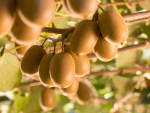
NZKGI Responds to Migrant Worker Exploitation Reports
Where any worker in the kiwifruit industry is mistreated, we expect the authorities to take action.




 increase font size

FEDERATED FARMERS says it hopes to see “some rigour” applied to the Minister for Primary Industries’ independent review of kiwifruit pollen import rules and processes.
The Federation’s vice president, William Rolleston, says he’d also like to see the review extend to all pollen imports “because Federated Farmers doesn’t want any door left ajar.
“Only 13 months ago, the old MAF was so confident in the import health standard for pollen, that it said there was no peer-reviewed scientific evidence pollen was a pathway for bacteria. Even to a layman, it doesn’t seem plausible pollen could transmit viruses and fungi but not bacteria,” notes Rolleston.
He says he’s concerned a 2007 paper, ‘Plant pathogens transmitted by pollen’, may have unduly influenced MAF policy.
“This paper concluded that while certain viruses and fungi could be transmitted by pollen, ‘there are no…bacteria…that are pollen transmitted’.”
Rolleston, a medical scientist as well as farm business owner, says an absence of evidence should be treated differently by decision makers to evidence of absence.
“Categorical negatives are difficult to prove in science and should be treated with some suspicion.
“Having said that, this aspect of the import health standard also slipped past industry scrutiny.
“These are also big lessons to be learnt as MAF Biosecurity ponders the risk of PRRS in imported raw pork, not to mention bee diseases not present in New Zealand but carried in honey overseas, such as European Foulbrood and the Israeli Acute Paralysis Virus.”
Where any worker in the kiwifruit industry is mistreated, we expect the authorities to take action.
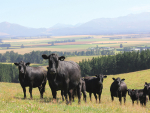
Bovine Viral Diarrhoea (BVD) is sometimes viewed as a dairy industry issue, but the reality is that the disease can have serious consequences for beef breeding herds as well.
Kiwifruit growers are watchful but remain optimistic as concerns around the potential effects of the El Niño weather pattern this season.
Election years are always a concerning time for farmers, according to DairyNZ chair Tracy Brown.
More signs of a booming kiwifruit sector.


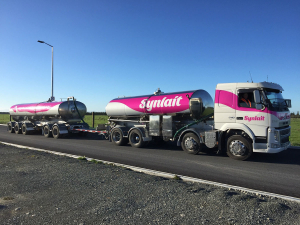
Synlait has swung to second-half profit as operations stabilise, but the dairy processor still posted a $75.4m annual loss.

LIC shareholders have elected a new North Island representative to the co-operative's Board, along with five representatives to its Shareholder Reference Group (SRG), following the company's Annual Meeting held in Invercargill.
Farmers across parts of Southland and South Otago are continuing to deal with difficult conditions after a prolonged run of wet weather, with pressure building around feed supply, stock management, pasture damage, farm infrastructure and everyday workloads.
Federated Farmers says it welcomes Labour's commitment to reviewing the Sharemilking Agreements Act, calling on other major parties to do the same.
For Canterbury dairy farmers Sian Meijer and Rick Wobben, wearable technology has become one of their most valuable on-farm tools - helping manage 1850 cows across an expansive, high-performing dairy operation while improving efficiency, mating outcomes and day-to-day decision making.
Fonterra has unveiled its annual results for the 2026 financial year, posting $27 billion in revenue and close to $20 billion returned to New Zealand farmer owners and unit holders.




OPINION: The same mainstream media muppets that brought you Jacindamania in 2017 have been flat out pimping for the Opportunities…
OPINION: Your old mate reckons the atrocious way farmers in the UK are treated by their lords and masters in…




