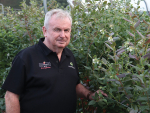
Blueberries Could Be NZ's Next $150m Horticultural Export
Blueberries have the potential to become a major horticultural export, earning up to $150 million within the next three to five years.




 increase font size

HORTICULTURE NZ says it won’t back off from raising biosecurity issues despite stinging criticism from the Minister for Primary Industries at the growers’ conference.
HortNZ chairman Andrew Fenton told Rural News his message to growers is “we are working on your behalf and we are not going to take the foot of the accelerator until we are satisfied”.
This followed a stark warning on credibility last week from Primary Industries Minister David Carter to the grower organisation at its conference in Auckland.
“If your board continues what is now an ill-informed crusade, it runs the risk of lowering the credibility of Horticulture New Zealand to Government and Government departments,” Carter said. “That is not a risk that should be taken lightly.”
Earlier Carter took aim at industry magazines, which he did not name, but they are believed to be two magazines published by HortNZ. Carter said they clearly “have an axe to grind” on biosecurity, filled pages with every negative angle and afforded little reply in response.
“It is disappointing – especially when the Government and I have taken every opportunity to work with your president and chief executive on issues impacting your industry.”
Carter said the Government takes biosecurity very seriously. “It is quite simply the greatest risk to our economy. It is, and always will be, my highest priority.”
Fenton says Carter’s criticism was a surprise but called for unity. “I want to remind everybody that we are all working for the same outcome which is improved biosecurity,” Fenton told Rural News. “Let’s make sure we are focused on that outcome rather than bickering along the road.
“We’ve been criticising in a constructive way…. from our point of view we still have grower concern. It became quite clear as the [conference] morning went on that growers are still concerned so we are not going to back down from our position.
“We haven’t lost any credibility. We might have lost some credibility with the minister, but we haven’t lost any credibility with our growers. Those 6000 growers are the people we represent; they are still very concerned.”
Fenton said Carter “still has got some issues he needs to deal with internally…. They are still restructuring biosecurity, they are still making improvements…”
Fenton says recent positive moves include four new detector dogs and 11 more before Christmas, recruitment of 40 new frontline staff and the new customs integrated targeting and operations (ITOC) centre in Auckland.
“This is continued improvement but there are still issues in plant material detection and that’s where we are anxious to continue with 100% x-rays and we would like to see detector dogs at every arrival point. It is not an imposing thing to walk past a dog which is an excellent way of picking up any plant material or seeds.”
Earlier Carter said each year about $80 billion of imports and exports and at least 10 million travellers cross our border and each day 175,000 items come across our border.
Carter said 2000 containers pass through the seaports each day.”Any suggestion to individually unpack and repack each container on the wharves is totally impractical.
“If we look at mail, nearly 100,000 items of mail arrive each day and despite interception being like looking for a needle in a haystack, our system intercepted more than 10,000 biosecurity risks in mail last year alone.”
Carter said it cost MPI $1.5 million to deal with one dead fly. That’s the reality of a response. “Yet, ironically, Horticulture New Zealand – the industry body that stood to lose most if an outbreak was to occur – went public to complain about that spend.”
More on detector dogs page 10
Blueberries have the potential to become a major horticultural export, earning up to $150 million within the next three to five years.
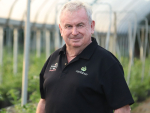
New Zealand needs to make sure that it continues to focus on its own food security, according to HortNZ board member and blueberry grower Dermott Malley.
According to a progress report on the Aotearoa Horticulture Action Plan (AHAP), New Zealand's horticulture sector is making real progress on the big issues facing growers.
Horticulture New Zealand’s Board has welcomed the re-election of grower-elected directors Alistair Petrie and Doug Brown.
Horticulture NZ says the funding boost to improve state highway resilience will support growers and strengthen the transport links they rely on to get produce to market.


OPINION: As the general election approaches, political parties are churning out policies in the hope of attracting more votes.

An LIC bull, Tronnoco AR Sadio-ET S3F, bred by Tony and Keri O'Connor of Tronnoco Farming Co Ltd near Timaru, has won the 2026 Mahoe Trophy.
With forecasters advising El Niño conditions will develop through winter and strengthen into spring and summer, Ballance Agri-Nutrients is encouraging farmers and growers to think ahead about nutrient planning and be prepared to work around challenging weather conditions.
In the past, much has been made of the concept of farm to fork, but an Australian expert in food science and marketing with experience in the dairy industry, Dr Angeline Achariya, says the reverse of this slogan is critical to win modern day consumers.
Efficiency is the big one because it tracks back into what is done on farm.
A four year trial has reaffirmed that mixing plantain into dairy pastures can help reduce nitrogen losses to freshwater while maintaining milk production and profitability, say researchers.





OPINION: The same mainstream media muppets that brought you Jacindamania in 2017 have been flat out pimping for the Opportunities…
OPINION: Your old mate reckons the atrocious way farmers in the UK are treated by their lords and masters in…