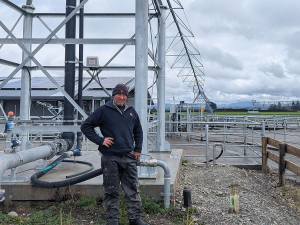
Farmer Jane Smith claims that farmers find comments from David Parker, Damien O’Connor and the Green Party’s James Shaw nauseating.
Read: Critic calls for a major investigation into freshwater reforms.
“This is our licence to operate with our global trading partners and will attract added-value premiums,” she says.
“This lacks any metric or rationale,” says Smith. “We are creating our own hurdles at a rate higher than any other primary producer in the world. For every dollar spent on food worldwide, the farmer receives on average, less than 10 cents.”
This is a topic of discussion Smith often has with offshore peers around the Global Farmer Roundtable.
Meanwhile, Smith believes the suggestion that farmers need a $50 million election handout to ‘transition to more sustainable farming practices’ is offensive and belittling – both to the farming sector and urban taxpayers who will have to pay for this.
“Any fool can see that the best long term strategy is to get the farming sector to fund their own good practice journey through a catchment-based approach – in their own time and at their own cost,” she says.
“In our own modest sheep and beef operation, we have spent over $350,000 during the past 10 years on environmental initiatives including trees, fencing and proactive land exclusion simply because we want to.”
“The inconvenient truth for Parker is that this is exactly what the farming sector is already undertaking, without a cent of burden on the taxpayer. However, this more practical timeframe does not fit into his aspirational goal of being anointed as New Zealand’s freshwater godfather.”
Smith adds that the Government’s own Treasury department recommended that MfE did not proceed with the Essential Fresh Water Regulations in their proposed form, due to the crippling effect on the economy.
“Common sense would suggest this should have been a catalyst for further scrutiny,” she says. “Urban taxpayers are going to have to underwrite this through a myriad of rate increases, while annual GDP falls by $6 billion by 2050.”
She adds that despite Parker establishing four advisory groups: the Scientific and Technical Advisory Group (STAG), Kahui Wai Maori, the Regional Sector Water subgroup and the Freshwater Leaders’ Group – it appears that no economic analysis of the proposals was ever prepared.
“Notwithstanding that this was an underpinning theme in many of the 17,500 submissions.”
Smith claims a tough freshwater legacy appears to have driven the final policy.
“Proving that this country is being governed by emotion, opinion polls and leaders that want their photo on the cover of Time magazine,” she concludes.
Conflicted?
Meanwhile, Jane Smith believes she has uncovered a serious conflict of interest issue, with animal rights activist Rowan Taylor – a MfE senior policy analyst for MfE leading the ministry’s submissions to influence plan changes at regional level.
“I am appalled that an animal liberation, vegan who is publicly opposed to livestock farming is essentially being paid by the taxpayer to be an internal activist,” she says.