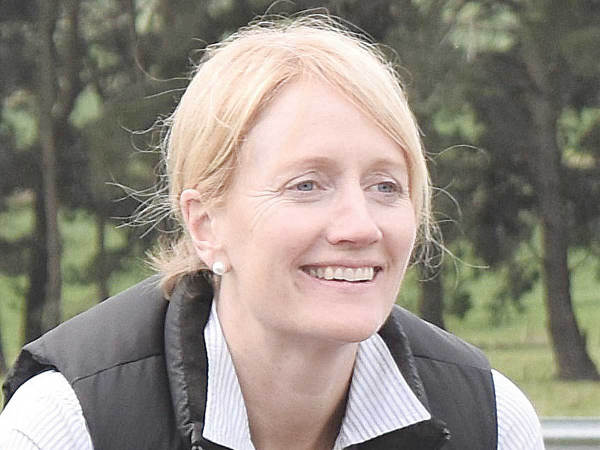
Award-winning, environmentally-focused farmer Jane Smith wonders whether she’s farming in North Otago or North Korea.
She is calling for a full review into the process behind Ministry for the Environment’s (MfE) Fresh Water National Policy Statement – particularly around the recent legislation for winter grazing practices and land use categorised solely on slope.
“The public have been sold a sanitised version of the truth and are going to pay an unacceptable price for what I suggest is effectively an abuse of legislative power,” she told Rural News.
While Smith is opposed to the punitive regulations in their current form, it is the process that she is challenging – rather than the outcome itself. She says her time in a myriad of governance roles have shown the importance of transparency in procedure behind every decision.
“Anyone running a business knows that if an outcome is a dog’s breakfast, then the process was probably even worse.”
Smith says the blame for the ‘dog’s breakfast’ water reforms can be laid solely at the feet of Environment Minister David Parker.
“This is one man’s attempt to claim a personal legacy and it goes against everything that a supposedly incorrupt democracy stands for,” she adds.
Smith has sifted through over 100 pages of Official Information Act (OIA) information and suggests that Parker may have gone beyond his ministerial mandate.
“It is no coincidence that a lot of this OIA material has been highly redacted by the minister himself – this is a sad indictment on democracy.”
She suggests that the freshwater “debacle” mirrors the pattern of events throughout the recent RMA Reform Bill, where conveniently short timeframes meant no contrary views were able to be aired.
“You can see the power that the minister had over decisions during the RMA Reform Bill process,” Smith told Rural News. “It was noted by MfE itself that: ‘there are risks to proceeding with this change to primary legislation without formal consultation that cannot be adequately mitigated by means of future consultation on a supporting NES’”.
She adds that a June 11, 2020 MfE Departmental Report evaluating changes introduced via Supplementary Order Paper 517 noted that the freshwater planning proposals only partially meet the quality assessment criteria. ‘Proposals could have been consulted on. Given the significance of water, this limited consultation is considered to be significant.
While there is an opportunity for these groups to engage through the select committee process for the Bill, this is not on its own considered sufficient to cover the approach to consultation prior to Cabinet decisions.’
Smith believes the “kicker” is that this now provides power to the minister (from 30 June 2020) to “call-in” any plan proposals or consents where the matter could be of “national significance”.
“This is the pathway in which Parker has given himself additional powers to effectively trump council decisions. The extent of his interference in council plan changes has become frightening obvious, the more OIA and LGOIMA (Local Government Official Information and Meetings Act) you read.”
Smith is also concerned about the level of intrusion that she is seeing in her own backyard in Otago. She believes Parker’s modus operandi will influence plan changes in other regions – even before he pulls out his council ‘call-in’ trump card.