
NZ Milk Price Could Hit $10/kgMS as Global Supply Eases
A 'tsunami' of milk from key exporting countries is winding down and this may be good news for New Zealand dairy farmers.




 increase font size
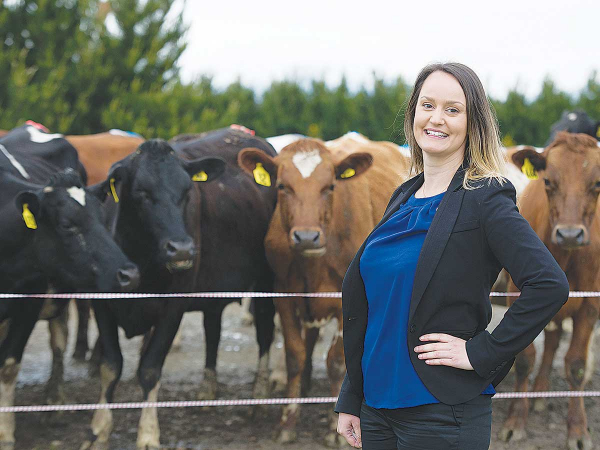 RaboResearch dairy analyst Emma Higgins says milk supply is outpacing demand in China.
Milk production in China is booming and this could be bad news for New Zealand farmers.
With demand for some dairy products muted by forced closures of food outlets during the Covid pandemic, China’s growing milk supply means inventory is building.
RaboResearch dairy analyst Emma Higgins says the overarching view is that milk supply is outpacing demand in China.
Higgins says, right now, NZ dairy exports to China remain at record levels and this is keeping the farmgate milk price strong.
However, she believes things could change in the coming months. As a result, Rabobank has dropped its forecast farmgate price for this season by 20c to $7.80/ kgMS.
Speaking at an online seminar hosted by the Smaller Milk and Supply Herds (SMASH) last week, Higgins said everyone was watching what happens in China very closely.
“We’re taking quite a bearish view,” says Higgins.
“We have seen a very voracious appetite for our dairy products in China. This is wonderful and has been underpinning commodity prices and our farmgate prices.”
But she says demand is muted mostly on the back of restaurant and food service closures brought about by Covid.
Higgins noted that China’s largest restaurant company Yum China reported the closure of 500 stores in 17 provinces at the height of the pandemic. The company expected recovery to be uneven.
On the supply side, China’s milk production is soaring.
According to Statista, in 2020 China had an output of around 34.4 million metric tons of cow’s milk – the highest volume in recent years. Chinese national milk production volume ranged between 30 and 34 million tons annually in the past decade.
With muted demand, very strong exports from NZ and a growing domestic milk pool, the supply/demand balance was changing. Higgins says Rabobank thinks milk supply is outpacing demand in China.
“And we think domestic milk production is also adding to the accumulation of inventory that we think is building,” she adds. “That’s why we have changed our milk price forecast – chopping 20c off.”
Higgins believes China will be destocking and reducing its inventory in the coming six to eight months.
Prices Holding
Dairy prices are holding because the global milk supply situation is a mixed bag, says Higgins.
Only two of the top seven exporters – the US and Australia – expect milk production to rise this season, she says.
New Zealand is looking at flat milk production this season mostly on the back of weather issues facing South Island farmers.
Global demand remains resilient, mostly on the back of major food service markets like the US and the EU enjoying the final weeks of summer.
While the demand side is looking good, supply is fairly mixed, she says.
Higgins believes major disruption caused by Covid is now behind us.
“Despite Covid still very much at play globally, we are seeing commodity prices start to rebound,” she says.
The last two Global Dairy Trade auctions saw prices rise for most products; benchmark whole milk powder prices are near US$3,800/metric tonne and skim milk powder at US$3,300/MT.
“That translates into some very favourable pricing conditions for NZ farmers,” she says.
A 'tsunami' of milk from key exporting countries is winding down and this may be good news for New Zealand dairy farmers.

The avocado sector is entering the new season with a larger crop and positive market opportunities.
OPINION: With 10,500 dairy farms, New Zealand continues to punch above its weight around the world.
A team effort that is paying dividends for the wider New Zealand economy.
Fonterra has reduced its forecast 2026/27 Farmgate Milk Price.


For Canterbury dairy farmer Cameron Henderson, supporting Meet the Need comes down to a simple question: how can the success of New Zealand farming benefit more than just those within the industry?
Fonterra board members are in line for a pay rise of around 3%.
Dairy processors are ready to further boost New Zealand’s export earnings but want the incoming government to match their ambition with good policy.
Massey University is best placed to solve the “problems” facing the dairy industry, says vice chancellor, Pierre Venter.
Synlait's longest serving employee – a man who joined the Canterbury-based milk processor even before it began processing milk – is now its newest executive.
A dairy industry leader believes eradicating the common and costly disease, Bovine Viral Diarrhoea (BVD) is within reach.




OPINION: The same mainstream media muppets that brought you Jacindamania in 2017 have been flat out pimping for the Opportunities…
OPINION: Your old mate reckons the atrocious way farmers in the UK are treated by their lords and masters in…




