
M.I.A.
OPINION: The previous government spent too much during the Covid-19 pandemic, despite warnings from officials, according to a briefing released by the Treasury.




 increase font size
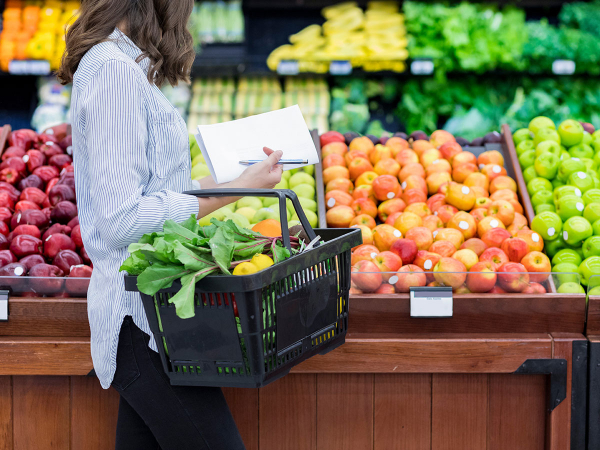
Calls are growing for the Government to allow butchers and independent fruit and vegetable retailers to operate under COVID-19 Alert Levels.
Federated Farmers is the latest industry lobby calling for the Government to reconsider and let small fresh food sellers stay open under level 3 and, if necessary, at level 4.
New Zealand’s first COVID-19 lockdown rules meant butchers, bakers and greengrocers could not open as the small retailers were considered non-essential.
But Feds president Andrew Hoggard is pleading with the Government to “let the little guys stay open”.
“Let them sell fresh food, because it’s safer, fairer and better for small communities trying to buy local," Hoggard says.
He believes the rule needs a rethink if we are to go back into a full-scale lock down.
"This is for fresh food. We need to keep supply chains moving, from the paddock to the plate, not paddock to the dump, as happened last lockdown."
Hoggard says the supermarkets did an incredibly good job in the first lockdown but enforcing the closure of smaller food retailers was short-sighted.
Food retailers such as butchers, bakers and greengrocers can observe distancing and hygiene rules as well as supermarkets and having them open will ease queues experienced at the bigger stores.
Having the ability to sell online is not the point, he adds.
“The point is the current rules don’t make sense for domestic food producers, retailers and customers keen to stay close to home and buy local.
"It’s also tough for the small stores to adapt to being online. They can’t afford the technology and the distribution systems required."
This week Horticulture NZ wrote to Prime Minister Jacinda Ardern asking her to classify independent fruit and vegetable retailers as essential services under COVID-19 Alert Level 3 and 4.
In New Zealand there are multiple ways fresh fruit and vegetables are available for sale to the general public. The majority of these sales are made through large supermarket chains and independent fresh fruit and vegetable retailers, at a market share of approximately 80% and 20% respectively. However, in Auckland independent retailers represent 60% of sales of fresh fruit and vegetables.
Hort NZ chief executive Mike Chapman says unlike supermarkets, fresh fruit and vegetables sold through independent retailers are different grades than sold in supermarkets and in some outlets at more affordable prices and in high end outlets at higher prices.
“Independent retailers also sell culturally significant fresh fruit and vegetables in their communities (that aren’t readily available in supermarkets) that form the staple diets of different ethnic groups in New Zealand.
“When New Zealand was in Alert Level 4 and 3 earlier this year, households were significantly impacted by not having access to purchase fresh fruit and vegetables from independent retailers, especially lower income households,” says Chapman.
In addition, rural communities often rely on independent retailers for supplies of fresh fruit and vegetables that are produced locally, where large supermarket chains are not readily present.
“This is in alignment with the government’s messaging to support local businesses,” he says.
OPINION: The previous government spent too much during the Covid-19 pandemic, despite warnings from officials, according to a briefing released by the Treasury.
OPINION: Labour leader Chris 'Chippy' Hipkins is carrying on the world-class gaslighting of the nation that he and his cohorts started after their disastrous Covid response; now trying to undermine the Covid inquiry to protect his own backside.
OPINION: Did former PM Jacinda Ardern get fawning reviews for her book?
OPINION: Welcome to the second annual NZ Dairy Expo at Matamata – an event created to bring together the best of the New Zealand dairy industry in a focused, grassroots environment where dairy farmers and rural professionals can meet, talk, compare products, and make smart decisions for their farms.
It's a bloody tough year for sheep farmers, but the worst may be over, and the future looks optimistic.


Mark Hooper has been appointed the new chair of NZPork, the industry organisation representing New Zealand pig farmers.

As the India-New Zealand free trade agreement enters into force, New Zealand’s apple industry has reaffirmed its commitment to the long-term development of India’s apple sector.
Fonterra shareholders can begin voting on Tuesday 20 October in the 2026 Board of Directors’ election, a Co-operative Council election in one Ward, and seven Annual Meeting resolutions.
National’s pledge to introduce 19 new national standards shows the party is serious about getting Wellington out of farming, Federated Farmers says.
The National Party’s policies to make it easier to grow fresh vegetables, secure reliable water and energy and simplify farm planning are practical changes that will give growers the confidence to invest, according to Horticulture New Zealand (HortNZ).
Fonterra Co-operative Group chief financial officer Andrew Murray has resigned to take up a role outside the dairy giant.



OPINION: The same mainstream media muppets that brought you Jacindamania in 2017 have been flat out pimping for the Opportunities…
OPINION: Your old mate reckons the atrocious way farmers in the UK are treated by their lords and masters in…




