The $14 Million Legacy That's Helping Farmers Build Careers
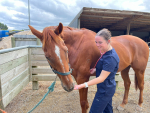
Tayla Steele is in her fourth year of a Bachelor of Veterinary Science at Massey University in Palmerston North.




 increase font size
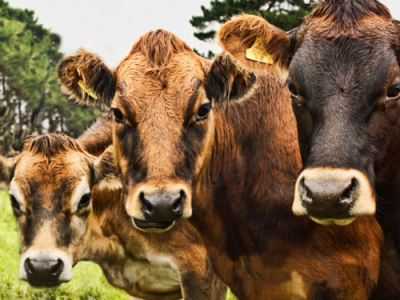 Animal health experts are warning that the outbreak of Mycoplasma bovis disease on a large South Canterbury farm could be “a potential game changer”.
Animal health experts are warning that the outbreak of Mycoplasma bovis disease on a large South Canterbury farm could be “a potential game changer”.
Massey University academics Richard Laven and Kevin Lawrence say farmers should be extremely concerned.
“The disease is very difficult to control or eradicate and can be a major cause of production losses on dairy farms," they told Rural News.
Use of winter housing may encourage the spread of the disease; in the UK some dairy farms have gone bankrupt after contracting Mycoplasma bovis.
Laven is associate professor in production animal health and Kevin Lawrence a senior lecturer in pastoral livestock health at Massey.
They say while the disease poses no risk to humans, there is a "real risk that the disease will spread and become a major problem in the New Zealand dairy industry”.
Ministry of Primary Industries (MPI) is investigating the outbreak; 14 cows have tested positive and about 150 cows on the 1000-cow property have clinical signs that indicate they may be affected. It is now tracing movements of animals on and off the property to ascertain if other properties are at risk.
MPI director of response Geoff Gwyn says Mycoplasma bovis does not infect humans and presents no food safety risk. There is no concern about consuming milk and milk products.
The disease is commonly found in cattle globally, including in Australia, but was never detected before in NZ.
The bacterial disease has serious effects on cattle including udder infection (mastitis), abortion, pneumonia and arthritis.
Laven and Lawrence are backing MPI’s response, but say it is handicapped by farmers not recording their cattle movements through NAIT.
“This will slow their ability to trace the spread of the disease and their ability to respond quickly, which will probably make the difference in the end. An additional worry is because of the long, slow chronic nature of the disease it is highly likely it has already spread at least locally.”
They are urging farmers who recently bought or leased dairy cows originating from Canterbury or Otago to be most vigilant.
Affected cows will have unusual cases of mastitis (especially where all four quarters are affected and/or treatment is unsuccessful), late abortions with weak calves, arthritis in adult cattle (again non-responsive to treatment) and pneumonia in housed calves.
Laven and Lawrence don’t think the outbreak will cause alarm among dairy customers overseas.
“The disease is already present in many other dairying countries. But they may be more concerned that our biosecurity measures have not prevented the incursion of a major bovine pathogen.”
Tayla Steele is in her fourth year of a Bachelor of Veterinary Science at Massey University in Palmerston North.

The Ministry for Primary Industries (MPI) says no new cases of H5 bird flu have been detected following a case found earlier this week.
New Zealanders are being urged to be alert following a confirmed positive case of H5 bird flu this week.
On a farm in Tikorangi, North Taranaki, Brent Stevenson is sharemilking 1,400 cows.
For Tararua District dairy farmer Lisa Lyons, ongoing professional development has always gone hand-in-hand with life on the farm, but a major health challenge prompted her to take her study journey even further.

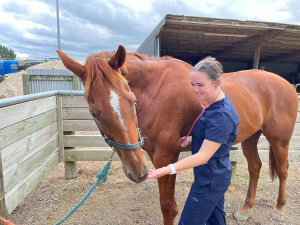
Tayla Steele is in her fourth year of a Bachelor of Veterinary Science at Massey University in Palmerston North.

The Ministry for Primary Industries (MPI) says no new cases of H5 bird flu have been detected following a case found earlier this week.
Two months after unveiling a major upgrade to its beef product, Halter says its farmers are on track for major production gains and additional grass growth.
New Zealanders are being urged to be alert following a confirmed positive case of H5 bird flu this week.
With a third of NZ dairy farmers still running outdated refrigerants, the country's largest farm refrigeration company says the opportunity for quick, meaningful emissions gains has never been clearer.
OPINION: Farmers are being put on notice by the Green Party.




OPINION: Central Hawke's Bay farmer Mark Warren recently told the Hawke's Bay Times it's time for a conversation about allowing…
OPINION: A nation that relies as heavily as NZ does on functional global shipping lanes will have to do its…