
Formula goes sour
OPINION: Media reports say global recalls tied to cereulide toxin contamination in milk-based nutrition brands could inflict combined financial losses exceeding $1 billion.




 increase font size
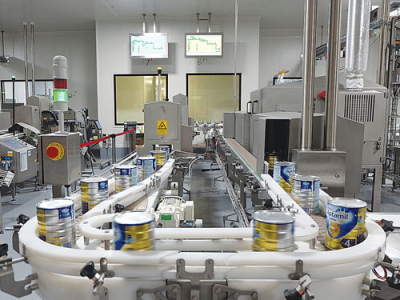 Danone has spent $25 million upgrading its Auckland blending and processing facility.
A $25 million upgrade and expansion of Danone’s Auckland blending and processing plant in late February has doubled its production capacity for finished products.
It is part of $85m spent by the global infant formula company in New Zealand in the past four years. This cements NZ as a critical, strategic supply point for local and regional markets, the company says.
Cyril Marniquet, NZ operations director, says NZ has a strong reputation for high quality milk and efficient production.
“We’re proud to be a growing part of the NZ dairy story through our high-quality international brands and expertise in early life nutrition,” he says.
“Australia remains our number-one export destination, but we’re seeing growing demand for our international products in other markets, including China.
“By doubling production capacity we’re better placed than ever to meet demand in key markets. Today we have end-to-end processing capability, with 450 people working in our NZ processing operations, up from 300 in 2014.”
Agriculture Minister Damien O’Connor says NZ’s ability to sustainably produce high-quality, nutritious food for a growing global population is crucial to our economic future.
“That means moving NZ’s primary sector higher up the value chain so we continue to deliver what international consumers demand,” he says.
“But we must do so in way that is sustainable and leverages our competitive edge as quality food producers. Danone Early Life Nutrition’s investment here shows it shares the same vision for NZ.”
To support its export growth, Danone has innovated and gained critical certifications.
Marniquet says innovation will include the latest global advances and product innovation via their NZ business.
“Our local experts form an integral part of Danone’s Nutricia 400-plus scientists and technologists worldwide.” Their work meets the specific needs of children during their first 1000 days – from pregnancy to two years of age.
“We have approval from the Certification and Accreditation Administration of the People’s Republic of China to manufacture and export direct to China from the Auckland plant. We’ve also been granted a Halal licence by the New Zealand Islamic Development Trust.
“Both certifications recognise our stringent processes in food safety, quality, hygiene and manufacturing. They open up exciting trade opportunities.”
Danone in 2014 bought its Balclutha spray dryer and Airport Oaks (Auckland) blending, packing and canning plants.
OPINION: Media reports say global recalls tied to cereulide toxin contamination in milk-based nutrition brands could inflict combined financial losses exceeding $1 billion.
Dairy's superpowers are lifting their game on proving greenhouse gas credentials.
Fonterra has climbed three places to number six on RaboResearch's annual Global Dairy Top 20 report.
One of the world's biggest dairy companies, Danone, aims to cut methane emissions from its fresh-milk supply chain by almost one-third over the next seven years.
Agriculture Minister Damien O’Connor says the Government will fund two new research projects to investigate the impacts of regenerative farming practices.


Waikato milk processor Tatua has again declared a record milk payout to farmer shareholders, leaving other processors in the dust.

A Labour-led Government won’t be bringing back the controversial freshwater rules of 2020.
National’s much-touted free trade deal with India featured in the Rural Issues Debate at Mystery Creek, Hamilton on Wednesday night.
New Zealand's 2026-27 freshwater fishing season has opened, with anglers encouraged to head to rivers and lakes over the coming days as conditions look favourable across much of the country.
Central Otago District Council (CODC) has voted against a plan to spread treated sewage sludge from Cromwell and Alexandra on farmland near Lauder, a decision Federated Farmers says reflects strong opposition from rural residents.
Pāmu has released its FY26 Integrated Annual Report, reporting a Net Operating Profit of $113 million, more than double the $49 million recorded in FY25.




OPINION: The same mainstream media muppets that brought you Jacindamania in 2017 have been flat out pimping for the Opportunities…
OPINION: Your old mate reckons the atrocious way farmers in the UK are treated by their lords and masters in…




