Federated Farmers Backs Year 11 Agricultural Science
Federated Farmers is backing Feilding High School’s call to keep Agriculture and Horticultural Science as a standalone subject in Year 11.




 increase font size
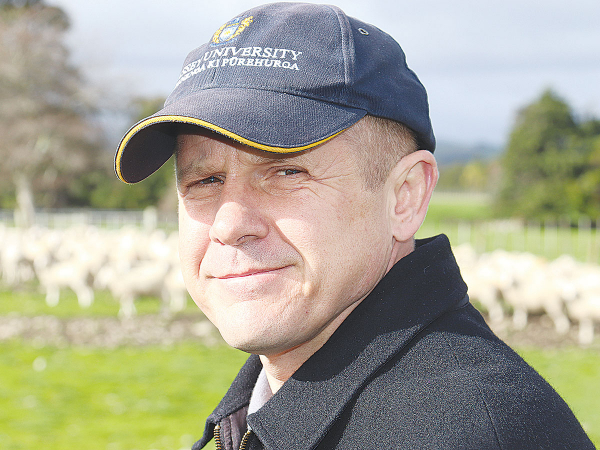 Paul Kenyon believes students have learned to be more self-reliant and independent because during lockdown they had to learn by themselves.
Massey University's School of Agriculture and Environment head says in the future it's likely that more students will do their degrees part time.
Professor Paul Kenyon's comments follow the graduation of the first cohort of students who have had all three years of their degree study disrupted in some way by Covid-19. Kenyon says despite these disruptions, he's confident that these students have the same knowledge as those who gained their degrees pre Covid.
"Their marks certainly indicate this," he told Rural News.
Kenyon says this latest cohort of students have developed new skills and traits that will set them up for successful careers in the new digital environment. He believes they have learned to be more self-reliant and independent because during lockdown they had to learn by themselves and are well set up for their future careers.
"In terms of the practical aspect of their degrees, this was only reduce a bit 2020 and 2021 and it's now back to normal," Kenyon explains. "But as with all distance and external students block courses were arranged, so that they could complete their practical work."
He adds that Massey students also do placements on farm and orchards during their holiday breaks to hone their skills and make them 'work ready'.
Kenyon believes that, going forward, the trend towards distance learning will likely grow.
He says the cost of education is rising and it's possible some students will stay in their local areas, work in the ag sector and do their degrees part time. For many students this will be a cheaper option.
He says Massey has always specialised in distance education and as a university was relatively well prepared for changes that were forced on it by Covid.
Meanwhile, this year's top Massey Ag students were honoured at a special ceremony recently. The top prize - the William Gerrish Award - was won by Adam Honeyfield, a Bachelor of Agribusiness student from Tauranga. He is majoring in rural valuation, grew up on a farm, and now works part-time for a rural valuation company in Tauranga while he finishes his degree.
Honeyfield says he was humbled to receive the award.
"I was quite surprised to be honoured," he told Rural News. "It's been a long journey for me - four years of hard work by distance, so it's a nice way to wrap things up. The hard work has all paid off," he says.
The other top students were Ingeborg Smythe (Earth Science), Joanna Wood (Environmental Science), Lachlan Barrett (Horticultural Science), Erika Lilley (Agriculture) and Brooklynn Taylor (Animal Science).
Federated Farmers is backing Feilding High School’s call to keep Agriculture and Horticultural Science as a standalone subject in Year 11.

Vetekina Pau'u is the first Tongan to win the William Gearish Memorial prize and sadly she will also be the last recipient.
Pāmu has welcomed Taranaki student Paige Burston as its newest First Foundation Scholar, supporting her journey towards a career in agriculture and animal science.
Researchers at Massey University are using a special piece of scientific equipment to improve the measurement of greenhouse gas emissions from pasture soils.
Kaikōura families affected by July's severe storm have found a practical solution to a problem that's kept some children away from regular schooling for weeks: a washed-out section of Inland Kaikōura Road, which has stopped the local school bus from running its usual route.


As part of its Election 2026 coverage, Rural News asked political parties how they would help pull the arable sector out of the doldrums. Here's what they said:
Farmers are being encouraged to rethink how they manage waste on farm with the launch of ruralwastesorted.co.nz, a new website bringing together practical tips, real farmer experiences and resources.
New Zealand Winegrowers (NZW) is celebrating the India-New Zealand Free Trade Agreement (FTA) coming into force today, bringing New Zealand wine improved access to one of the world’s fastest-growing economies.
New Zealand’s red meat sector has welcomed the India-New Zealand Free Trade Agreement taking effect, which removes India’s 33% tariff on New Zealand sheepmeat.
More than 95 per cent of New Zealand’s forestry and wood exports to India can now enter tariff free as the New Zealand-India Free Trade Agreement comes into force today.
Federated Farmers is backing Feilding High School’s call to keep Agriculture and Horticultural Science as a standalone subject in Year 11.


OPINION: The same mainstream media muppets that brought you Jacindamania in 2017 have been flat out pimping for the Opportunities…
OPINION: Your old mate reckons the atrocious way farmers in the UK are treated by their lords and masters in…