Election 2026: How Parties Would Lift the Arable Sector
As part of its Election 2026 coverage, Rural News asked political parties how they would help pull the arable sector out of the doldrums. Here's what they said:




 increase font size
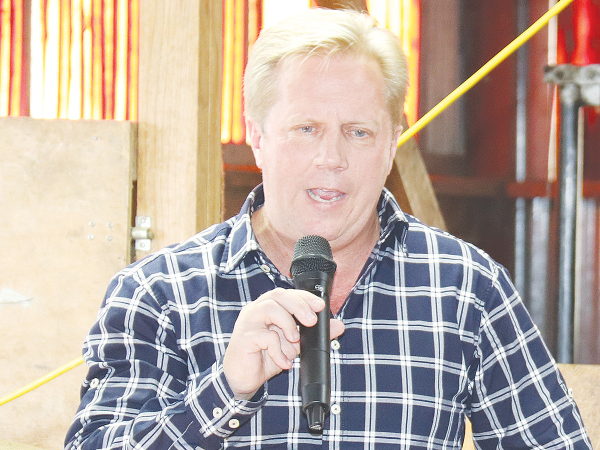 Agriculture Minister Todd McClay.
The Government has expanded the medium-scale adverse event classification to cover the Canterbury and Otago regions.
Last week, Agriculture Minister Todd McClay announced the medium-scale adverse event would cover the Marlborough, Nelson, and Tasman districts.
With today’s announcement comes further support for farmers and growers, including tax relief. It also enables the Ministry for Social Development (MSD) to consider Rural Assistance Payments.
“I have made this decision to unlock additional support for farmers and growers across the Canterbury and Otago regions as the intense dry spell persists and looks unlikely to improve in the short-term,” McClay says.
Earlier this week, McClay met with farmers in South Marlborough to see conditions on the ground first-hand.
“They told me the classification makes a difference, enabling them to access further support,” he says.
The extension unlocks up to $70,000 for Rural Support Trusts in North, Mid, and South Canterbury and Otago to facilitate community and one-on-one support for affected farmers and growers.
This is on top of $20,000 allocated to the Top of the South Rural Support Trust last month in an effort to ensure early support was available.
Rural Communities Minister Mark Patterson has also visited the affected regions recently, meeting with farmers, growers, and sector groups to discuss the challenging weather conditions.
“The dry conditions have affected some fodder crop yields and farmers have already been feeding out winter supplementary feed to livestock,” Patterson says.
He says rain over the weekend in parts of Canterbury and Otago did not deliver any significant relief to parched soils.
“The Ministry for Primary Industries (MPI) has been working with sector groups, regional bodies, and farmers to prepare for El Niño since its arrival last year; and continue to monitor the situation to determine where additional support is needed,” Patterson says.
Farmers and growers who require support are encouraged to contact their local Rural Support Trust on 0800 787 254.
As part of its Election 2026 coverage, Rural News asked political parties how they would help pull the arable sector out of the doldrums. Here's what they said:
Food and fibre exports have returned a billion- dollar bonus to the country.
The Government is backing work on a community-led water storage scheme that could irrigate up to 11,000 more hectares of the Poverty Bay flats, Agriculture Minister Todd McClay says.
The Minister for Rural Communities, Mark Patterson, says there's a massive infrastructure deficit in rural areas.
A Labour-led Government won’t be bringing back the controversial freshwater rules of 2020.


Federated Farmers has welcomed new rural policies released by ACT, saying they align closely with its own election priorities.

Rural Contractors NZ says proposed changes to land transport rules for agricultural vehicles are a welcome response by the Government to out of date regulations which have seen members hit with huge fines.
Alliance is calling for final applications for its 2027 Graduate Programme, with applications closing on Sunday 25 October.
Decades piloting planes has ensured vet and farmer David Hayes is focused on safety. So, after a serious accident while welding on farm, he is sharing his experience so others can learn from it.
Canterbury milk processor, Synlait Milk has confirmed Leon Fung as its chief executive officer.
OPINION: Making it easier to collect rainwater and use it to grow crops and livestock is a no brainer.




OPINION: The same mainstream media muppets that brought you Jacindamania in 2017 have been flat out pimping for the Opportunities…
OPINION: Your old mate reckons the atrocious way farmers in the UK are treated by their lords and masters in…




