Award winner aims to put farmers in the clover
This year's Kate Sheppard Memorial Award recipient will support research to ultimately help New Zealand farmers choose forages for best production and drought resistance.




 increase font size

Lincoln University's Kellogg Rural Leaders Programme has extended its welcome, with the course accepting its first Australian participant this year.
The programme has welcomed Mary Johnson as the first Australian to join the course and also the youngest applicant in its 34-year history.
"I found out about the programme through my line of work at Cattle Council Australia and then through the Australian Beef Industry Foundation," says Johnson.
"I did some of my own research and found that the Kellogg programme is all over the world, so I jumped at the opportunity."
Lincoln University has recently formed a five-year partnership with the Australian Beef Industry Foundation and Australia and New Zealand Banking Group (ANZ). The partnership will sponsor young Australians, like Mary, who have demonstrated a commitment to the rural industry.
Lincoln University has been involved with the leaders programme since 1976, when it was launched with a grant from the Kellogg Foundation, USA. Only 20 applicants are accepted each year.
Despite the programme being based in New Zealand, she finds Australia's rural opportunities and challenges very similar.
Johnson says the programme has so far given her the opportunity to regroup and take a step back to review what she wants to achieve and future career progression.
The programme places an emphasis on networking and communication, says Kellogg Rural Leaders Programme Academic Director, Dr Aldwell.
"Former course attendees form an important alumni network that every participant is able to utilise for advice, mentorship and information. Each year, previous 'Kelloggers' come back to talk with current students about their experience and the opportunities that followed," says Aldwell.
Aldwell says the programme has been designed to foster leadership within the rural sector and the wider rural community.
The Kellogg Rural Leaders Programme incorporates residential workshops, seminars and personal study over an 11-month period. The first stage is a 10-day residential induction course at Lincoln University at the beginning of the year, where participants focus on the dimensions that make a leader.
In the second, non-residential, phase, participants select a topic of interest and complete a research project, which is presented to their fellow Kellogg participants in phase three at Lincoln University.
The course then moves to Wellington for two and a half days for attendees to study the mechanism of government and the political process. They are also able to interview chief executive officers, politicians and other industry leaders about the practical nature of their leadership styles.
For more information, please visit www.lincoln.ac.nz/krlp.
This year's Kate Sheppard Memorial Award recipient will support research to ultimately help New Zealand farmers choose forages for best production and drought resistance.
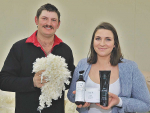
A Lincoln-based wool products company believes it offers a glimmer of hope against the increasing negativity currently saturating New Zealand’s strong wool industry.
The “mythology” of regenerative agriculture and lack of scientific evidence has prompted two renowned plant scientists to write to Ag Minister Damien O’Connor.
New research from Lincoln University has revealed that the genetic disposition of dairy cows could significantly reduce nitrate leaching.
Lincoln University has unveiled plans for what is expected to be a globally-unique Energy Demonstration Farm to help the primary sector meet its future zero-carbon obligations.

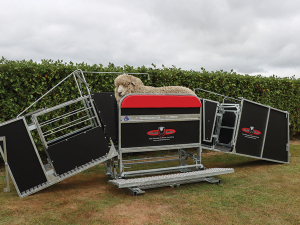
Oamaru-based livestock handling specialist Te Pari has bought Combi Clamp, the New Zealand manufacturer of Combi Clamp manual sheep handlers.
Agriculture Minister Todd McClay has admitted that a scheme bringing workers from Pacific nations to work on orchards has become too hard to navigate but says changes are coming.
A new app designed in New Zealand aims to help sheep, beef and deer farmers capture, analyse and use body condition score data more effectively.
Canterbury farmer Andy Macfarlane has been appointed to the board of AgriZeroNZ, the public-private partnership designed to accelerate the development and deployment of emissions reduction tools for New Zealand farmers.
For over 50 years Mel Ewers has been supporting the apple sector navigate through compliance and quality assurance issues.
The apple sector is enjoying a bumper harvest season.



A fair question has been raised about how member-funded organisations should conduct themselves when taking a public position on any…
OPINION: It really is getting harder to lampoon government bureaucrats when they do such a good job of it themselves.…