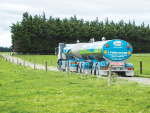
Fonterra FY26 Results: $9.69 Milk Price, $3.4bn Profit
Fonterra has unveiled its annual results for the 2026 financial year, posting $27 billion in revenue and close to $20 billion returned to New Zealand farmer owners and unit holders.




 increase font size

FONTERRA WILL this week hold the first of 50 meetings with farmer suppliers on the new Sustainable Dairying Water Accord.
This partnership between the Dairy Companies Association of New Zealand (DCANZ) and DairyNZ replaces the Clean Streams Accord which expired last year.
Federated Farmers fully supports the new accord and has signed on as ‘friends’. Regional councils, government agencies, fertiliser and irrigation industries and iwi are likely to do the same.
The new agreement covers riparian planting, nutrient management, effluent management, water use management and conversions. One of the specific promises in the new accord is that 90% of all dairy cattle on the milking platform will be excluded from waterways by 31 May 2014 and 100% by May 2017.
The new accord will require farmers to better manage nitrogen and phosphorous though an industry wide monitoring and support system. They’ll also have to comply with regional council effluent rules and improve water efficiency in irrigation systems and around their cow sheds. Farmers doing conversions will have to meet ‘good practice standards’.
The chairman of DCANZ and Fonterra director Malcolm Bailey told Rural News the big difference is that all dairy companies are involved, whereas the old Clean Streams Accord was a Fonterra initiative supported by a number of other agencies – a critical point, Bailey says.
“Farmers have done a good job in raising their game. Maybe that wasn’t a perception shared by some but I certainly think it is, because over the life of the accord the rules farmers have had to work against changed significantly in becoming a lot tougher.”
Bailey says all the companies agree on the direction of the new accord and the desired outcomes. Though each company may handle things slightly differently the result will be the same.
Fonterra and DairyNZ managers will front the Fonterra consultation meetings. The substance of the accord is not expected to change, but individuals’ ideas may improve the way it is managed, Bailey says.
DairyNZ chairman John Luxton says the new accord will take effect from the start of this year’s dairy season and is broader and more comprehensive than its predecessor.
“All dairy companies and DairyNZ will be accountable for [the new accord’s] commitments and farmer uptake will be supported through supply contracts and support programmes,” Luxton says.
The new accord refers to the need for farmers grazing dairy cows away from the milking platform to ensure they don’t get into streams. Luxton believes councils will before long require this as a matter of course, posing problems to farmers, given that cows grazing off-farm in winter can be doing so on hilly country difficult to fence.
The new accord is based on some proposals thrashed out by the Land and Water Forum (LAWF) as a ‘collaborative model’. Environmental groups have been consulted as part of the process.
The accord will not replace rules set in place by councils, but in some cases it will be identical to such rules.
Fonterra has unveiled its annual results for the 2026 financial year, posting $27 billion in revenue and close to $20 billion returned to New Zealand farmer owners and unit holders.
Fonterra Co-operative Group has confirmed the independently assessed candidates standing for election to its board in 2026.
Fonterra has revised its Farmgate Milk Price forecast for the 2026/27 season, lifting the midpoint and narrowing the range on the back of improving global dairy commodity prices.
Outgoing Fonterra Co-operative Council chair John Stevenson says that it has been a privilege to represent the co-op's farmer shareholders.
OPINION: It seems Canterbury processor Synlait is still in the doldrums.


Federated Farmers says it welcomes Labour's commitment to reviewing the Sharemilking Agreements Act, calling on other major parties to do the same.
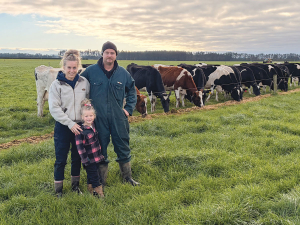
For Canterbury dairy farmers Sian Meijer and Rick Wobben, wearable technology has become one of their most valuable on-farm tools - helping manage 1850 cows across an expansive, high-performing dairy operation while improving efficiency, mating outcomes and day-to-day decision making.
Fonterra has unveiled its annual results for the 2026 financial year, posting $27 billion in revenue and close to $20 billion returned to New Zealand farmer owners and unit holders.
The first major update to the Dairy Cattle Code of Welfare in more than a decade has been released, marking what DairyNZ describes as an important step in ensuring animal welfare standards continue to evolve alongside scientific evidence and on-farm realities.
Ravensdown shareholders have elected Jane Montgomery and Kate Acland to the Ravensdown Board for three-year terms, following a closely contested director election.
Federated Farmers says new legislation replacing the Resource Management Act will cut red tape, unlock investment and help grow New Zealand's export-led economy, after the Planning Bill and Natural Environment Bill passed their third reading in Parliament yesterday.




OPINION: The same mainstream media muppets that brought you Jacindamania in 2017 have been flat out pimping for the Opportunities…
OPINION: Your old mate reckons the atrocious way farmers in the UK are treated by their lords and masters in…




