Wilding conifers a legacy issue - forest owners
Forest owners welcome the Parliamentary Commissioner for the Environment’s acknowledgement that the presence of wilding conifers across New Zealand is largely a legacy issue.




 increase font size
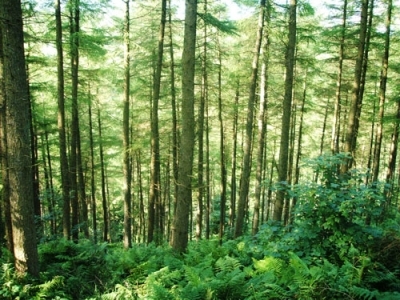
The Forest Owners Association says there are forest based solutions to some of the issues raised in the report released by the Parliamentary Commissioner for the Environment, Dr Jan Wright.
The Chair of the joint Forest Owners and New Zealand Farm Foresters Associations' Environment Committee, Peter Weir, says New Zealand's plantation forests lock up millions of tonnes of carbon.
"Once we get a real carbon price going under the Emissions Trading Scheme then the area and the carbon our forests lock up will increase again. That helps address what Wright calls, "climate change ... by far the serious environmental issue we face".
But Weir says blanket planting on highly erodible land of short rotation pinus radiata for clear-fell is not an optimum solution.
"There is a trade-off between markedly reduced erosion for 27 to 30 years while the trees are growing and an elevated risk for the five or so years after harvest.
"We have a draft National Environmental Standard sitting with government at the moment.
"I hope it's going to be implemented very soon. In it, there are rules about requiring geotechnical assessments before any planting on highly erodible land, to see if that terrain can support access roads and clear-felling – otherwise a standard radiata forest can't be planted on such land as a Permitted Activity."
"It may well be those kauri, totara, redwood, Douglas Fir or other speciality timbers are a more suitable species."
Weir says the NES for plantation forests is a comprehensive yardstick which will lead to consistent and defensible rules to maintain water quality.
"We have specifications for instance, which limit the number of times a logging truck can go across a ford in a stream, so as to reduce the mud washed off the tires, which might affect native fish. Jan Wright has correctly identified that water quality is high in forested areas, and it should be kept that way."
Weir says the biodiversity in the pine plantation forest also includes the bird life.
"Along with kiwi and kokako, most of the endangered New Zealand falcons lives in our pine forests. These forests are the main hope for survival of this apex predator. A cut over area, next to a mature stand of pines, is their habitat of choice. The falcon nests on the ground and then uses the tall trees to spot its prey.
"We fully support measures to control introduced animals, such as rats, possums and mustelids, which prey on falcon chicks."
As well, Weir also says the forest production industry is leading in reduction of transport greenhouse gas emissions.
"We have a modern logging and transport fleet, certainly in comparison with the average New Zealand car. A third of our logging trucks are less than three years old and a high proportion of these vehicles are compliant with the most rigid US or EU emission standards.
"But we can do better in our transport and looking at only using shore power for vessels berthed at our log loading ports would be well worthwhile."
Forest owners welcome the Parliamentary Commissioner for the Environment’s acknowledgement that the presence of wilding conifers across New Zealand is largely a legacy issue.
Federated Farmers forestry spokesperson Toby Williams says that changes to forestry rules announced yesterday will put power back into the hands of local communities.
The Forest Owners Association is decrying the latest Kiwis Backing Farmers campaign as "climate change responsibility denial".
A new recruitment campaign called ‘Find Your Fit in Forestry’ has been launched with the aim of drawing attention to the varied career opportunities available in the forestry industry.
The Forest Owners Association (FOA) says its members and the supply chain are gearing up to meet the challenge of getting back to work on Tuesday 28 April.



Potatoes New Zealand and Garden to Table have partnered together to celebrate a versatile vegetable and the people behind it.
Mainland Poultry has confirmed new ownership of its vertically integrated agribusiness with Pacific Equity Partners Gateway (PEP Gateway) now joining current shareholders Navis.
The recently published State of the Industry -Tractors and Machinery 2025 from the Australian Tractor and Machinery Association (TMA), the equivalent of New Zealand’s TAMA, gives an interesting perspective of the industry.
Strong competition and tightening supply have seen wool reach its highest prices paid at auction since 2011.
The Government is funding a feasibility study to investigate what would be required for a successful farmer-led purchase of the McCain Foods' vegetable processing site in Hastings.
A young man just five years out of his Lincoln University degree already has his foot in the door of farm ownership, as equity manager of a large new dairy conversion now taking shape in Mid- Canterbury.


OPINION: The old saying 'a new broom sweeps clean' doesn't always hold up, if you ask the Hound.
OPINION: This old mutt went to school to eat his lunch, but still knows the future of the country, and…