Ballance Farm Environment Awards Launch on West Coast
The Ballance Farm Environment Awards are coming to the West Coast of the South Island.




 increase font size
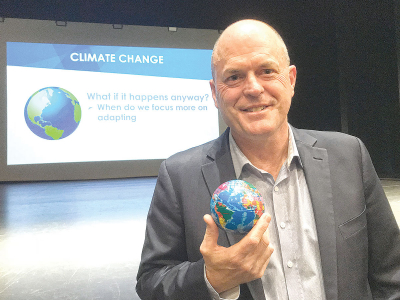 Todd Muller.
The Government's consultation process on freshwater proposals has been unacceptable, writes Todd Muller, National’s agriculture spokesman.
OPINION: I commented recently on the tension and anxiety around our rural kitchen tables as our farmers grapple with the pressures this Government is piling up on their family businesses.
Over the last few weeks we’ve seen this further added to by the Government’s freshwater proposals and unacceptable consultation process.
To explain why I need to paint a scene typical in rural New Zealand: a farming family, rivers and streams fenced, in some case wetlands created, cowshed effluent captured to be reused on farm as a fertiliser if you are a dairy farmer.
You model your impact year on year on the surrounding environment to demonstrate improvement. You are working alongside other farmers to improve your catchment. You are making a difference, your local stream values are improving.
Your catchment group is working with your local council to establish the previous National Party’s freshwater standards, including the first wider ranging set of minimum bottom lines of water quality announced just two years ago. Here are seen local catchments and local people finding local solutions.
Then along comes David Parker from an office in Wellington, with a raft of new measures and onerous nitrogen reduction targets which under current conditions won’t be feasible to achieve.
Our farmers are not the enemy in the water quality conversation. They are the people who will be implementing the solution. The rural sector is sick of being ostracised and demonised by this Government.
At present, neither the consultation process nor the language of Government ministers indicate there is any intention to negotiate or partner with landowners in finding a workable solution. No matter where you sit on the matter, this rigidity and lack of stewardship is unacceptable.
The proposed reforms are misguided, misinformed and need reworking. The purpose of an effective public consultation is to work through the kinks and come out the other side with workable outcomes. Legislative overhaul of this magnitude deserves effective and inclusive public consultation.
The rural constituency is an important group of stakeholders, the most financially impacted on an individual level, yet they are being branded environmental vandals for attempting to explain their position.
The Government gave just six weeks for consultation (extended to a mere eight after farmer pressure) during one of the busiest times of the year and it set up just five meetings across the entire country which are farmer friendly.
The documents provided for farmers to wade through have no economic analysis. In fact the Government’s own report says the modelling done on what this means for farming is ‘very limited’.
Interestingly, Local Government New Zealand has done some modelling on the reforms. Their modelling focuses on our very productive Waikato/Waipa catchment and shows sheep and beef farming is expected to fall by 68% while dairy would be reduced by 13%. Plantation forestry blocks would boom by an astonishing 160%, covering up to 50% of farmland in Waikato. Is this really the outcome New Zealand wants?
Above all this is the startling reality that the Government’s own freshwater quality monitoring data shows that in its monitored sites more are improving than deteriorating. It is disingenuous to frame resistance to these changes as being pro environmental degradation. Far from it. Water is one of our nation’s critical assets, perhaps second only behind our people. It must continue to be improved, but our farmers must be able to lead the way.
What is disingenuous, if not straight out destructive, is to frame up our improving water quality trajectory as false, impose targets that can’t be farmed to, provide no economic analysis, limited the opportunity to give feedback and say you are working in the best interests of this country.
• Todd Muller is National’s agriculture spokesman
The Ballance Farm Environment Awards are coming to the West Coast of the South Island.
Climate, nature and animal wellbeing make up Fonterra's refreshed sustainability roadmap released last week.
There's been widespread support from the primary sector for the Government's announcement on changes to freshwater farm plans that come under the Natural Environment Bill, which is now set to replace the existing RMA.
The chair of the country's environmental regulator, the Environmental Protection Authority (EPA), says changes are already under way to improve the performance of the agency to better meet the needs of those who interface with them.
New Zealand's Emissions Trading Scheme (NZ ETS) encourages afforestation while not achieving climate goals, says a new report released by the Parliamentary Commissioner for the Environment, Simon Upton.



Now in its fourth year, the 2026 Fencing Industry Awards, formed part of the proceedings of the FCANZ Conference, held in Nelson during August.
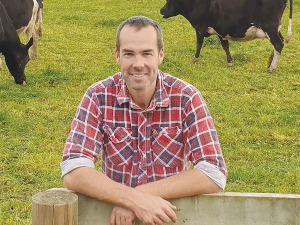
DairyNZ deputy chair Cameron Henderson has been re-appointed unopposed for another term.
OPINION: The stats speak for themselves.
Farms across the upper North Island are trialling different pasture mixes as part of a research programme that aims to build greater resilience into farming systems.
Election years are always a concerning time for farmers, according to DairyNZ chair Tracy Brown.
The Ballance Farm Environment Awards are coming to the West Coast of the South Island.


OPINION: The same mainstream media muppets that brought you Jacindamania in 2017 have been flat out pimping for the Opportunities…
OPINION: Your old mate reckons the atrocious way farmers in the UK are treated by their lords and masters in…