The Ministry for Primary Industries (MPI) has launched an investigation in the central Auckland suburb of Grey Lynn after the discovery of a single male Queensland fruit fly on Monday.
The fly was collected from a fruit fly surveillance trap late afternoon on Monday and formally identified late on Tuesday.
MPI chief operations officer, Andrew Coleman, says only one male insect has been trapped and this does not mean New Zealand has an outbreak of fruit fly.
"The Queensland fruit fly has been detected five times before in northern New Zealand – in Whangarei and in Auckland. In all cases MPI carried out thorough surveillance and no further flies were found."
Coleman says MPI has responded swiftly. Yesterday field teams started setting up additional fruit fly lure traps to determine if other flies are present in the area and to limit their spread, if found.
"It is vital to find out if this insect is a solitary find or if there is a wider population in Auckland.
"This insect, if established here, could have serious consequences for New Zealand's horticultural industry. It can damage a wide range of fruit and vegetables and could lead to restrictions on trade in some of our horticultural exports."
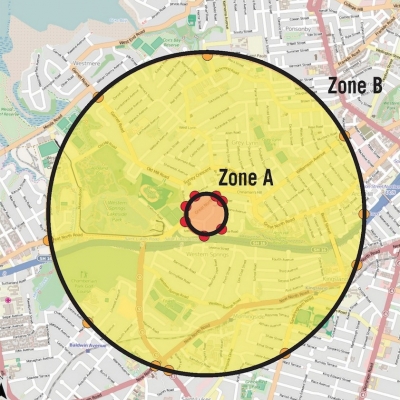
MPI has placed legal controls on the movement of fruit and some vegetables outside of a defined circular area, which extends 1.5km from where the fly was trapped in Grey Lynn.
The Controlled Area takes in parts of Grey Lynn, Western Springs, Mt Albert, Ponsonby, and Kingsland.
Detailed maps of the controlled area and a full description of the boundaries, and full information about the rules are at www.mpi.govt.nz.
Whole fresh fruit and vegetables (except for leafy vegetables and root vegetables) cannot be moved outside of the Controlled Area.
"These legal controls are an important precaution while we investigate whether there are any further fruit flies present," Coleman says.
"Should there be any more flies out there, this will help prevent their spread out of the area.
"Our previous fruit fly operations have shown that public support is vital to success and we have always had terrific community buy-in," Coleman says.
"We appreciate this will be inconvenient for the many people living in and around the Controlled Area, but compliance with these restrictions is a critical precaution to protect our horticultural industries and home gardens.
"It is likely the restrictions will be in place for at least a couple of weeks."
The most likely way that fruit flies can arrive in New Zealand is in fresh fruit and vegetables.
MPI has strict requirements on the importation of fruit and vegetables to minimise this risk. Air and sea passengers are prohibited from bringing fresh fruit and vegetables into the country. MPI has to date been highly successful in keeping this insect threat out of New Zealand crops.
Coleman says that this latest find demonstrates the benefit and effectiveness of MPI's surveillance network and biosecurity system. The network, which involves some 7500 traps nationwide, undergoes regular checks to ensure early detection.
"By setting traps for these pest insects, we are able to detect their presence early, have assurance about exactly where the problem is located and respond faster and more effectively where finds are made." Coleman says.
For more information please visit http://www.mpi.govt.nz/.