The Wairarapa community is closer to a reliable and sustainable supply of water.
A project investigating how water infrastructure could be developed in the Wairarapa Valley has gained co-funding from the Government's Irrigation Acceleration Fund (IAF).
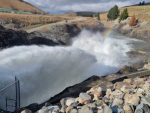
The Wellington Regional Council set up the Wairarapa Water Use Project (WWUP) to develop long-term rural water infrastructure including water storage. The options include a series of water storage lakes around low-lying foothills of the Wairarapa Valley.
The Regional Council and IAF have agreed to provide half each of funding for $2.5 million worth of further investigation work. The expected outcome is a decision in December 2013 on whether to move on to a full feasibility study of any of the options.
Regional council chair Fran Wilde says Wairarapa is prone to extremes of weather, including during the summer months when drought conditions could be followed in the next year by heavy rain.
"The project intends to provide consumers with more certainty of supply, but in an environmentally sustainable way and by adopting a broader regional approach to the challenges of water storage and use."
Wilde says the funding approval signalled the national significance of the project, which had the potential to be one of the region's biggest economic development projects.
The Regional Council's $1.28 million contribution is part of an overall $3 million commitment to the Project.
About 10,000ha are at present under irrigation in the Wairarapa Valley, but the Project could enable that to increase by between 30,000 and 50,000ha.
MPI's IAF manager, Kevin Steel says the new investigation work will be a platform for balanced decision-making. "This feasibility study will provide good information to assist decisions about how best to develop the water infrastructure while providing for the wider community's interests."
About the Wairarapa Water Use Project:
The WWUP takes an integrated approach, aiming to provide water to meet various local needs and uses. These include: agricultural production; instream ecosystems; municipal and rural water supplies; recreational purposes; hydro power generation and cultural purposes.
The WWUP is supported by several forums that ensure community involvement, including a leadership group comprising representation from iwi, environmental and recreational groups and local government; a stakeholder advisory group that acts as a conduit for community views; and the Water Users Society which provides a voice for users and others with an interest.
About the Irrigation Acceleration Fund:
The Government established the Irrigation Acceleration Fund in 2011 to support the development of regional-scale, rural water infrastructure proposals to investment-ready stage. To meet IAF criteria, projects must aim for environmentally sustainability and plan for best-practice water use.