West Otago Farmer Luke Kane Wins Rabobank 2026 Prize
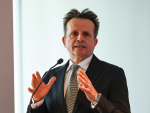
West Otago dairy farmer Luke Kane has been awarded the 2026 Rabobank Dr John Morris Business Development Prize.




 increase font size
 The bank’s view is the Official Cash Rate (OCR) has peaked at 5.5% and two rate cuts will be delivered by the Reserve Bank of New Zealand (RBNZ) in the second half of 2024.
According to Rabobank, inflation expectations in the New Zealand economy are headed in the right direction, with interest rate relief on the cards for the second half of 2024.
“We have come through this period where the market was very constrained by the effects of the COVID -19 pandemic,” says Rabobank Senior Market Strategist Ben Picton. “The supply side was under a lot of pressure; demand was being juiced up by very low interest rates and lots of government spending. Now the economy is rebalancing.”
The bank’s view is the Official Cash Rate (OCR) has peaked at 5.5% and two rate cuts will be delivered by the Reserve Bank of New Zealand (RBNZ) in the second half of 2024. A key factor in this view is the recent slump in New Zealand economic activity, with a technical recession in early 2023 and third quarter contraction.
“We expect that when we get the data for the last three months of 2023 it could show another contraction,” says Picton. “This has helped to bring headline inflation down rapidly, [as] year-on-year inflation fell to 4.7% at the end of 2023 and fourth quarter inflation of just 0.5% was very encouraging. However, there is still some way to go to reach the midpoint of the RBNZ’s 1 to 3% target range.”
Higher unemployment also supported the bank’s view, despite recent data highlighting the labour market was responding to tightening monetary policy slower than expected.
“What that indicates is that the labour market is a lot more resilient than what economists had been predicting. A tighter labour market means higher wages growth and aggregate demand. Right now, the RBNZ will be a little concerned about this, but there is softness beneath the headline figure, and overall we think unemployment will rise at a fast enough rate to support our view.”
An additional factor supporting the bank’s interest rate expectation was the significant time lag associated with monetary policy cuts. Picton explains that it can take a full two years for the full impacts of rate increases to take effect, so only now are we starting to feel the full effects of the first rate hikes from late 2021 and early 2022.
In addition to a resilient labour market, Rabobank identified accelerating consumer spending and the Red Sea conflict as further threats to the bank’s forecast.
“For a small open trading economy like New Zealand that imports a lot of goods from the rest of the world, inflationary pressures on internationally-traded goods is potentially a risk to the trajectory of inflation in New Zealand that might delay rate cuts.”
Looking beyond 2024, Rabobank anticipates the OCR would eventually settle at around 3.5%.
“The RBNZ gives us a bit of an idea about where they think interest rates will settle in the long term because they publish their expectations of what they call the neutral rate, which is the rate at which they think that interest rates are not adding to inflation or subtracting from inflation,” said Picton.
“Now, they think that the neutral rate is 2.5%. With a 2.5% OCR, inflation won't be accelerating or decelerating. We think that that is maybe a little bit too optimistic and is based off recent history, but we've seen changes in the structure of the global economy which maybe suggests that neutral rates are actually higher than what they used to be.
“We think it's probably closer to 3.5% than 2.5%. And that’s a roundabout way of saying, in a nutshell, we think that the OCR converges on 3.5% sometime in early 2026.”
West Otago dairy farmer Luke Kane has been awarded the 2026 Rabobank Dr John Morris Business Development Prize.
Twenty five secondary school students from around New Zealand recently completed a three day residential programme designed to explore career opportunities across the food and fibre production supply chain.
OPINION: With 10,500 dairy farms, New Zealand continues to punch above its weight around the world.
A team effort that is paying dividends for the wider New Zealand economy.
37 farmers from across the Rangitīkei and Manawatū regions recently spent a day-and-a-half learning new business management and planning skills at Rabobank’s latest AgPathways Programmes in Whanganui.



State farmer Pamu has delivered its strongest operating result on record.
Four years since it was first detected in New Zealand, researchers and growers now know much more about management of maize pest fall armyworm (FAW).
The Government has announced it will pause key parts of Waikato Plan Change 1 (PC1) in a decision that is set to give Waikato farmers a reprieve from new consenting and farm-planning requirements while the wider resource management system is overhauled.
OPINION: The time has come for the Government to back the organic sector.
Plan ahead and be patient. That’s the message to farmers and horticulturalists from the chairman of the NZ Agricultural Aviation Association, Kent Weir.
The industry is crying out for graduates with agricultural related degrees.



OPINION: The same mainstream media muppets that brought you Jacindamania in 2017 have been flat out pimping for the Opportunities…
OPINION: Your old mate reckons the atrocious way farmers in the UK are treated by their lords and masters in…