DairyNZ Resilient Pastures Trial Expands Across North Island
Farms across the upper North Island are trialling different pasture mixes as part of a research programme that aims to build greater resilience into farming systems.




 increase font size
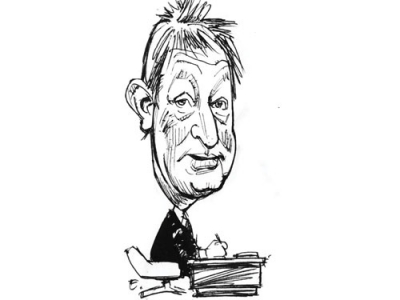 Nick Smith says the Government needs to stay connected to rural communities.
To heed the lessons of the Northland by-election the Government needs to stay connected with New Zealand’s rural and remote communities, says Environment Minister Nick Smith.
But there is an opportunity to go after the Greens ‘soft vote’, he told the Blue Green conference on Great Barrier Island this month.
“By our principles of marrying good economic and environmental policies, of underpinning our policies with good science, and of moving from a polarised conversation on environmental issues to a more collaborative approach we can appeal to New Zealand’s practical, down to earth brand of environmentalism.”
He is confident the government can pull together enough support to still “progress substantive change” in the Resource Management Act, he
said.
Since the Northland by-election, securing a majority in Parliament for reform has become even more challenging, but discussions are continuing with confidence and supply partners, Smith says. He is confident of getting the support to make change.
Even before the by-election it has always been a challenge to secure a majority in Parliament to support a bill which would make changes over “difficult issues”. Those issues include sections 6 and 7 relating to protection of natural features. Changes to those sections are opposed by a number of environmental organisations.
“The first, key change is improving the plan making process. The current schedule 1 process is cumbersome, costly and is not serving New Zealand’s environment or economy well,” Smith said.
He is a strong enthusiast for the collaborative process used by the Land and Water Forum for water plans and is keen to see this approach for a wider range of resource management issues.
On that issue he said the Land and Water Forum had just been reinvigorated to go to the next stage and its chief goal will be implementing the national policy statement at regional and catchment level.
Two further commitments on freshwater will be delivered this term. The first is developing a $100 million fund to support the retirement of buffer zones around sensitive lakes and rivers. The second is meeting a requirement for all dairy cattle be to excluded from waterways from July 1, 2017.
Farms across the upper North Island are trialling different pasture mixes as part of a research programme that aims to build greater resilience into farming systems.

Election years are always a concerning time for farmers, according to DairyNZ chair Tracy Brown.
OPINION: Since when did one and one make three? Who didn't smell an elephant-sized rat when our leaders decided to give $60 million to save the cement factory in Northland?
New Zealand needs to make sure that it continues to focus on its own food security, according to HortNZ board member and blueberry grower Dermott Malley.
A five-year study has found that the cost of reducing emissions without technology may be significant and unsustainable for Northland dairy farmers.


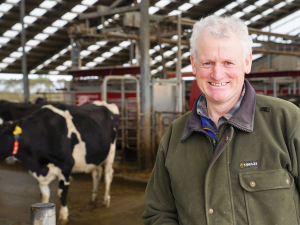
In Dacre, near Invercargill in New Zealand’s South Island, Bruce Dinnington is running a dairy operation unlike any other.

A free online platform aggregating governance vacancies across rural and regional New Zealand has been launched.
Environment Minister Nicola Grigg has announced details of a new rural plastics recycling scheme.
Agricultural drone operators say that a government decision to allow lower-risk drone work without certification won’t lower standards but drive innovation and efficiency.
OPINION: Warning bells are ringing in the arable sector.
Farmgate lamb prices are down by 8%, beef cattle by 4.5% and farm expenditure up by 4.2%.

OPINION: The same mainstream media muppets that brought you Jacindamania in 2017 have been flat out pimping for the Opportunities…
OPINION: Your old mate reckons the atrocious way farmers in the UK are treated by their lords and masters in…




