
Kiwifruit Growers Prepare for El Niño, Stay Optimistic
Kiwifruit growers are watchful but remain optimistic as concerns around the potential effects of the El Niño weather pattern this season.




 increase font size
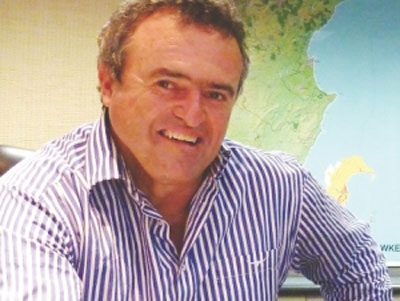 Hawkes Bay Regional Council chairman Fenton Wilson.
Agencies are keeping a close watch on dry conditions and farmer welfare in Hawke's Bay.
A long dry spell means that some areas have little pasture cover or water.
A round-table meeting of grower and farmer groups, East Coast Rural Support Trust, Hawke's Bay Regional Council and Ministry for Primary Industries discussed the current dry conditions this week.
Farmers around the region reported to the meeting that, although conditions for many have been better than expected, rainfall had been patchy through autumn. Some areas have little to no grass and little spare feed. The Pakipaki to Porangahau strip was most at risk. The rain had been insufficient to get creeks flowing. Towards the coast some farms have large ungrazeable areas due to a lack of stock water.
"Northern Hawke's Bay is still pretty good but the Wairoa River has low flows as much as anywhere else. It's concerning that, like last year, around the rest of the region stock water is being challenged and farm dams are not full. We are looking forward to some rain," says Hawkes Bay Regional Council chairman Fenton Wilson.
Farmers are asked to continue a watch on water availability and animal welfare, especially where stock are let into areas which have water and subsequently overgraze those paddocks.
On a positive note, large quantities of baleage are available for purchase and grain is at lower prices than in 2015, the regional council says in a statement. Other areas have fared better over autumn and are able to take stock for grazing over winter.
Facial eczema (FE) has been widespread but while not as bad as previously seen in the region, it has occurred in areas not usually affected. Vets are giving advice and farmers are generally keeping an eye out for FE. Farmers will be aware that FE can put animals under more pressure near lambing and in late winter. Scanning is likely to be affected, and a high dry rate could result in further destocking.
The Rural Support Trust reported that farmer morale is still strong. To date very few calls have been received for assistance and support. While a poor autumn has been experienced by most, in general farmers are coping well due to early planning and good decision-making.
HBRC's climate scientist Dr Kathleen Kozyniak reported on late summer/autumn climate monitoring. February to April had less than average rainfall across the region and most places have so far seen less than 50% of the usual. Soil moisture in the north of the region was around or just below median levels, but in some places across the plains and south, soil moisture is at very low levels for this time of the year.
Farmers, growers, workers and their families are encouraged to contact the Trust on 0800 RURAL HELP (787 254) for a free and confidential chat.
Kiwifruit growers are watchful but remain optimistic as concerns around the potential effects of the El Niño weather pattern this season.
OPINION: In the 1980s, concern was expressed in West Germany about the falling birth rate. Some simple analysis was performed by Professor Helmut Sies, physician and biochemist at Dusseldorf University. His letter ‘A new parameter for sex education’ was published in Nature in 1988:
“The first conviction we need as wine drinkers,” Andrew Jefford once wrote, “is to spend less time thinking about grape varieties, and pay more attention to the places wines come from and the cultures in which they come into being. All the grape variety does is present a spectrum of opportunities.”
When Kate Lattey and Koldo Santamaria planted their dream vineyard in 2020, they knew they wanted to work with winemakers who shared their passion for wine “and expressing what the land can say”.
Celebrating 50 years in the rural landscape of Central Canterbury and beyond, Ashburton-based Carrfields, has been the exemplar for all aspects of modern agriculture via its extensive range of services including supply, growing, agronomic advice and marketing.


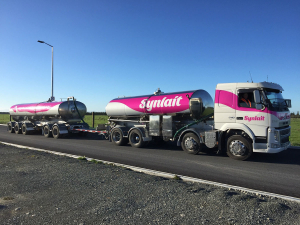
Synlait has swung to second-half profit as operations stabilise, but the dairy processor still posted a $75.4m annual loss.

LIC shareholders have elected a new North Island representative to the co-operative's Board, along with five representatives to its Shareholder Reference Group (SRG), following the company's Annual Meeting held in Invercargill.
Farmers across parts of Southland and South Otago are continuing to deal with difficult conditions after a prolonged run of wet weather, with pressure building around feed supply, stock management, pasture damage, farm infrastructure and everyday workloads.
Federated Farmers says it welcomes Labour's commitment to reviewing the Sharemilking Agreements Act, calling on other major parties to do the same.
For Canterbury dairy farmers Sian Meijer and Rick Wobben, wearable technology has become one of their most valuable on-farm tools - helping manage 1850 cows across an expansive, high-performing dairy operation while improving efficiency, mating outcomes and day-to-day decision making.
Fonterra has unveiled its annual results for the 2026 financial year, posting $27 billion in revenue and close to $20 billion returned to New Zealand farmer owners and unit holders.



OPINION: The same mainstream media muppets that brought you Jacindamania in 2017 have been flat out pimping for the Opportunities…
OPINION: Your old mate reckons the atrocious way farmers in the UK are treated by their lords and masters in…




